Some places inspire a building.
Some inspire a landscape.
Ljubljana inspired several thousand years of history.
When I arrived in Slovenia’s capital, I was already travelling through the landscape that would eventually become the inspiration for a large, still mostly blank region of Tolrendor. I had always imagined this part of Tolrendor, north of Varandia and the Akayin peninsula, as having something of a Central European character, but beyond a few lines on a map, I’d never really worked out what that meant.
Ljubljana started to answer the question.
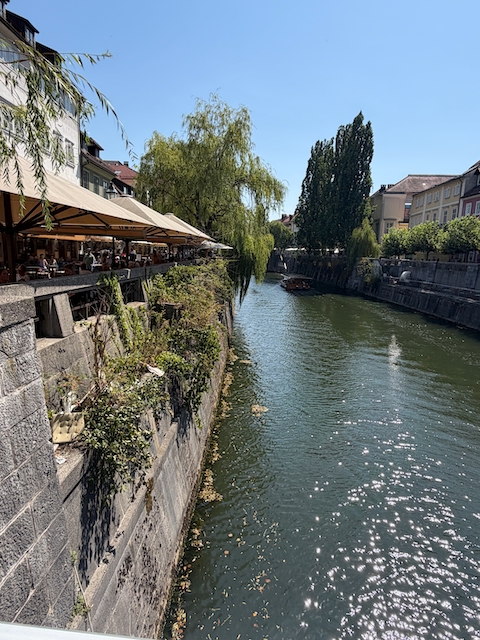
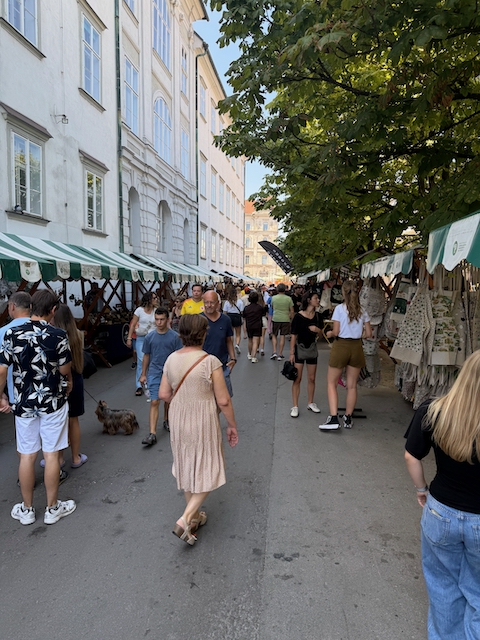
It is an extraordinarily appealing city. A river winds through its centre beneath bridges crowded with pedestrians. Markets spill out alongside it. Streets and squares gather around the water rather than turning their backs upon it. Above everything sits the castle, looking down from its wooded hill.
But what really interested me was its position.
Ljubljana sits at a natural crossroads between different parts of Europe: the Alps and the Balkans, the Adriatic and the Danube basin, the Latin, Germanic and Slavic worlds. That geography has repeatedly made the region a meeting place between cultures and empires.
Standing there, I realised that Tolrendor needed somewhere like that.
A crossroads.
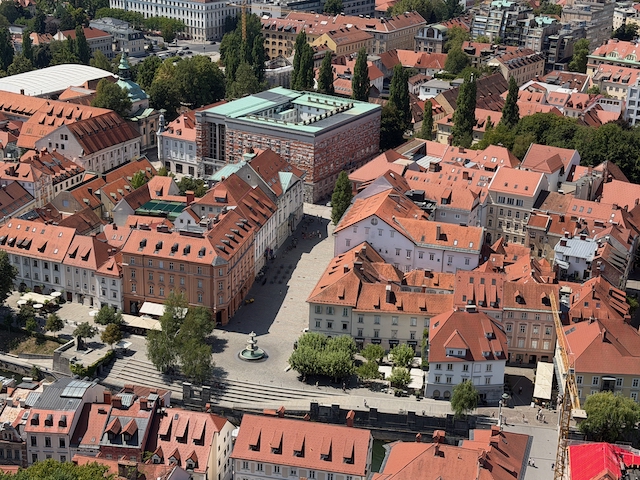
Finding Velsar
On my still very incomplete continental map of Tolrendor there is an enormous amount of unexplored territory north of Varandia.
Several hundred miles north and somewhat east of the Isle of Varandia, the geography begins to provide exactly the sort of location I was looking for.
Rivers coming from the north and east meet routes leading south towards the old Varandian lands and the Akayin peninsula. Mountains and broken country constrain travel into natural corridors. Beyond lie routes eventually connecting with the great waterways leading towards Ailavaara and the northern world.
Put a reliable river crossing there and people will use it.
Protect that crossing and people will settle there.
Connect it to several thousand years of Tolrendor’s history and you get Velsar.
Today Velsar is the capital of a small but prosperous duchy of the same name. Its territory is modest. Its importance isn’t.
Merchants, pilgrims, mercenaries and adventurers travelling between northern and southern, eastern and western Tolrendor have been passing through Velsar for longer than anyone can reliably remember.
But the city began long before there was a Duchy of Velsar.
Perhaps even before there were kingdoms.
Before the Empires
This took me back to a period of Tolrendor’s history that I’ve been slowly developing for years.
After the Sundering and the great conflicts of the Age of Strife, the world did not suddenly become safe.
The greatest powers might have been defeated, imprisoned or driven away, but their remnants remained. Monsters and other things born during those ancient struggles still wandered the world. Civilisation existed only in scattered pockets. Many of Tolrendor’s peoples were simply trying to survive.
This was the beginning of the Age of Heroes.
The gods themselves bore at least some responsibility for the catastrophe that had befallen the world. Unable to intervene again directly, they sent a small number of divine emissaries into the mortal world to aid their beleaguered worshippers.
Scholars know these as the First Lights.
Each was bound to a divine purpose and to the mortal cycle itself. They lived mortal lives and could die, only to be reborn in another form, carrying fragments of memories from their previous lives.
Around some of the First Lights gathered other heroes, forming the Bright Orders.
These weren’t necessarily knightly orders in the later medieval sense. They were companies of champions gathered around a purpose: destroy a particular horror, guard a people, protect a route, maintain an ancient seal, cleanse a corrupted land.
One of those Orders came to the river valley where Velsar would eventually stand.
Its name is now uncertain.
So, perhaps, is precisely what it was sent there to do.
What survives in the oldest stories is that a First Light and their companions established a fortress upon the hill overlooking the river crossing.
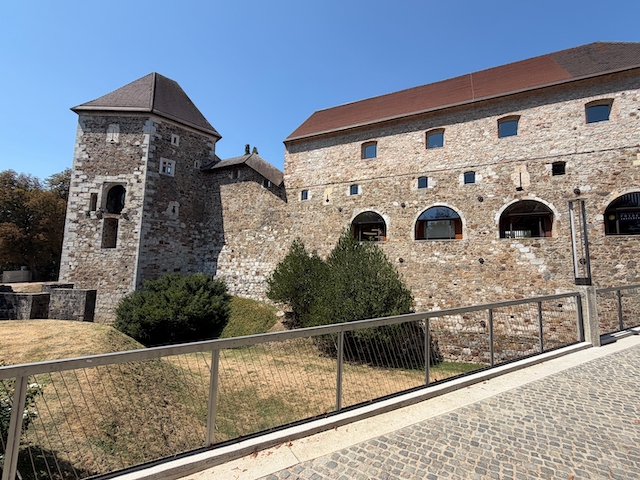
Beneath its protection, people gathered.
A settlement grew.
And that was the beginning of Velsar.
When Heroes Became Rulers
The Age of Heroes eventually gave way to something new.
The Age of Empire.
The first great empire to emerge in this part of Tolrendor was Varandia: the Dragonborn civilisation whose ruins still dominate much of the region to the south.
There is an irony here.
One tradition holds that Varandia itself grew from a Bright Order.
Its founders had protected people through the terrible centuries after the Sundering. They created safe settlements. They defeated monsters. They brought order where none had existed.
And eventually they began to ask a dangerous question.
If they could protect people, perhaps they could govern them too.
The change was not necessarily malicious. Indeed, for centuries the result may have been overwhelmingly beneficial. Roads became safe. Trade flourished. Law replaced feud. Settlements became cities.
But service had become authority.
Authority became government.
Government became empire.
When Varandia eventually reached the valley of Velsar, it found another Bright Order already performing much the same role its own distant predecessors once had.
So Varandia didn’t destroy it.
It offered it power.
The Order retained its fortress and its traditional influence over the surrounding communities. Varandia simply recognised that influence, expanded it and incorporated the Order into the imperial hierarchy.
The guardians of the valley became its rulers.
The Dragon Above Velsar
Varandia was a Dragonborn empire.
But behind the Dragonborn stood dragons.
The relationship between the two is something I’m still developing, but the great dragons were far more than beasts lurking in caves. Some occupied positions of enormous political and social authority within Varandia.
Velsar became the domain of one such dragon.
And perhaps surprisingly, this wasn’t necessarily a disaster.
The dragon recognised what the geography offered.
The old river crossing was improved. Varandian roads converged upon it. Engineers strengthened the bridge, walls and river defences. Markets expanded. Warehouses appeared beside the water. The old fortress of the Bright Order was rebuilt and enlarged.
The geography had created the crossing.
The Bright Order had made it safe.
Varandia made it important.
Over centuries, the original Order itself gradually disappeared into the institutions of the Empire. Its purpose had been fulfilled. Perhaps, their ancient charge finally complete, the Order’s First Light simply passed from the mortal cycle.
The fortress remained.
By then, however, it was simply the castle above a thriving Varandian city.
The Fall of the Dragons
Nothing lasts forever in Tolrendor.
Varandia’s final wars were catastrophic.
Its great conflict with a rival empire to the south and east eventually devastated the heartlands of both powers, leaving behind the magically scarred wasteland still known as the Blight.
Velsar was far enough away to escape the worst of that destruction.
Its dragon overlord was not.
When Varandia summoned its forces for the final wars, the dragon left Velsar and flew south.
It never returned.
Eventually word reached the city that it had been slain.
And in the political vacuum that followed, Velsar rebelled.
The Dragonborn regime that had ruled the city for centuries suddenly lacked both its imperial authority and its overwhelmingly powerful patron. Human factions seized control. Governors were overthrown. Estates were confiscated. Imperial symbols were torn down.
Not every Dragonborn disappeared. Their descendants can still be found in Velsar today.
But Dragonborn rule ended.
And the dragons suffered a peculiar fate.
The Dragons in the Rain
Ljubljana is famous for dragons.
There is one on its coat of arms. Dragons stand proudly on the Dragon Bridge. They have become one of the symbols of the city.
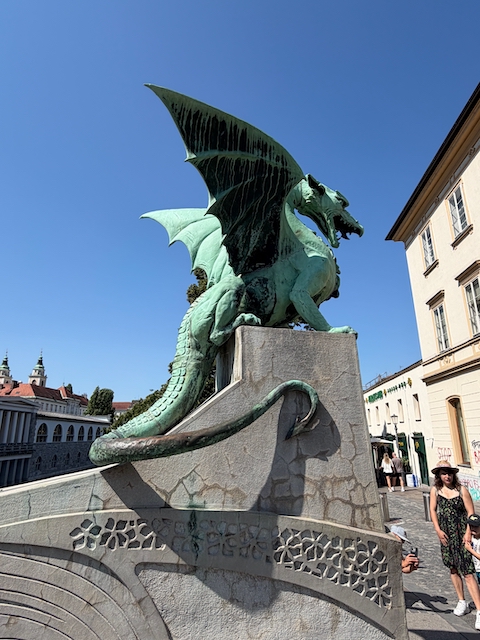
Velsar has dragons too.
Hundreds of them.
But Velsar’s dragons aren’t standing proudly upon pedestals.
They’re gargoyles.
During the Varandian period, dragons had appeared throughout the architecture of Velsar. They adorned civic buildings, bridges, palaces and gates as symbols of imperial authority and of the city’s own draconic overlord.
After the revolution, the most important statues were destroyed.
But there were simply too many dragons to remove them all.
So the people of Velsar began doing something rather more pointed.
They recarved them.
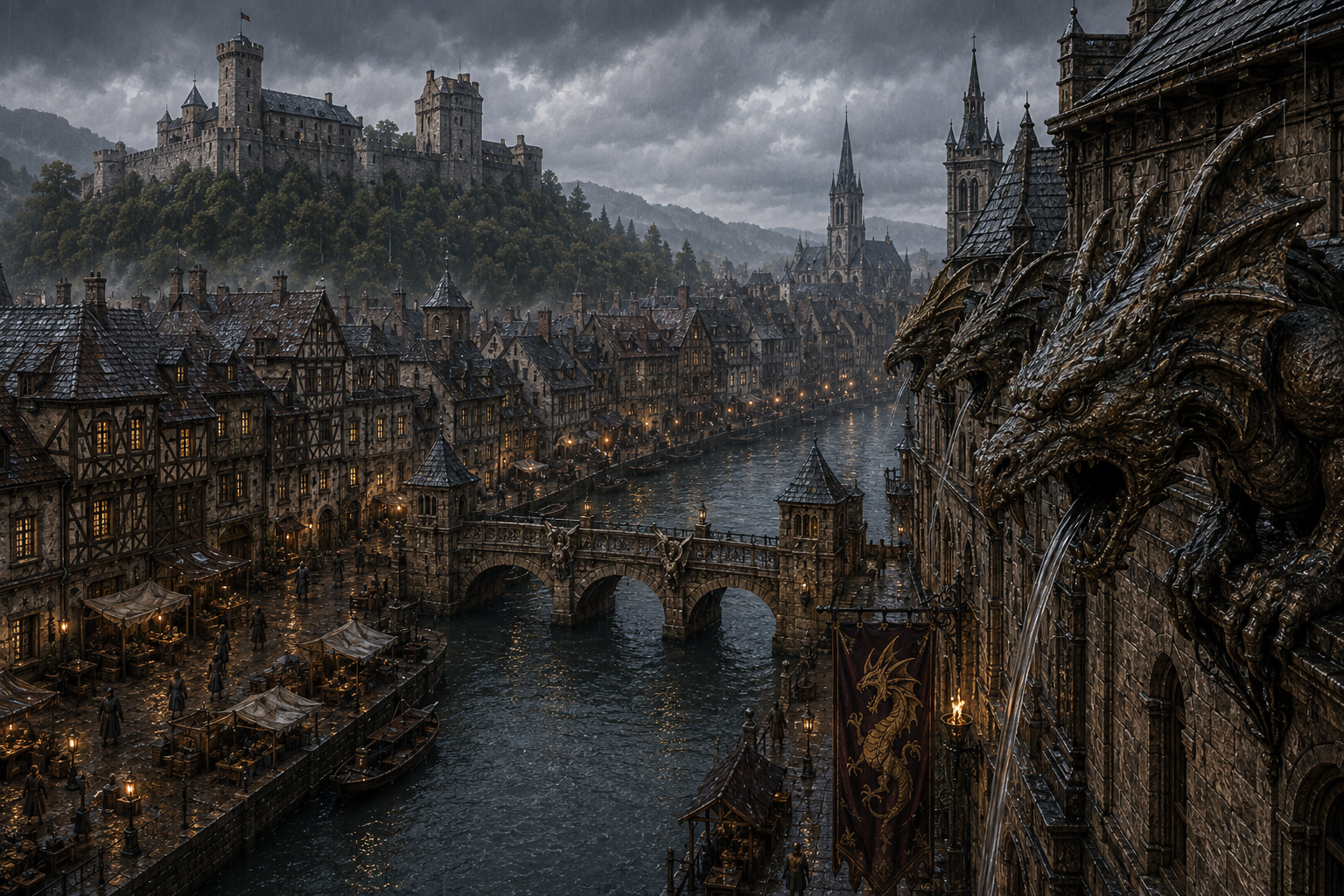
Dragons that had once represented rulers became grotesques. They crouched beneath roofs. They clung to walls. Stone dragons were made to carry gutters and spit rainwater into the streets below.
The symbolism was unmistakable.
Dragons no longer ruled Velsar. Dragons served Velsar.
And then the insult became a tradition.
Centuries after anyone seriously feared the return of Varandia, architects continued putting dragon gargoyles on buildings because that was simply what buildings in Velsar looked like.
Different ages added different dragons.
Elegant Akayin beasts stare from the cornices of merchant houses. Grim northern dragons cling to old fortifications. Harondin craftsmen have added their own interpretations. Some are terrifying. Some are ridiculous. Children have favourites.
When it rains, water pours from dragon mouths all over the city.
Most visitors assume they are simply Velsar’s symbol.
The people of Velsar know better.
Between Empires
Independence after Varandia wasn’t straightforward.
To the north and west, Reinbergen emerged as one of Varandia’s successor states. Its rulers regarded themselves as inheritors of parts of the old imperial order — including, inconveniently, Velsar.
Over the following centuries the city moved repeatedly in and out of Reinbergen’s orbit.
Sometimes its independence was real.
Sometimes theoretical.
Sometimes a Reinbergen lord occupied the castle while the merchants below behaved as though nothing particularly important had happened.
Meanwhile another power was rising much further south.
The city of Samos had grown from Akayin origins into the centre of what would become the Samite Empire.
Samos never conquered Velsar.
But it didn’t need to.
As the Samites absorbed much of the Akayin world, their influence travelled north. Samite coins passed across Velsar’s markets. Akayin merchants established houses beside its river. Architecture, law, food and fashions followed.
Velsar learned something that would become central to its survival.
When Reinbergen became too interested in the city, friendship with the Samites suddenly seemed extremely attractive.
When Samite influence became uncomfortable, the ancient ties with the north were rediscovered.
Velsar became very good at being useful to everyone and owned completely by no one.
And it remained that way for centuries.
The Harondin Come West
The final major ingredient in modern Velsar arrived surprisingly recently.
About two centuries ago, groups of Harondin moving westwards through Tolrendor’s river systems reached the region.
Other Harondin migrations had followed the great waterways south and west towards the Inner Sea, eventually contributing to kingdoms such as Norbaer and Loronder.
This branch followed the rivers west.
They didn’t arrive in an empty country.
They found an ancient city whose people already carried thousands of years of history.
And, as the Harondin have a habit of doing, they eventually supplanted the existing political regime without replacing the existing population.
The modern Duchy of Velsar emerged from that takeover.
Its Duke, court and much of its martial aristocracy are Harondin in culture and ancestry. Harondin speech, fashions and traditions have become increasingly prominent.
But Velsar itself is not a Harondin city.
Nor is it Varandian.
Or Akayin.
Or Reinbergian.
It is all of them.
The Crossroads
And that’s what Ljubljana finally unlocked for me.
I already knew that this part of Tolrendor would have something of a Central European flavour. What I hadn’t worked out was what that actually meant.
The answer isn’t to create fantasy Slovenia, Austria, Hungary or Bohemia.
It’s to take the thing that made Ljubljana interesting to me in the first place:
the crossroads.
Velsar is a city where geography has repeatedly forced different peoples and cultures into contact.
Its castle began as the fortress of heroes.
Its oldest streets follow Varandian roads.
Its roofs are covered with the humiliated dragons of a revolution more than a thousand years old.
Its markets still carry the legacy of centuries of Akayin and Samite trade.
Its aristocracy arrived only two centuries ago.
And through the middle of it all flows the river that brought almost everyone here in the first place.
That’s the lesson I’m increasingly taking from this journey.
Finding Tolrendor in Europe isn’t really about finding places I can reproduce on a fantasy map.
It’s about finding places that make me ask:
Why would somewhere like this exist in Tolrendor?
Ljubljana gave me a crossroads.
Velsar gave me the history that made it one.

 Tolrendor DM's Blog