A little over a month ago, I set off across Central Europe in search of Tolrendor.
That journey followed part of Richard the Lionheart’s route home from the Third Crusade, taking me from the Adriatic coast through ancient cities, mountain passes, castles, monasteries and river valleys. It has already given Tolrendor Karsos, the pirate city inside a dead Dragonborn emperor’s palace; Talovar, the marble island that survived the fall of Varandia; and Velsar, a city shaped by rivers, bridges and the legacies of successive empires.
There are more discoveries from that journey still to come.
But on Tuesday, I’m setting out again.
This time I won’t be crossing Europe by train.
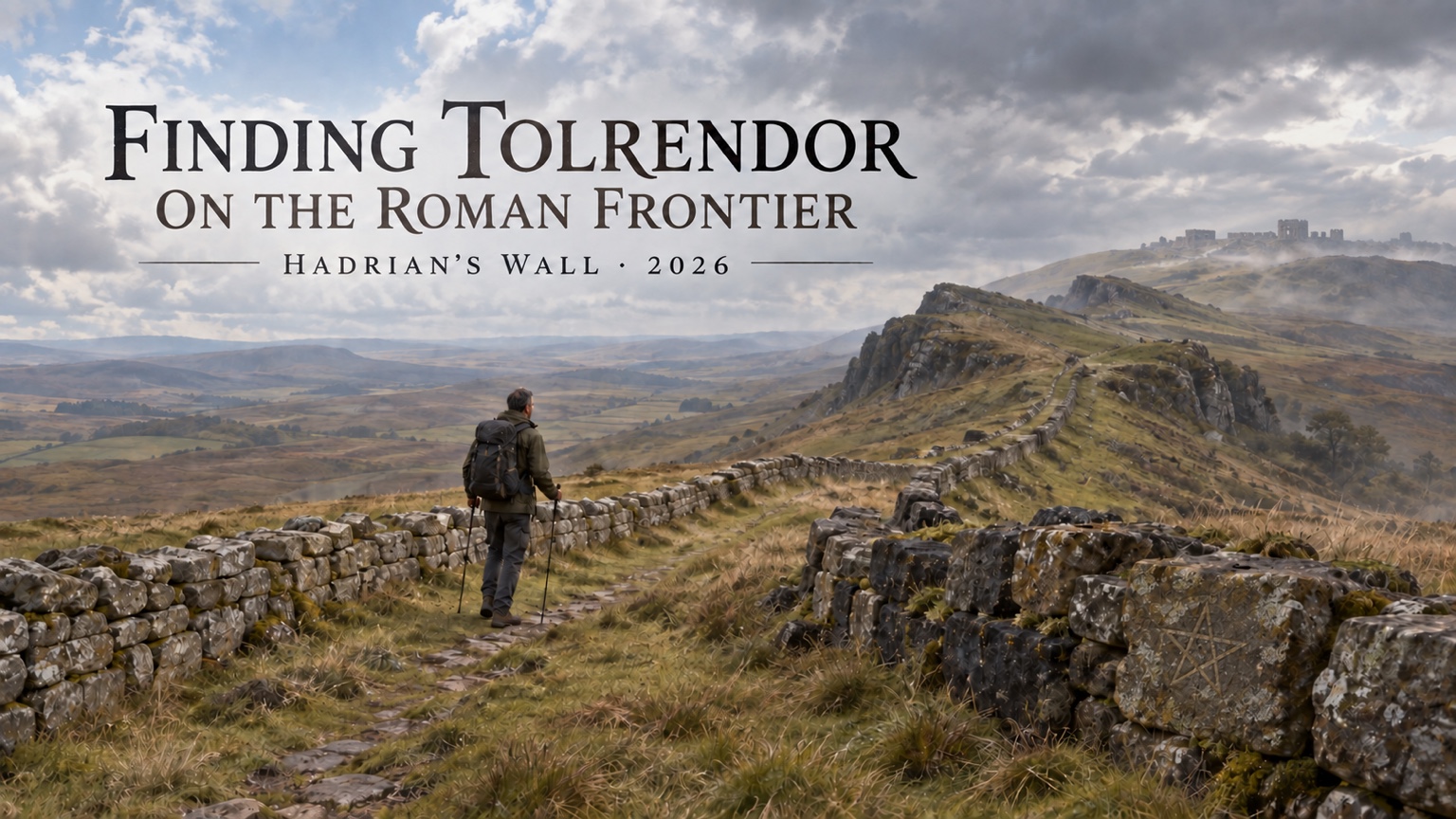
I’ll be walking across northern England, following Hadrian’s Wall from the Solway Firth to Wallsend.
A Different Kind of Journey
The walk itself begins on Wednesday at Bowness-on-Solway, the western end of Hadrian’s Wall Path.
From there I’ll spend nine days travelling west to east: through Carlisle and the Eden Valley, past Birdoswald, into the dramatic central Wall country around Walltown and the Whin Sill, and then onwards through the forts and sacred places of the eastern frontier before eventually reaching Segedunum at Wallsend.
Most nights I’ll be camping and carrying everything with me.
Hadrian’s Wall is often imagined as a single enormous stone barrier dividing Roman Britain from the wild lands beyond.
The reality is much more interesting.
The Wall was part of an entire frontier system: forts and milecastles, roads and bridges, watchtowers and settlements, supply routes, river crossings and customs points. Soldiers arrived from across the Roman world. Traders, families and local communities gathered around the forts. Temples and shrines appeared beside military roads.
The frontier wasn’t merely a line separating two worlds.
It was a landscape in which those worlds met.
Its character also changes dramatically along its length. In the west, the frontier begins amid the saltmarshes and immense skies of the Solway. Further east, the Wall rises onto the dark crags of the Whin Sill, using the land itself as part of its defences. Beyond that, the country gradually softens again as the route approaches the Tyne and the settlements that would become Newcastle.
That relationship between geography, political power and everyday life is exactly the sort of thing I want to understand.
Why was a fort placed here rather than somewhere else?
How did soldiers and supplies move through the frontier?
What grew outside the gates?
What happened when an imperial military landscape became home?
And, inevitably…
What if this place existed in Tolrendor?
The Frontiers of Fallen Empires
Tolrendor has never lacked empires.
Varandia once ruled much of the Inner Sea beneath its Dragonborn emperors and dragon overlords. The Samite Empire rose centuries later, absorbing kingdoms, cities and peoples before eventually fracturing into successor states of its own.
Their ruins already shape the modern world.
But empires are not defined only by their capitals, palaces and monuments.
They are also defined by their edges.
Somewhere, every empire must decide where its authority ends. It must control roads, rivers and mountain passes; watch the peoples beyond its borders; move troops and messages across immense distances; and persuade those stationed at the farthest edge of civilisation that the centre still matters.
Hadrian’s Wall offers a chance to think about that imperial edge as a complete landscape.
What would a Tolrendian frontier wall defend against?
Would it mark a true boundary between settled lands and wilderness, or merely an emperor’s attempt to impose a neat line upon a much messier world?
Who built it?
Who served there?
What gods did soldiers bring from distant provinces and worship in its forts?
What communities gathered beyond its gates?
And what remained after the empire that built it disappeared?
At the moment, I don’t know which frontier this will become.
That is rather the point of going.
What I’m Looking For
Over the nine days I’ll be visiting places such as Birdoswald, Vindolanda, Housesteads, Chesters and Segedunum, together with the smaller remains scattered between them.
Some of the most intriguing sites are not the great forts at all.
At Carrawburgh, a temple of Mithras and the nearby sacred spring associated with Coventina offer a glimpse of the beliefs carried to the frontier—and of older sacred landscapes that existed alongside Rome. Elsewhere, medieval churches, farms and villages stand on or beside the vanished Wall, sometimes incorporating its stone into buildings raised many centuries later.
That layering matters.
The Wall was built as an expression of imperial power. Later generations reused it, dismantled it, built over it and told new stories about it. What survives today is not simply Roman. It is the accumulated result of almost two thousand years of people living with the remains of Rome.
That feels very much like Tolrendor.
I’m not looking to create a fantasy copy of Hadrian’s Wall, with Roman names exchanged for invented ones and legionaries replaced by conveniently equivalent soldiers.
I’m looking for the ideas underneath.
Somewhere along that frontier, I suspect there is a place waiting to be found in Tolrendor.
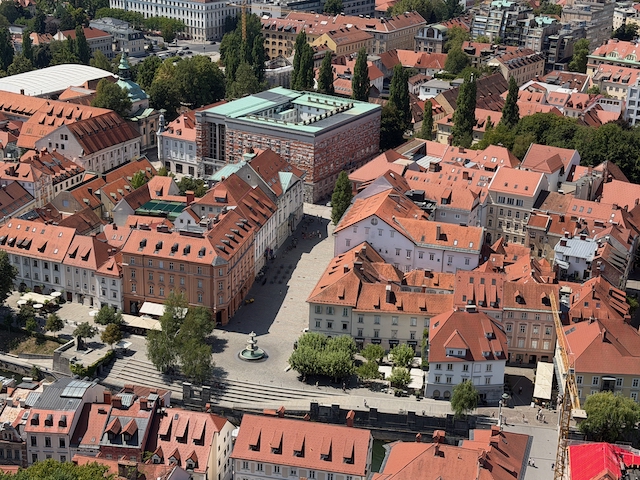
Ljubljana inspired several thousand years of history.
When I arrived in Slovenia’s capital, I was already travelling through the landscape that would eventually become the inspiration for a large, still mostly blank region of Tolrendor. I had always imagined this part of Tolrendor, north of Varandia and the Akayin peninsula, as having something of a Central European character, but beyond a few lines on a map, I’d never really worked out what that meant.
Ljubljana started to answer the question.
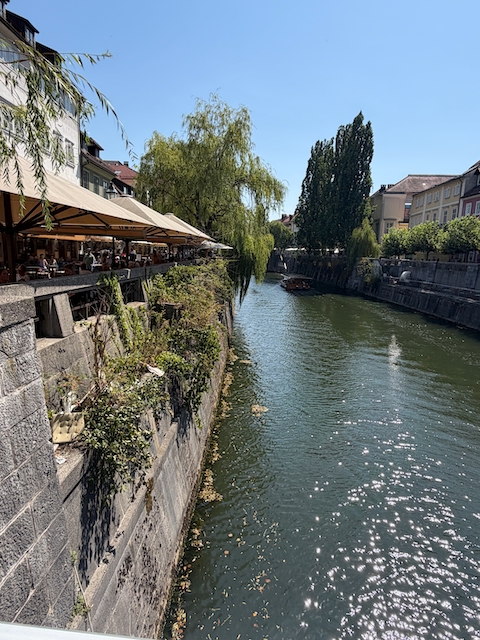
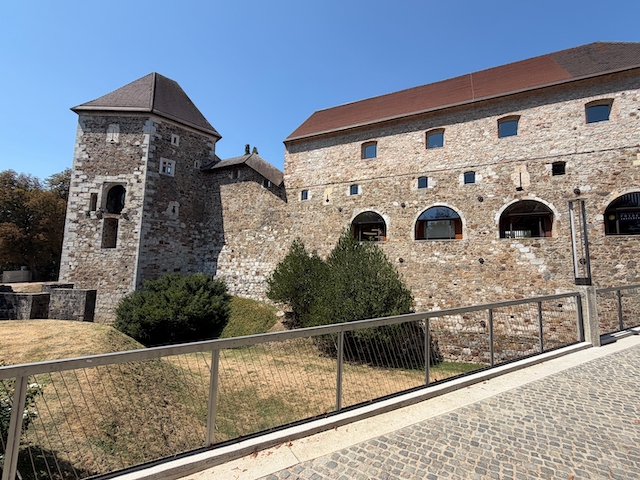
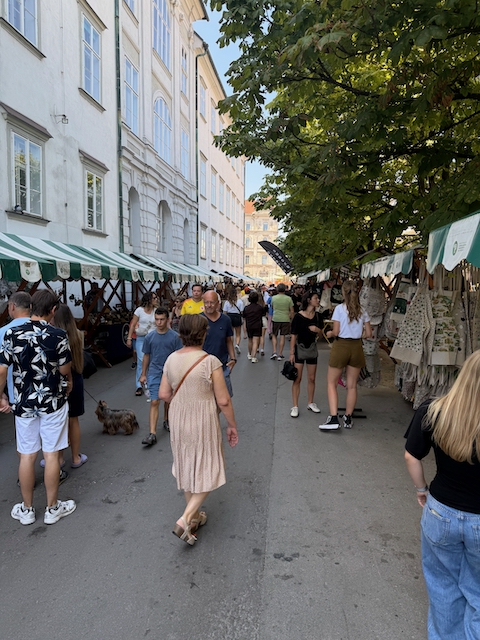
It is an extraordinarily appealing city. A river winds through its centre beneath bridges crowded with pedestrians. Markets spill out alongside it. Streets and squares gather around the water rather than turning their backs upon it. Above everything sits the castle, looking down from its wooded hill.
But what really interested me was its position.
Ljubljana sits at a natural crossroads between different parts of Europe: the Alps and the Balkans, the Adriatic and the Danube basin, the Latin, Germanic and Slavic worlds. That geography has repeatedly made the region a meeting place between cultures and empires.
Standing there, I realised that Tolrendor needed somewhere like that.
A crossroads.
Finding Velsar
On my still very incomplete continental map of Tolrendor there is an enormous amount of unexplored territory north of Varandia.
Several hundred miles north and somewhat east of the Isle of Varandia, the geography begins to provide exactly the sort of location I was looking for.
Rivers coming from the north and east meet routes leading south towards the old Varandian lands and the Akayin peninsula. Mountains and broken country constrain travel into natural corridors. Beyond lie routes eventually connecting with the great waterways leading towards Ailavaara and the northern world.
Put a reliable river crossing there and people will use it.
Protect that crossing and people will settle there.
Connect it to several thousand years of Tolrendor’s history and you get Velsar.
Today Velsar is the capital of a small but prosperous duchy of the same name. Its territory is modest. Its importance isn’t.
Merchants, pilgrims, mercenaries and adventurers travelling between northern and southern, eastern and western Tolrendor have been passing through Velsar for longer than anyone can reliably remember.
But the city began long before there was a Duchy of Velsar.
Perhaps even before there were kingdoms.
Before the Empires
This took me back to a period of Tolrendor’s history that I’ve been slowly developing for years.
After the Sundering and the great conflicts of the Age of Strife, the world did not suddenly become safe.
The greatest powers might have been defeated, imprisoned or driven away, but their remnants remained. Monsters and other things born during those ancient struggles still wandered the world. Civilisation existed only in scattered pockets. Many of Tolrendor’s peoples were simply trying to survive.
This was the beginning of the Age of Heroes.
The gods themselves bore at least some responsibility for the catastrophe that had befallen the world. Unable to intervene again directly, they sent a small number of divine emissaries into the mortal world to aid their beleaguered worshippers.
Scholars know these as the First Lights.
Each was bound to a divine purpose and to the mortal cycle itself. They lived mortal lives and could die, only to be reborn in another form, carrying fragments of memories from their previous lives.
Around some of the First Lights gathered other heroes, forming the Bright Orders.
These weren’t necessarily knightly orders in the later medieval sense. They were companies of champions gathered around a purpose: destroy a particular horror, guard a people, protect a route, maintain an ancient seal, cleanse a corrupted land.
One of those Orders came to the river valley where Velsar would eventually stand.
Its name is now uncertain.
So, perhaps, is precisely what it was sent there to do.
What survives in the oldest stories is that a First Light and their companions established a fortress upon the hill overlooking the river crossing.
Beneath its protection, people gathered.
A settlement grew.
And that was the beginning of Velsar.
When Heroes Became Rulers
The Age of Heroes eventually gave way to something new.
The Age of Empire.
The first great empire to emerge in this part of Tolrendor was Varandia: the Dragonborn civilisation whose ruins still dominate much of the region to the south.
There is an irony here.
One tradition holds that Varandia itself grew from a Bright Order.
Its founders had protected people through the terrible centuries after the Sundering. They created safe settlements. They defeated monsters. They brought order where none had existed.
And eventually they began to ask a dangerous question.
If they could protect people, perhaps they could govern them too.
The change was not necessarily malicious. Indeed, for centuries the result may have been overwhelmingly beneficial. Roads became safe. Trade flourished. Law replaced feud. Settlements became cities.
But service had become authority.
Authority became government.
Government became empire.
When Varandia eventually reached the valley of Velsar, it found another Bright Order already performing much the same role its own distant predecessors once had.
So Varandia didn’t destroy it.
It offered it power.
The Order retained its fortress and its traditional influence over the surrounding communities. Varandia simply recognised that influence, expanded it and incorporated the Order into the imperial hierarchy.
The guardians of the valley became its rulers.
The Dragon Above Velsar
Varandia was a Dragonborn empire.
But behind the Dragonborn stood dragons.
The relationship between the two is something I’m still developing, but the great dragons were far more than beasts lurking in caves. Some occupied positions of enormous political and social authority within Varandia.
Velsar became the domain of one such dragon.
And perhaps surprisingly, this wasn’t necessarily a disaster.
The dragon recognised what the geography offered.
The old river crossing was improved. Varandian roads converged upon it. Engineers strengthened the bridge, walls and river defences. Markets expanded. Warehouses appeared beside the water. The old fortress of the Bright Order was rebuilt and enlarged.
The geography had created the crossing.
The Bright Order had made it safe.
Varandia made it important.
Over centuries, the original Order itself gradually disappeared into the institutions of the Empire. Its purpose had been fulfilled. Perhaps, their ancient charge finally complete, the Order’s First Light simply passed from the mortal cycle.
The fortress remained.
By then, however, it was simply the castle above a thriving Varandian city.
The Fall of the Dragons
Nothing lasts forever in Tolrendor.
Varandia’s final wars were catastrophic.
Its great conflict with a rival empire to the south and east eventually devastated the heartlands of both powers, leaving behind the magically scarred wasteland still known as the Blight.
Velsar was far enough away to escape the worst of that destruction.
Its dragon overlord was not.
When Varandia summoned its forces for the final wars, the dragon left Velsar and flew south.
It never returned.
Eventually word reached the city that it had been slain.
And in the political vacuum that followed, Velsar rebelled.
The Dragonborn regime that had ruled the city for centuries suddenly lacked both its imperial authority and its overwhelmingly powerful patron. Human factions seized control. Governors were overthrown. Estates were confiscated. Imperial symbols were torn down.
Not every Dragonborn disappeared. Their descendants can still be found in Velsar today.
But Dragonborn rule ended.
And the dragons suffered a peculiar fate.
The Dragons in the Rain
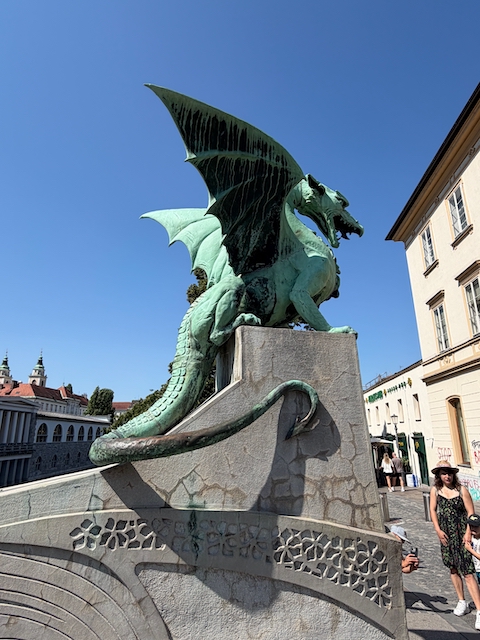
Ljubljana is famous for dragons.
There is one on its coat of arms. Dragons stand proudly on the Dragon Bridge. They have become one of the symbols of the city.
Velsar has dragons too.
Hundreds of them.
But Velsar’s dragons aren’t standing proudly upon pedestals.
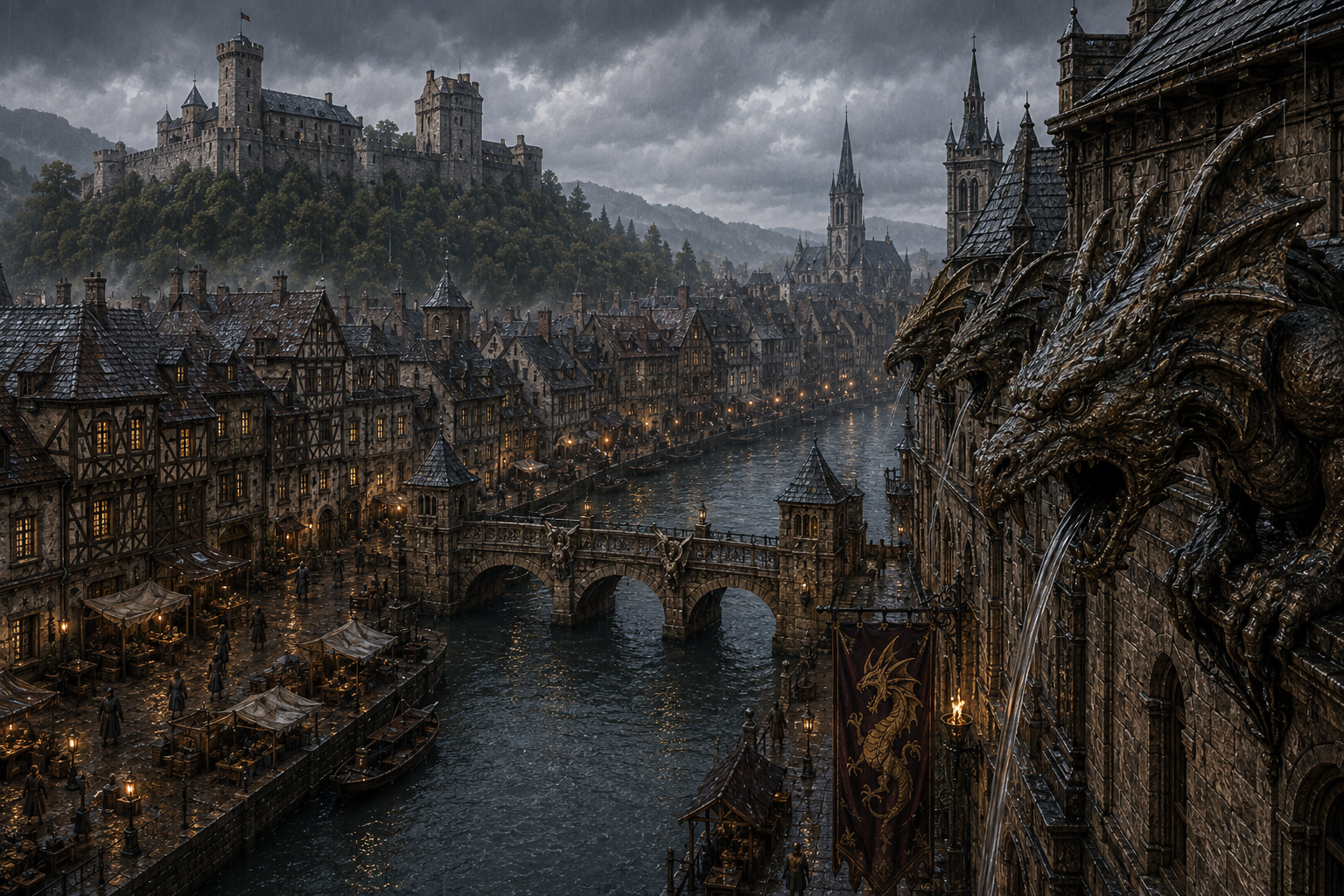
They’re gargoyles.
During the Varandian period, dragons had appeared throughout the architecture of Velsar. They adorned civic buildings, bridges, palaces and gates as symbols of imperial authority and of the city’s own draconic overlord.
After the revolution, the most important statues were destroyed.
But there were simply too many dragons to remove them all.
So the people of Velsar began doing something rather more pointed.
They recarved them.
Dragons that had once represented rulers became grotesques. They crouched beneath roofs. They clung to walls. Stone dragons were made to carry gutters and spit rainwater into the streets below.
The symbolism was unmistakable.
Dragons no longer ruled Velsar. Dragons served Velsar.
And then the insult became a tradition.
Centuries after anyone seriously feared the return of Varandia, architects continued putting dragon gargoyles on buildings because that was simply what buildings in Velsar looked like.
Different ages added different dragons.
Elegant Akayin beasts stare from the cornices of merchant houses. Grim northern dragons cling to old fortifications. Harondin craftsmen have added their own interpretations. Some are terrifying. Some are ridiculous. Children have favourites.
When it rains, water pours from dragon mouths all over the city.
Most visitors assume they are simply Velsar’s symbol.
The people of Velsar know better.
Between Empires
Independence after Varandia wasn’t straightforward.
To the north and west, Reinbergen emerged as one of Varandia’s successor states. Its rulers regarded themselves as inheritors of parts of the old imperial order — including, inconveniently, Velsar.
Over the following centuries the city moved repeatedly in and out of Reinbergen’s orbit.
Sometimes its independence was real.
Sometimes theoretical.
Sometimes a Reinbergen lord occupied the castle while the merchants below behaved as though nothing particularly important had happened.
Meanwhile another power was rising much further south.
The city of Samos had grown from Akayin origins into the centre of what would become the Samite Empire.
Samos never conquered Velsar.
But it didn’t need to.
As the Samites absorbed much of the Akayin world, their influence travelled north. Samite coins passed across Velsar’s markets. Akayin merchants established houses beside its river. Architecture, law, food and fashions followed.
Velsar learned something that would become central to its survival.
When Reinbergen became too interested in the city, friendship with the Samites suddenly seemed extremely attractive.
When Samite influence became uncomfortable, the ancient ties with the north were rediscovered.
Velsar became very good at being useful to everyone and owned completely by no one.
And it remained that way for centuries.
The Harondin Come West
The final major ingredient in modern Velsar arrived surprisingly recently.
About two centuries ago, groups of Harondin moving westwards through Tolrendor’s river systems reached the region.
Other Harondin migrations had followed the great waterways south and west towards the Inner Sea, eventually contributing to kingdoms such as Norbaer and Loronder.
This branch followed the rivers west.
They didn’t arrive in an empty country.
They found an ancient city whose people already carried thousands of years of history.
And, as the Harondin have a habit of doing, they eventually supplanted the existing political regime without replacing the existing population.
The modern Duchy of Velsar emerged from that takeover.
Its Duke, court and much of its martial aristocracy are Harondin in culture and ancestry. Harondin speech, fashions and traditions have become increasingly prominent.
But Velsar itself is not a Harondin city.
Nor is it Varandian.
Or Akayin.
Or Reinbergian.
It is all of them.
The Crossroads
And that’s what Ljubljana finally unlocked for me.
I already knew that this part of Tolrendor would have something of a Central European flavour. What I hadn’t worked out was what that actually meant.
The answer isn’t to create fantasy Slovenia, Austria, Hungary or Bohemia.
It’s to take the thing that made Ljubljana interesting to me in the first place:
the crossroads.
Velsar is a city where geography has repeatedly forced different peoples and cultures into contact.
Its castle began as the fortress of heroes.
Its oldest streets follow Varandian roads.
Its roofs are covered with the humiliated dragons of a revolution more than a thousand years old.
Its markets still carry the legacy of centuries of Akayin and Samite trade.
Its aristocracy arrived only two centuries ago.
And through the middle of it all flows the river that brought almost everyone here in the first place.
That’s the lesson I’m increasingly taking from this journey.
Finding Tolrendor in Europe isn’t really about finding places I can reproduce on a fantasy map.
One of the dangers of travelling with a fantasy world permanently lurking somewhere in the back of your mind is that eventually you stop seeing places simply as they are.
You start seeing what they could be.
That happened almost immediately in Split. I had barely begun this journey before Diocletian’s Palace was already being dismantled and rebuilt in my imagination as Karsos: an ancient Varandian imperial complex, abandoned after the fall of the empire and eventually reclaimed by pirates, merchants and refugees.
A few days later, I took the short boat journey along the coast to Trogir.
And almost immediately it happened again.
A City on an Island
Trogir is tiny.
That was probably the thing that struck me most strongly.
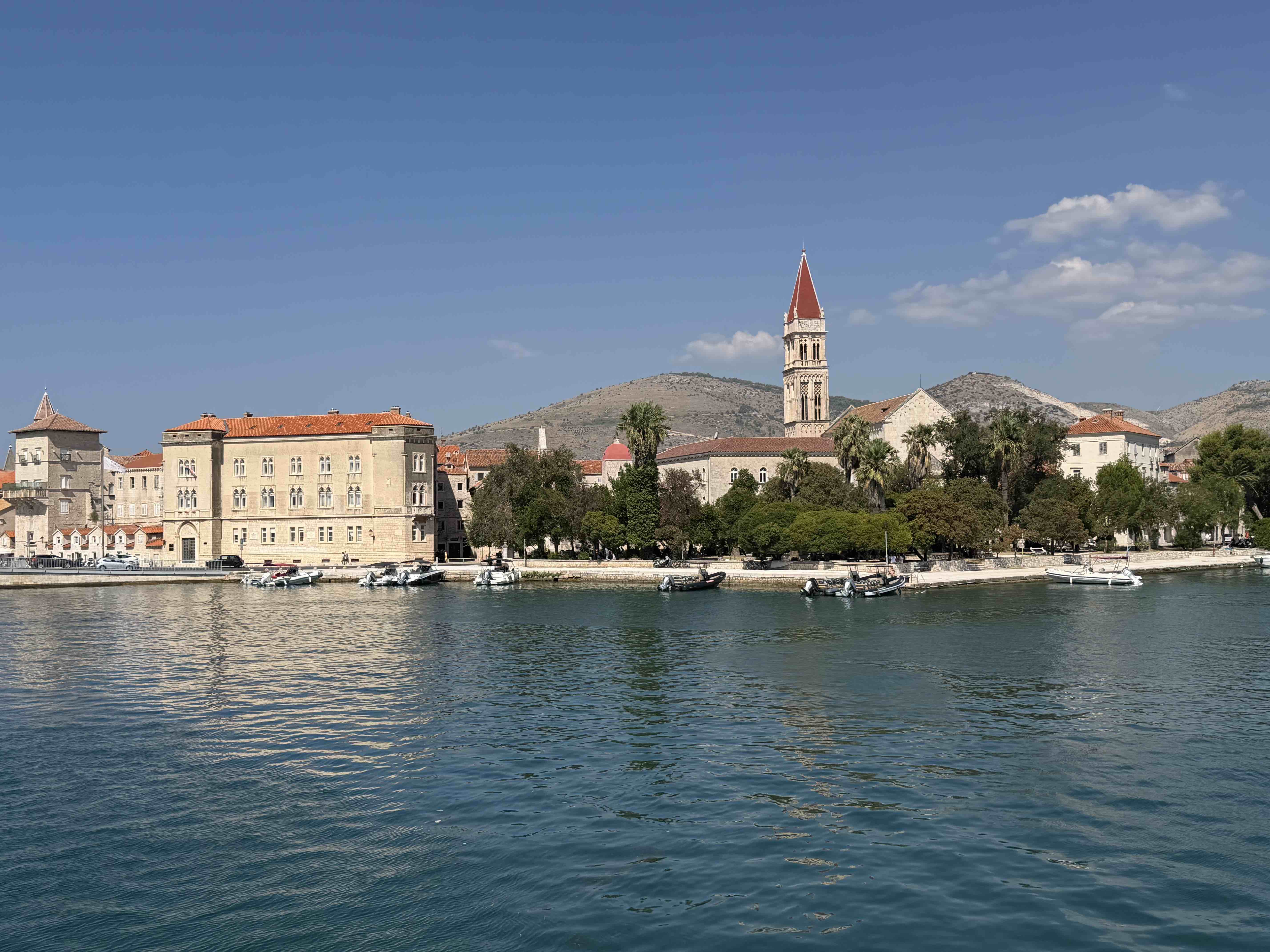
The historic city occupies a small island squeezed between the Croatian mainland and the much larger island of Čiovo. You can walk from one side to the other in minutes.
And yet an extraordinary amount of city has been compressed into that little space.
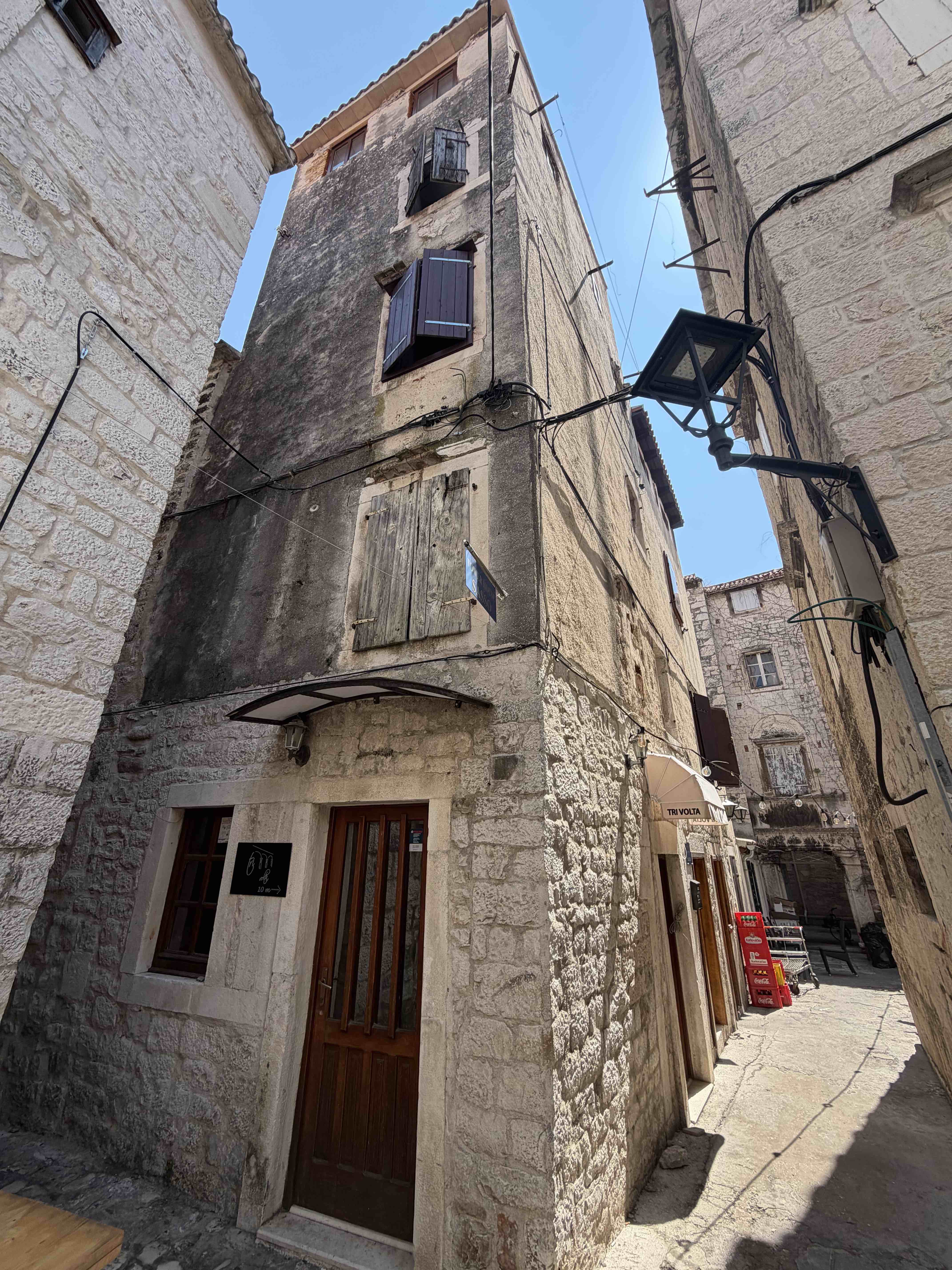
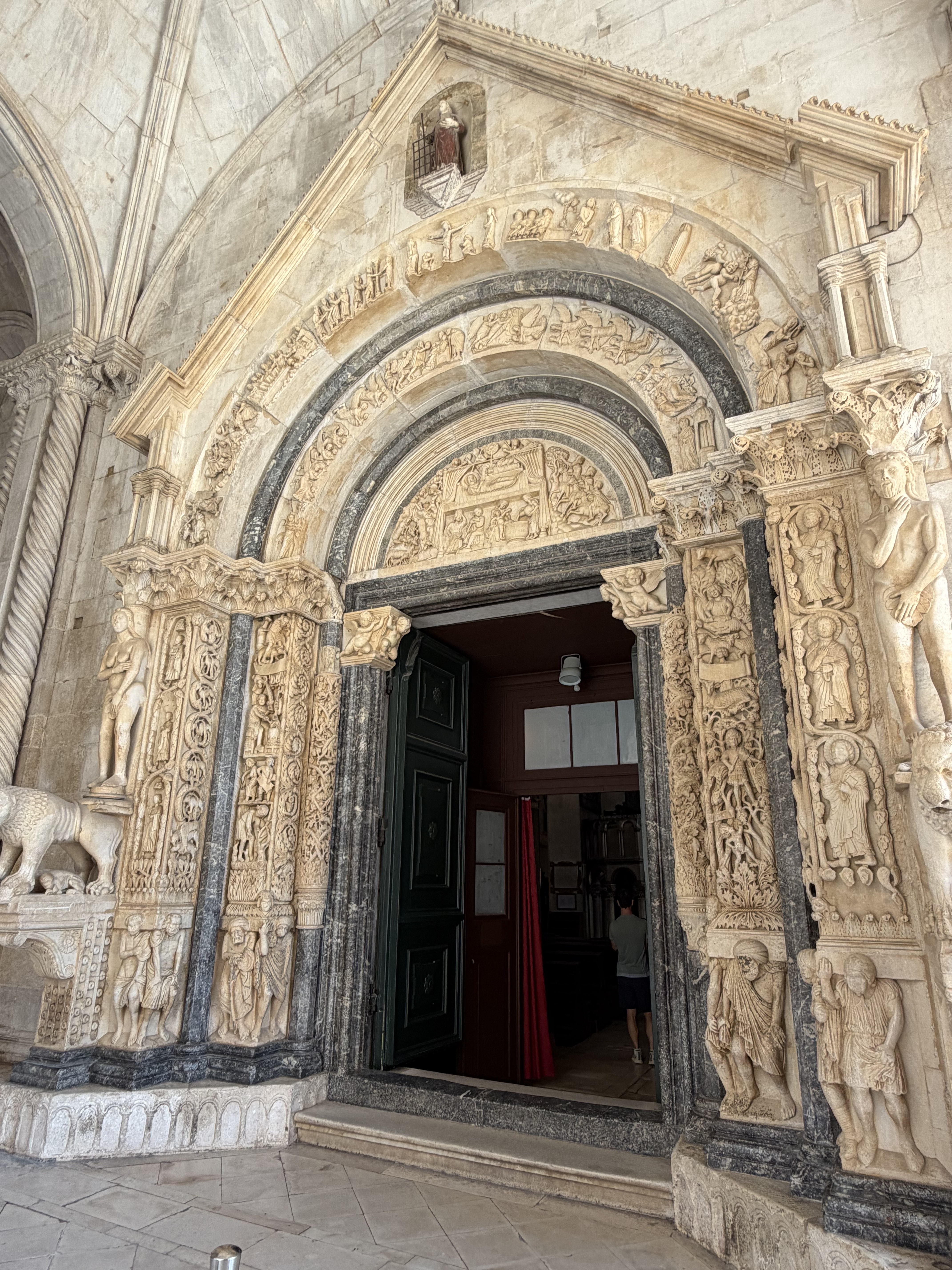
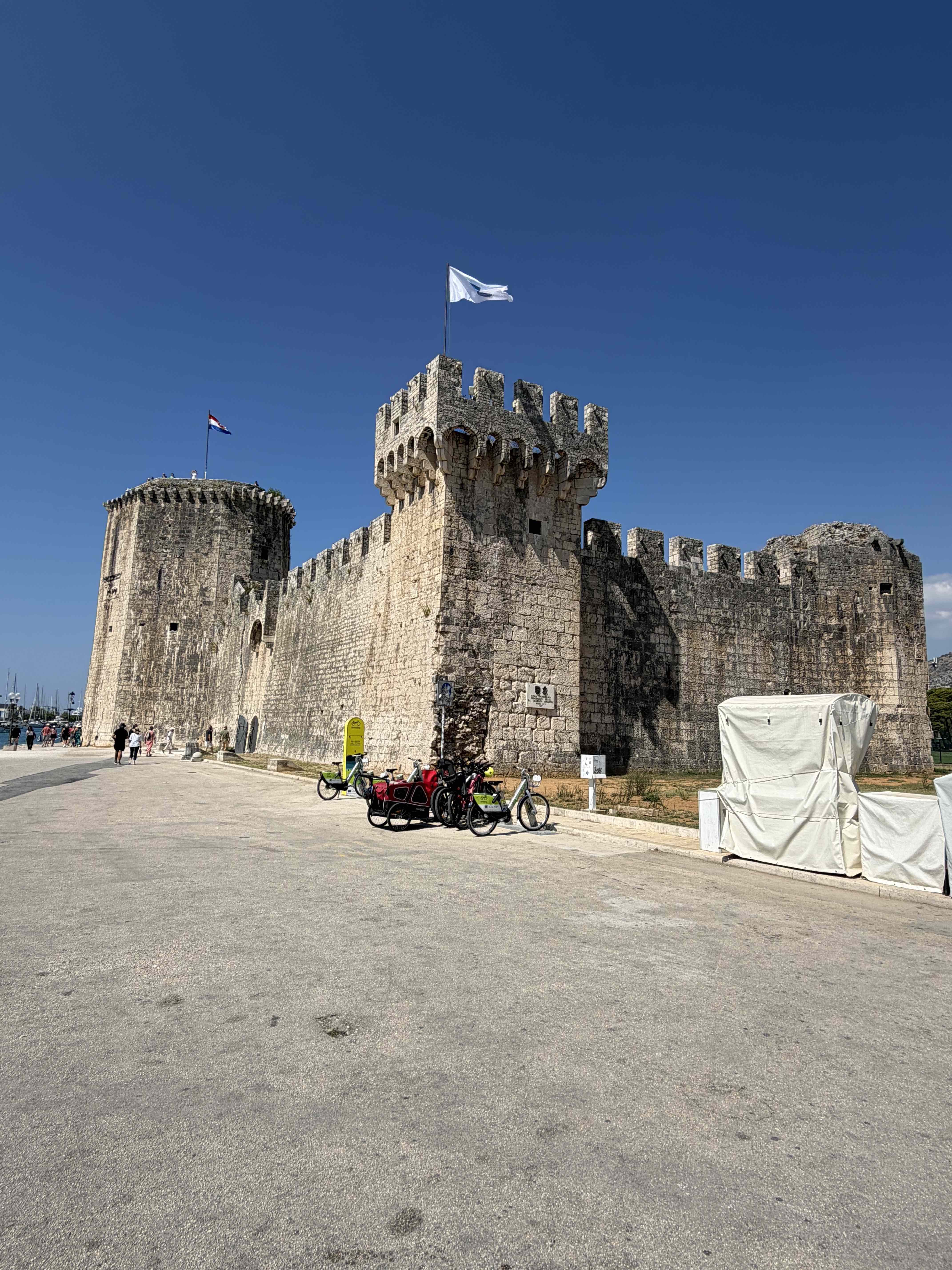
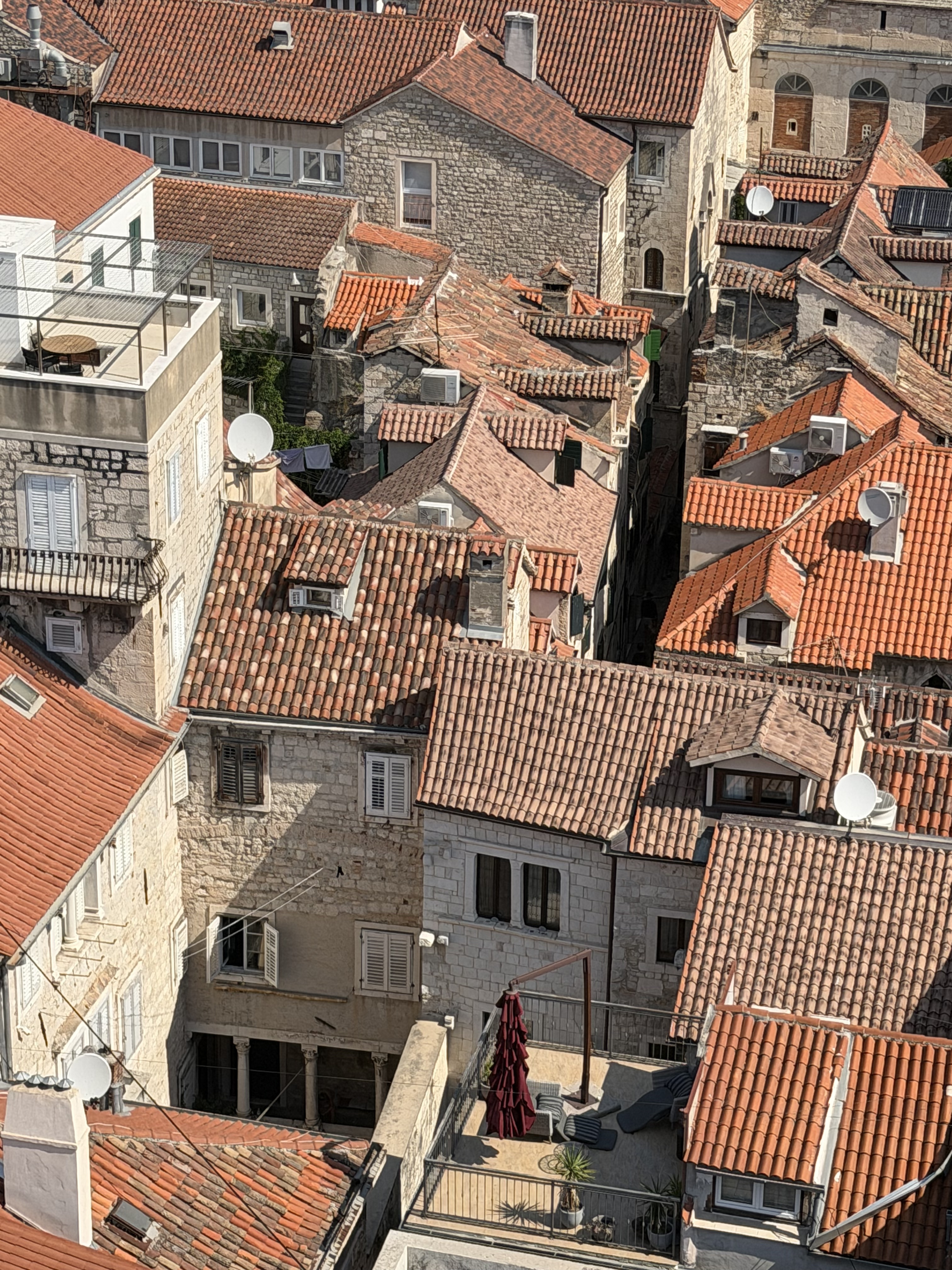
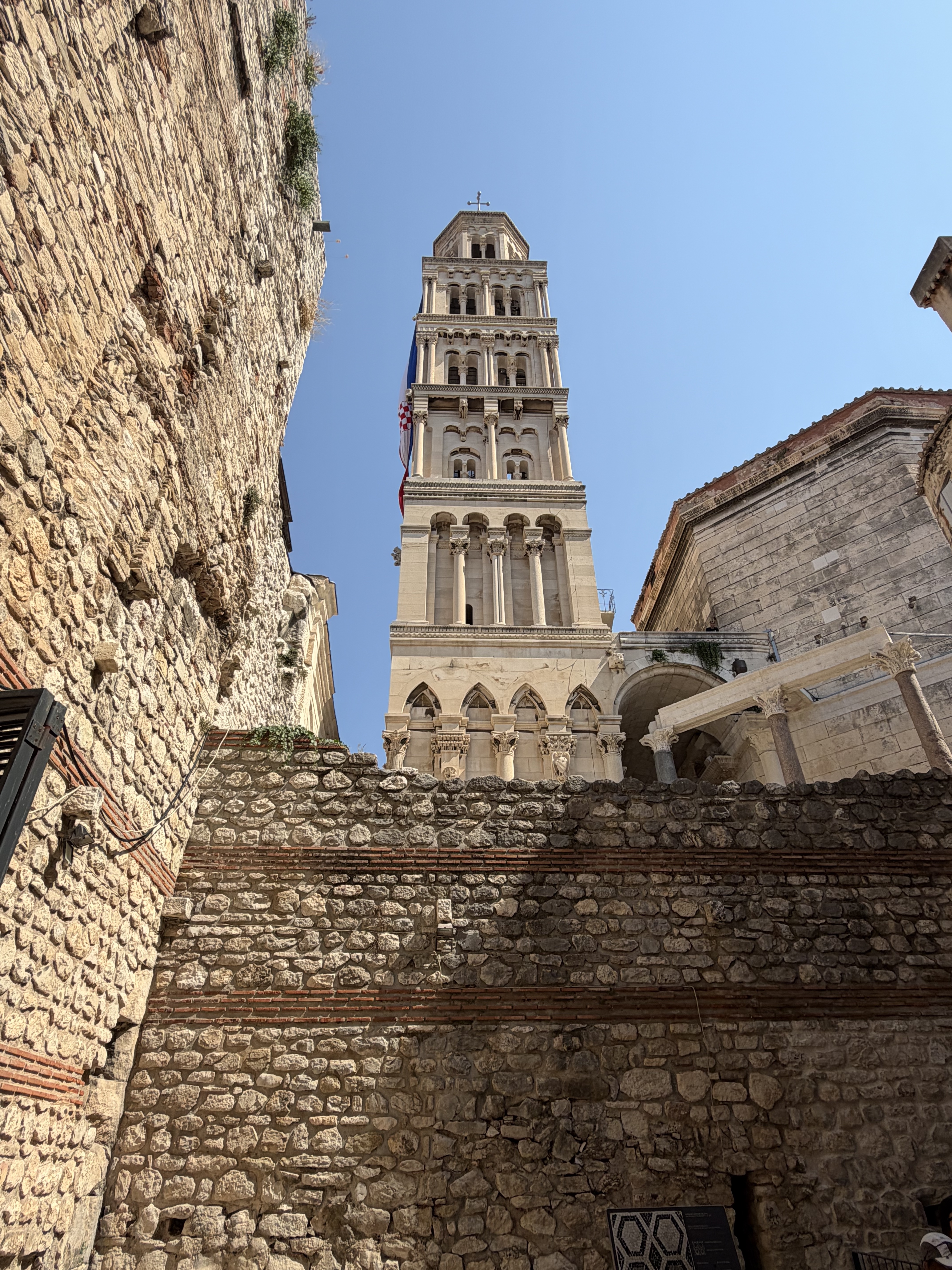
There are narrow stone streets and tiny squares, medieval houses packed almost wall-to-wall, churches, palaces and towers. At the western end, Kamerlengo Fortress guards the waterfront. Above everything rises the bell tower of the Cathedral of St Lawrence.
From street level, Trogir feels like a maze.
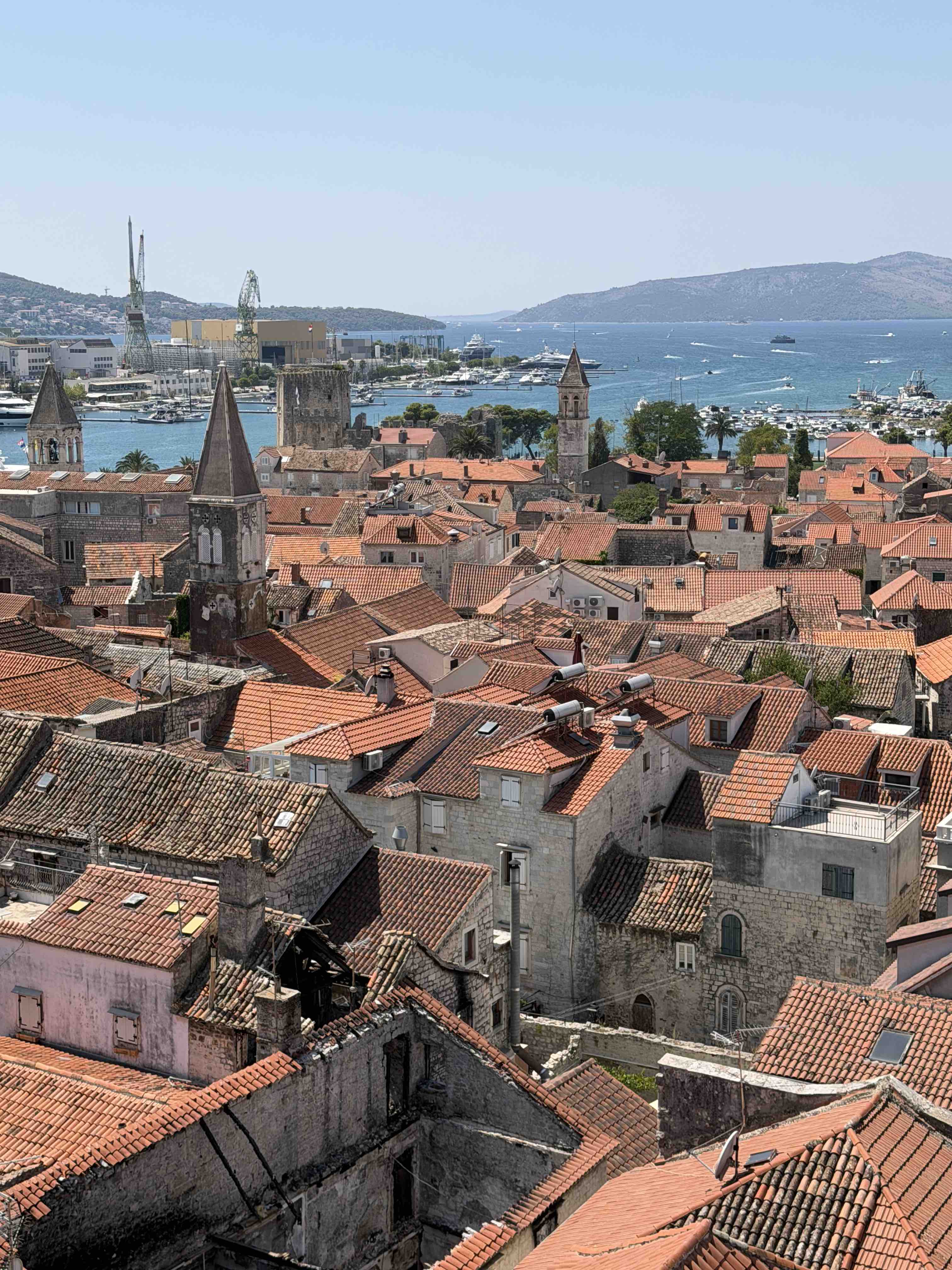
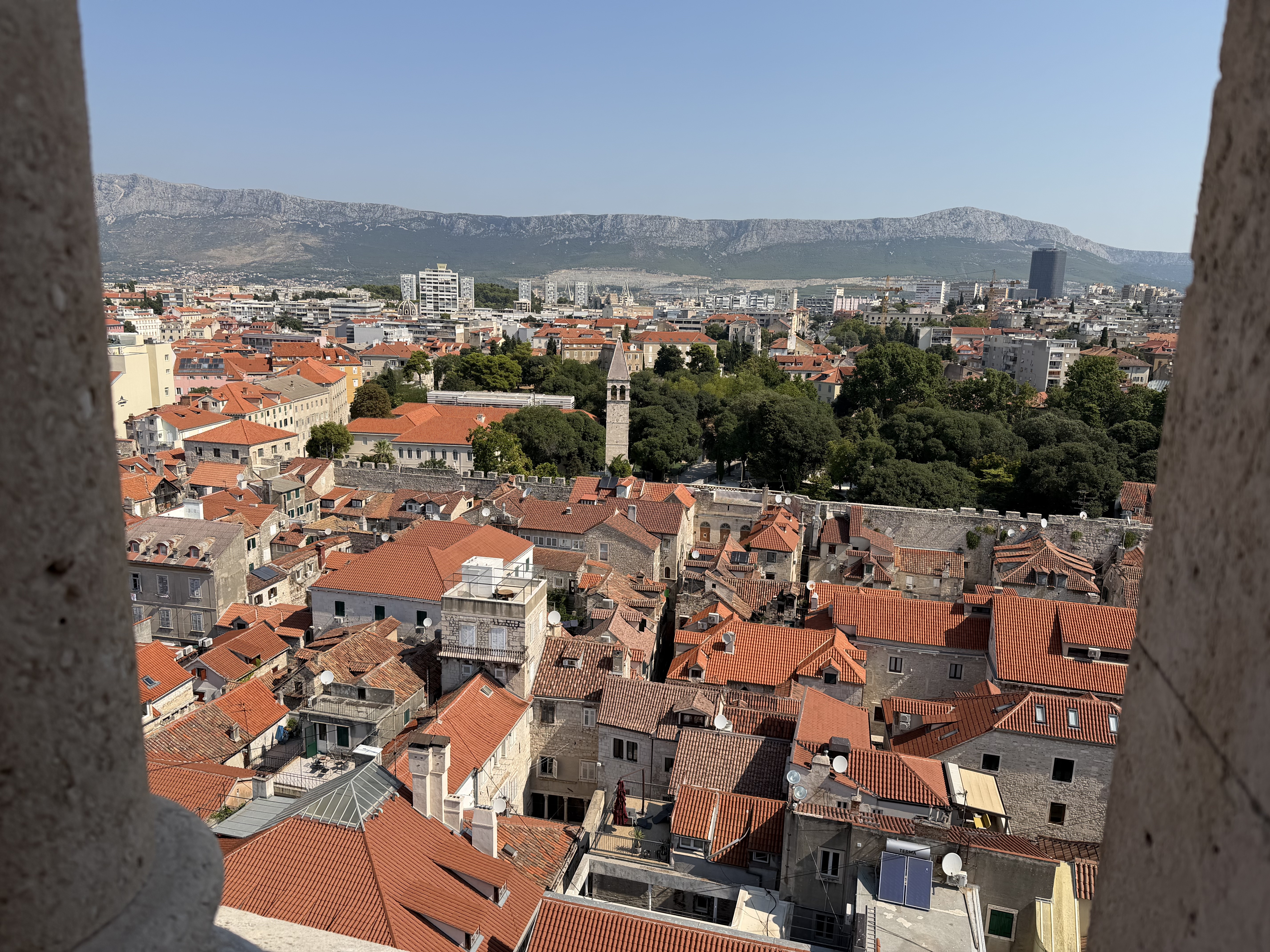
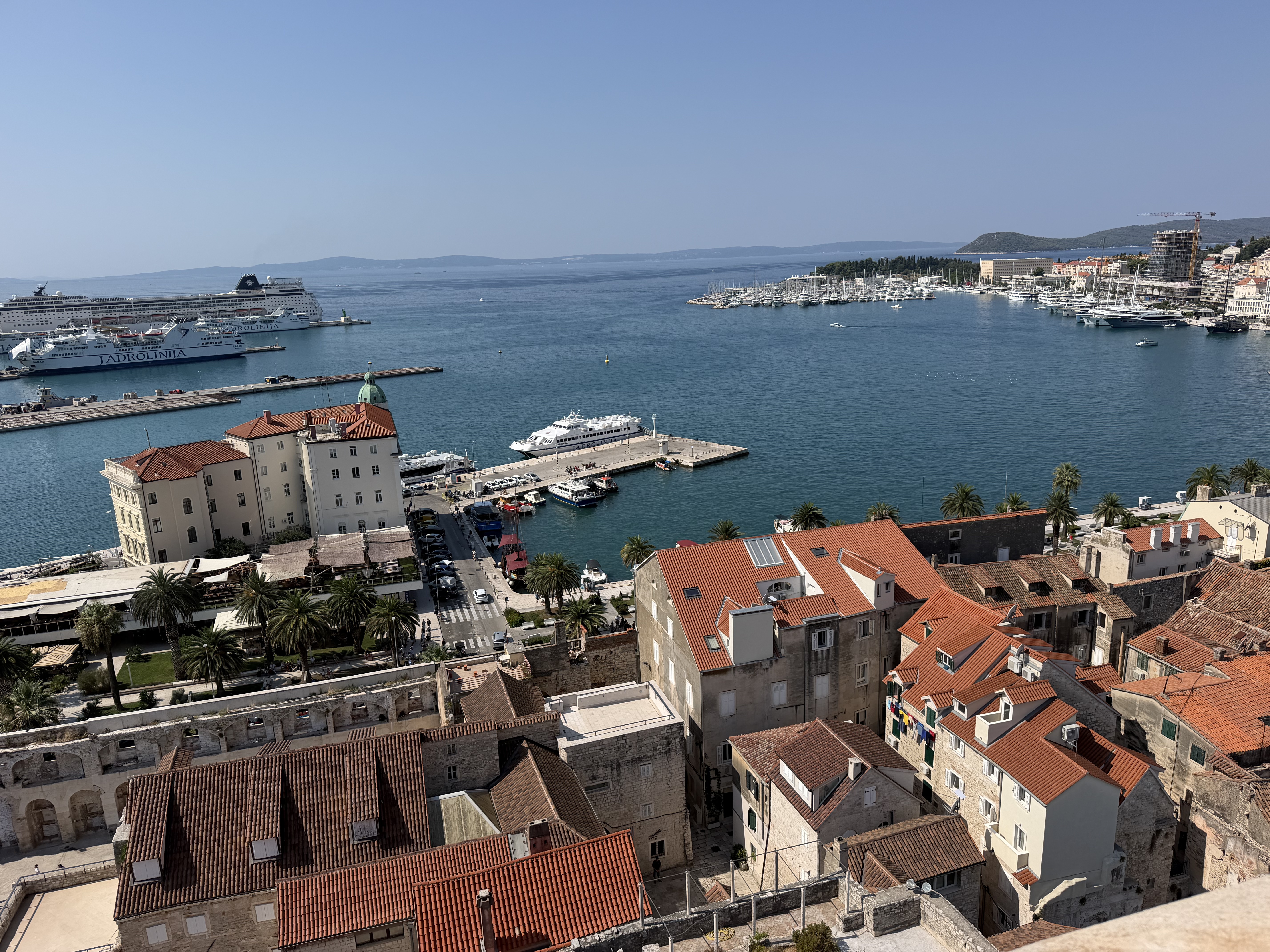
Climb above the rooftops and suddenly the whole thing makes sense.
The red-tiled roofs spread out beneath you, bounded on every side by water. Beyond them are the harbour, the mainland, the hills and the larger island across the channel.
It is a wonderfully legible piece of geography.
And looking down from those towers, I realised that I already had almost exactly the right place for something like it in Tolrendor.
Back to Varandia
Karsos, inspired by Split, lies on the southern coast of the ruined Isle of Varandia.
Varandia was once the heartland of one of the great powers of the ancient world: the Dragon Empire.
Its end was catastrophic.
A magical war between Varandia and a rival empire to the south and east devastated the heartlands of both powers. Much of Varandia became the Blight, a magically scarred wasteland where even centuries later magic behaves unpredictably and the remains of once-great cities lie abandoned.
The catastrophe effectively emptied the heart of the old empire.
But perhaps not quite all of it.
Looking at my map, just a short distance west of Karsos is a tiny island sitting immediately off the Varandian coast. Beyond it lies another, somewhat larger island.
I’d drawn them years ago.
They had never really been anything more than shapes on the map.
Trogir gave them a purpose.
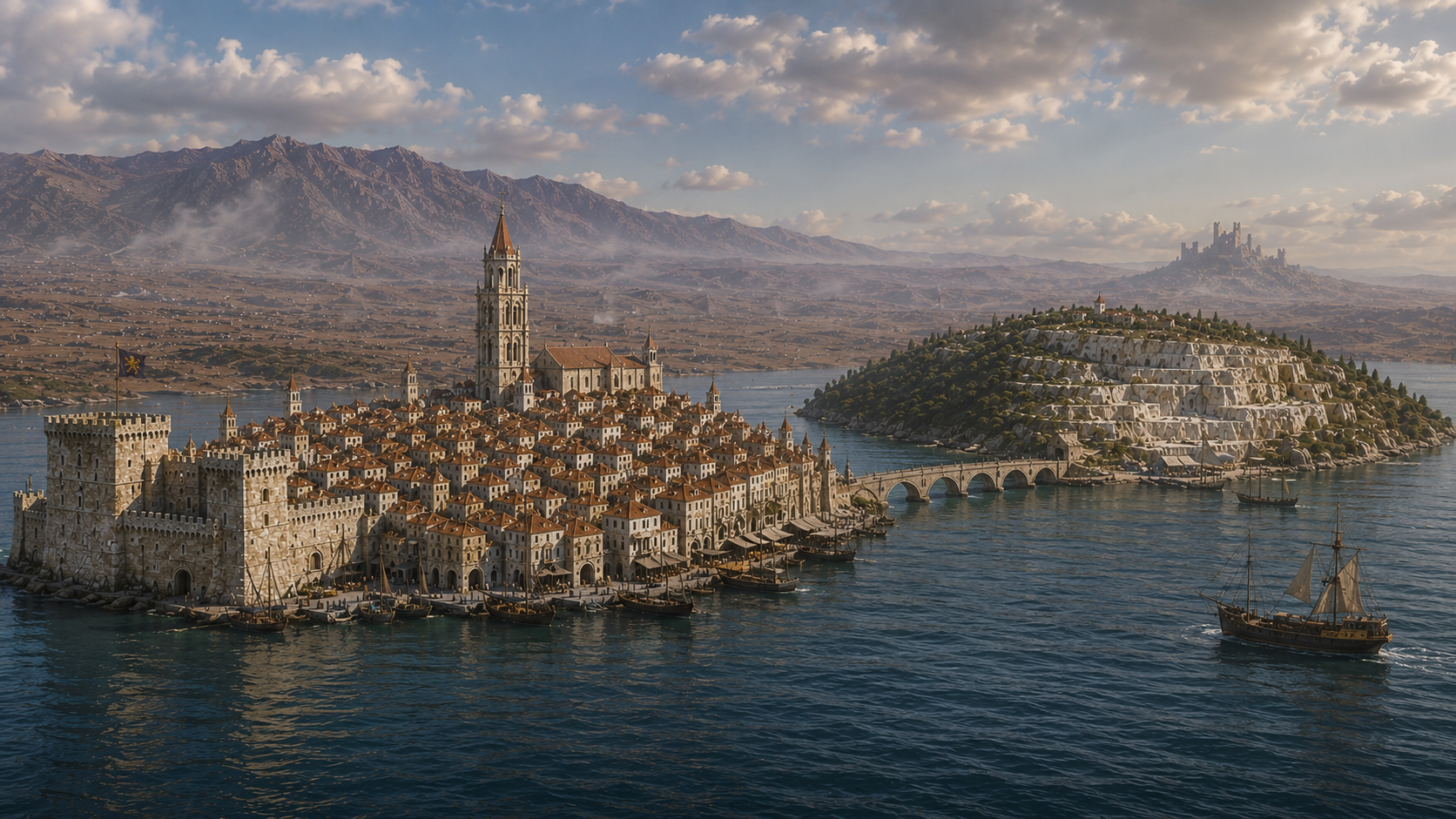
The little island became Talovar.
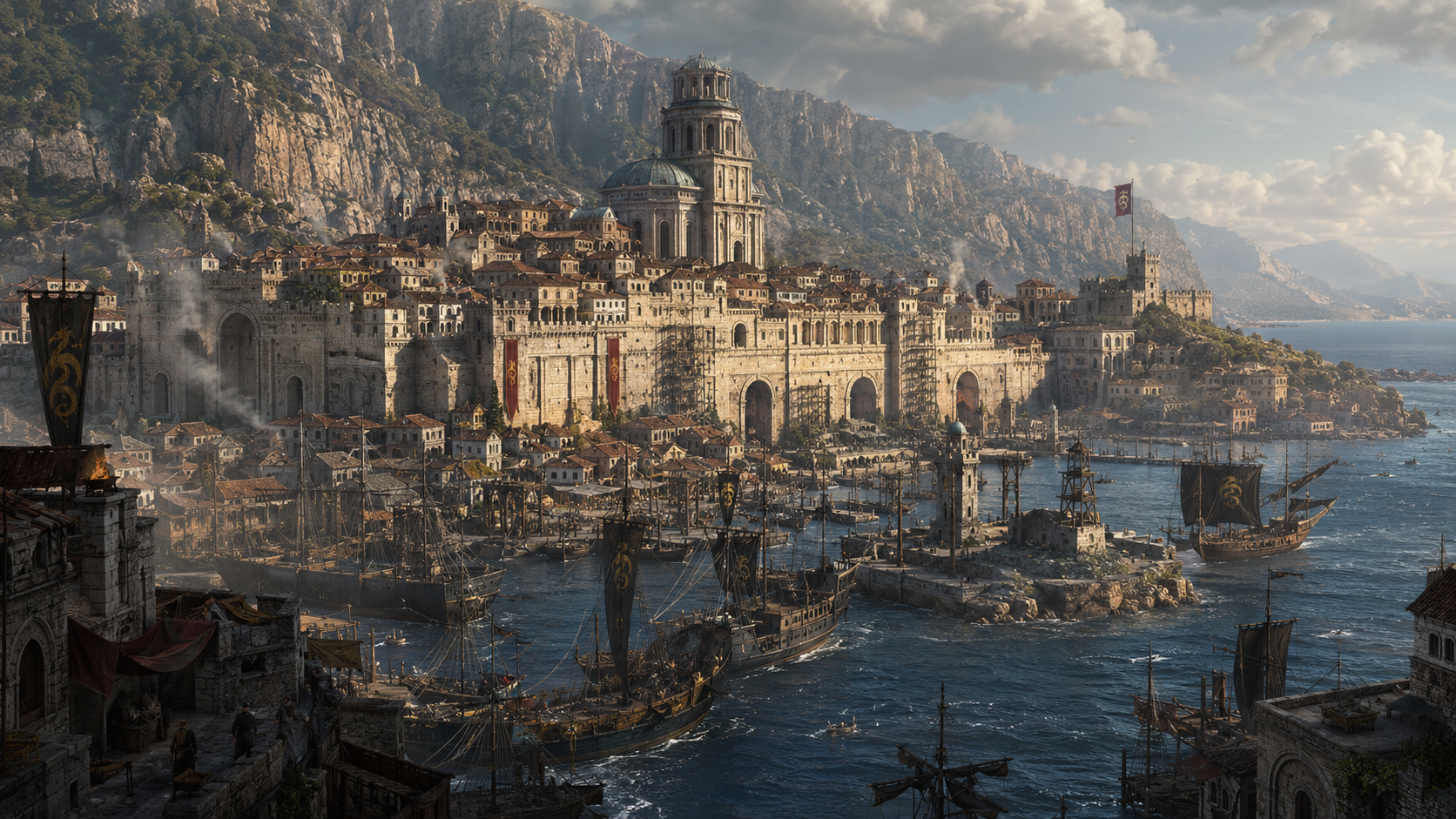
Talovar concept – AI generated
The Marble City
Talovar predates Karsos by many centuries.
In the days of the Dragon Empire it was a small but prosperous Varandian city, occupying an island just offshore and connected by bridges to both the mainland and the larger island beyond.
Its importance came from stone.
The larger island contained rich deposits of a pale marble prized throughout Varandia. Quarries cut deep into its hills, while Talovar became the port through which the stone passed on its way to temples, palaces and monuments across the empire.
It was never one of Varandia’s great cities.
It didn’t need to be.
It was a busy little quarry port, comfortably protected by imperial power and connected to a trading network stretching across the Inner Sea.
Then the world ended.
Surviving the Blight
The magical devastation that destroyed Varandia transformed Talovar almost overnight.
The mainland beyond the bridge became increasingly dangerous. Roads which had once carried carts of stone and food inland now led towards abandoned settlements and magically scarred wilderness.
Trade collapsed.
The quarries largely fell silent.
And the empire which had governed Talovar simply ceased to exist.
But Talovar itself survived.
Perhaps being separated from the mainland by that narrow strip of sea spared it from the worst of the catastrophe. Perhaps it was simply luck.
Whatever the reason, the people remained.
For generations Talovar became poorer, smaller and increasingly isolated. Great Varandian buildings were stripped for their stone. Marble which had once been intended for imperial monuments became doorsteps, harbour walls and houses.
The city learned to live from the sea.
More importantly, it learned to govern itself.
That experience became fundamental to the Talovari sense of who they were.
Empires might rise and fall around them.
Talovar endured.
Conquerors Come and Go
Eventually ships returned.
To the west, the Akayin peoples who had spent centuries beneath Dragon rule were building cities and kingdoms of their own.
Trade across the Inner Sea revived, and Talovar slowly became part of that world.
Its independence did not last forever.
One of the expanding Akayin city-states eventually brought the little port under its control. Later still, that state — and Talovar with it — was swallowed by the growing Empire of Samos.
The Samite Empire eventually dominated almost the entire Inner Sea.
Yet even the Samites largely avoided the Blight.
Talovar therefore occupied an unusual position: an imperial city sitting on the very edge of territory the empire nominally claimed but had little desire to govern.
Its ancient civic institutions survived. Its merchants prospered again. The marble trade revived, although never on the scale it had enjoyed under Varandia.
And among its increasingly cosmopolitan population remained an unusually large number of Dragonborn families.
Some claim descent from Talovari citizens who survived the fall of Varandia itself.
Their archives, traditions and stories preserve fragments of the old empire that have disappeared almost everywhere else.
Then Samos fell too.
And once again, Talovar found itself free.
Thelin
Unfortunately for the Talovari, history has an irritating habit of repeating itself.
Today Talovar belongs to Thelin, one of the Akayin successor states which emerged from the wreckage of Samite power.
The conquest is recent enough to remain uncomfortable.
A Thelin governor occupies the city. Thelin soldiers man its walls. And at the western end of the island stands a great stone fortress overlooking the harbour — both protection against attack and a very visible reminder of who currently rules Talovar.
The relationship isn’t entirely hostile.
Thelin protects the sea lanes. Its markets bring wealth. Some Talovari merchant families have become considerably richer under its rule.
But the city remembers governing itself.
Indeed, it has governed itself several times.
There is an old saying in Talovar that empires eventually leave.
The Talovari merely have to wait.
The Upstarts Along the Coast
Which brings us back to Karsos.
Karsos is almost the opposite of Talovar.
Talovar survived the fall of Varandia.
Karsos was born from it.
For centuries the enormous ruined imperial complex at Karsos remained largely abandoned. Under Samos there was little reason to settle such a dangerous corner of the old Varandian coast.
But when Samite authority collapsed, piracy returned to the Inner Sea.
The ruins made an excellent refuge.
Pirates became settlers. Settlers became merchants. Privateers acquired warehouses, taverns and respectable houses.
Eventually the forgotten palace became a city.
To the old families of Talovar, Karsos should be appalling.
It is young, unruly and infested with pirates.
Its inhabitants have occupied Varandian ruins to which they have no conceivable claim and turned them into taverns, workshops, warehouses and homes.
Naturally, Talovar does a great deal of business with it.
Officially, Thelin would prefer that relationship to remain limited.
Unofficially, Talovari merchants have discovered that pirates require supplies, stolen cargo requires buyers, and privateers occasionally need respectable paperwork explaining where particular goods came from.
There are even whispers of something considerably more dangerous.
Some among Talovar’s old families look at Karsos and see not a nest of pirates, but something their own city has repeatedly lost.
Freedom.
They dream of restoring Talovar’s ancient charter, expelling the governor of Thelin and once again declaring themselves a free city — with the ships of Karsos conveniently available to discourage Thelin from objecting.
Thelin, unsurprisingly, would call that treason.
Old Cities, New Stories
And this is perhaps what I enjoyed most about Trogir.
Split inspired me because an enormous imperial monument had become a city.
Trogir suggested almost the reverse.
What if the little city simply never went away?
Empires collapse. Peoples migrate. Languages change. Gods acquire different names. Conquerors raise their banners over the walls.
But underneath everything are the same streets.
The same harbour.
The same old houses rebuilt from even older stone.
And somewhere beneath a Talovari merchant’s cellar there might still be a block of marble bearing the half-erased inscription of a Dragonborn magistrate who governed the city before the Blight.
Karsos may look more Varandian.
Its enormous ruins make sure of that.
But Talovar has something Karsos can never acquire.
Memory.
And all because I took a boat to a little Croatian island city that had been sitting there, quietly surviving empires, for more than two thousand years.
The first few days in Split were really just supposed to be a short city break before the backpacking ‘research’ journey got underway properly with my first train north to Zagreb.
But that didn’t last long. Inspiration hit pretty much as soon as I took my first stroll into the old town.
There is something wonderfully strange about Split.
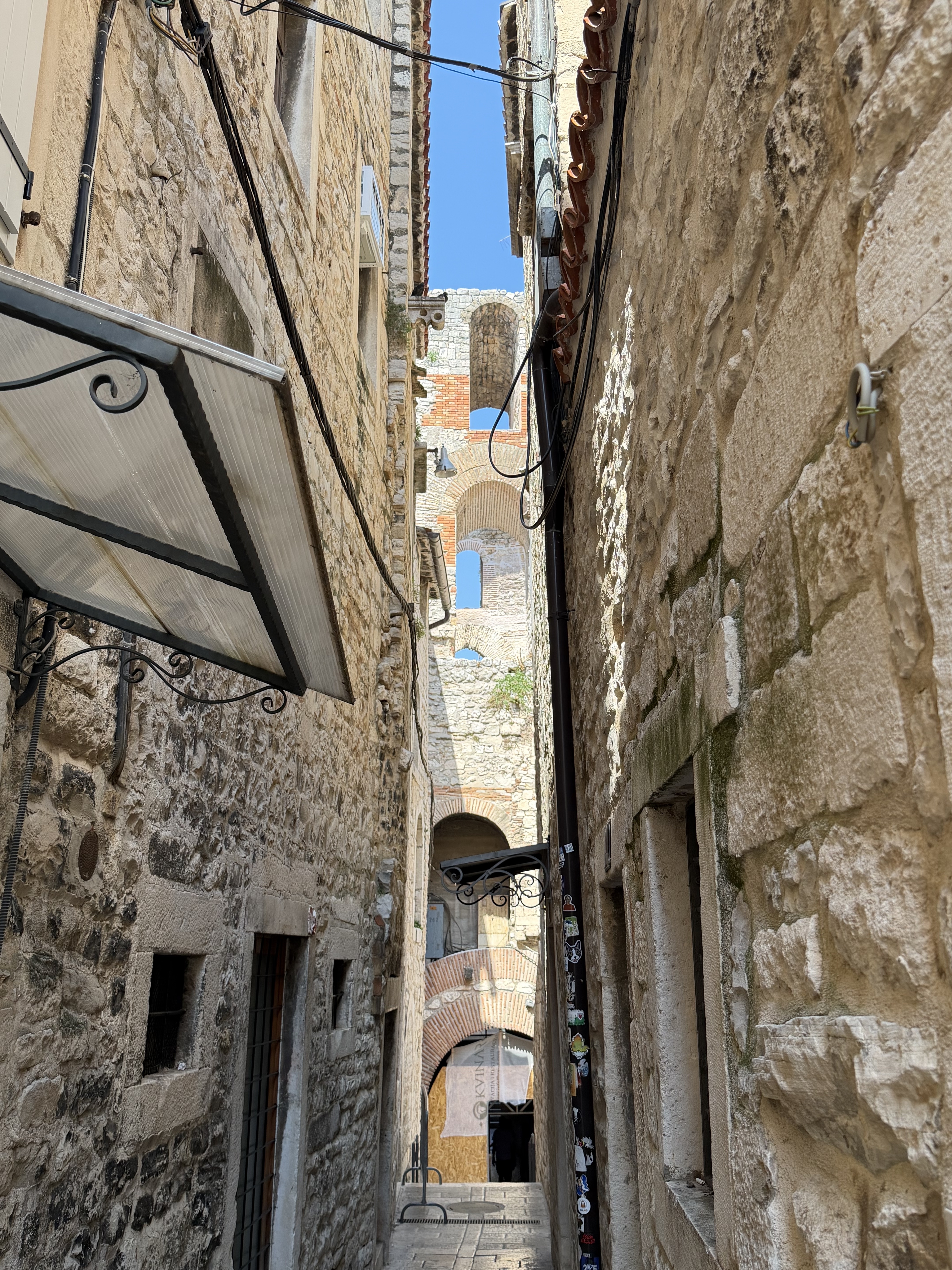
At first glance, it has many of the things you expect from an old Mediterranean city: pale stone walls, red-tiled roofs, narrow alleys, church towers and little squares packed with cafés.
Then you realise that the old city isn’t merely beside the ruins of a Roman palace.
It is inside them.
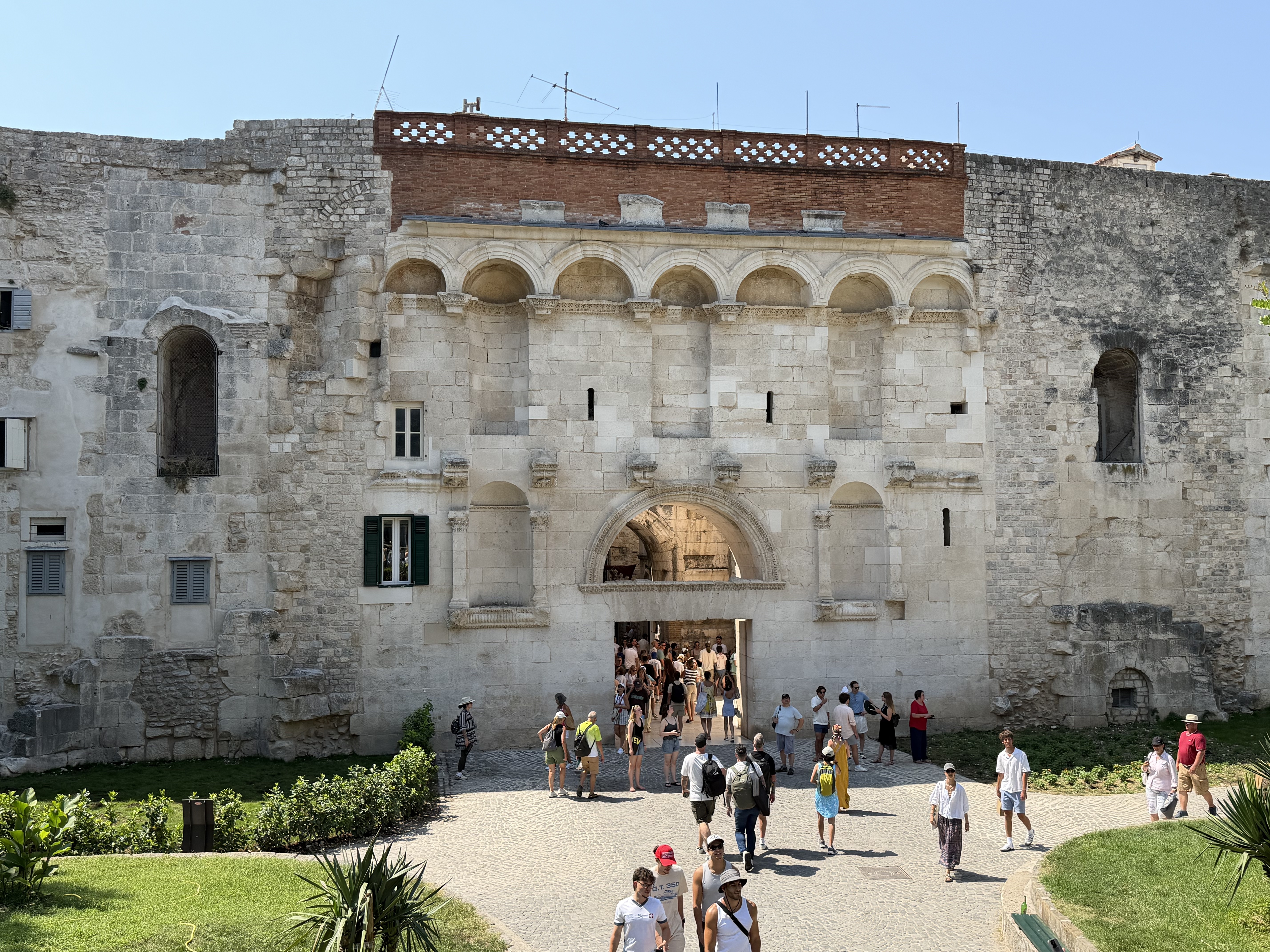
Diocletian’s Palace was built at the beginning of the fourth century as an enormous fortified retirement residence for the Roman emperor. As the western Roman world fragmented and the centuries passed, people didn’t simply abandon the palace. They moved into it.
Rooms became houses. Corridors became streets. Walls became the foundations of other buildings. Shops appeared beneath ancient arches. Diocletian’s mausoleum eventually became the Cathedral of Saint Domnius.
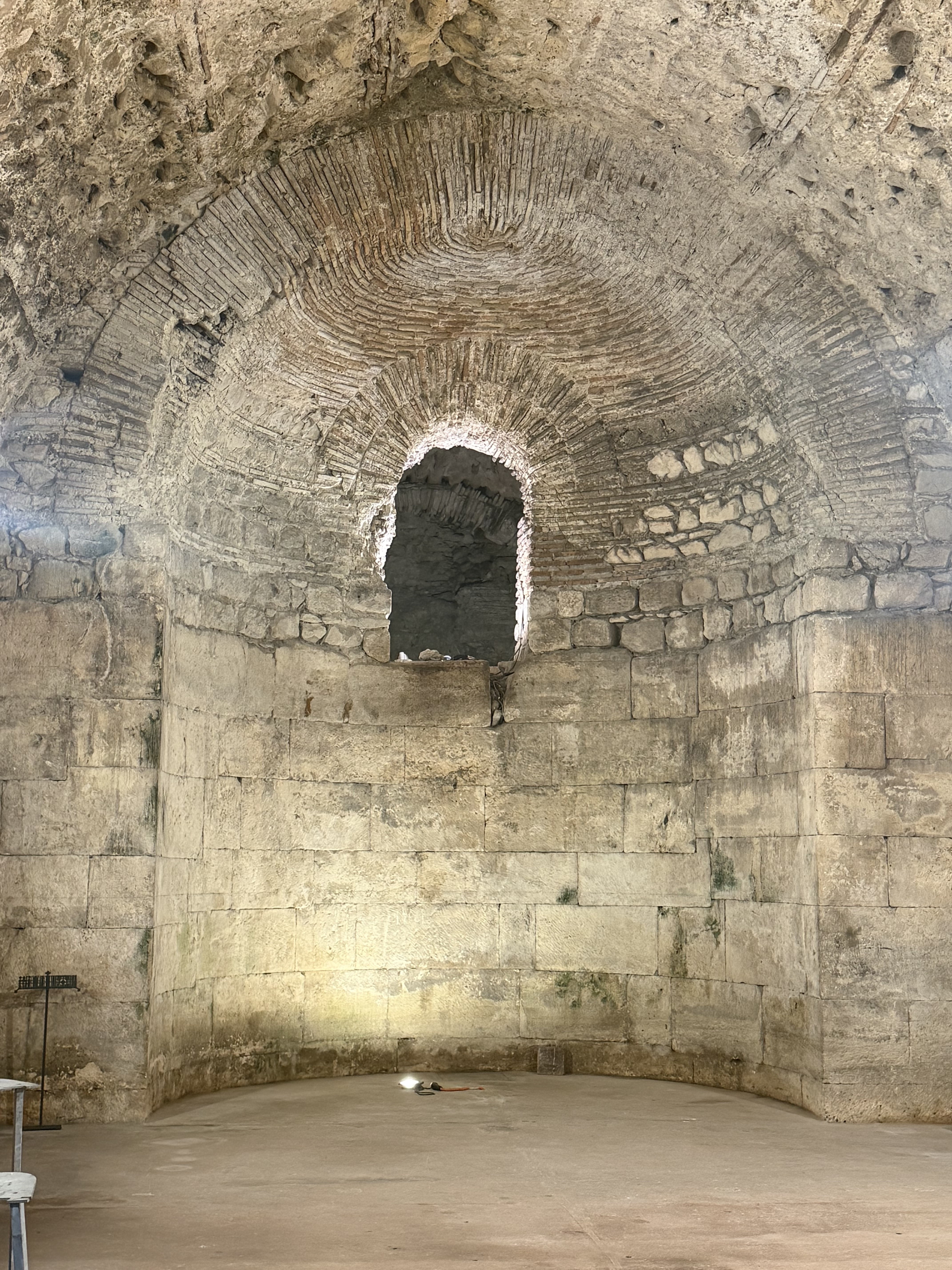
And beneath all of it survive the enormous vaulted substructures of the original palace.
Walking through Split, you’re not really walking through a Roman ruin or a medieval city.
You’re walking through both at once.
And that immediately started me thinking about Tolrendor.
The Palace of a Dead Empire
Tolrendor has plenty of fallen empires.
One of the greatest was Varandia, the ancient dragon empire whose power once stretched across lands surrounding the Inner Sea.
So imagine a rocky peninsula thrust into that sea, on the south-western coast, perilously close to the blighted lands that mark the fall of the draconic realm.
Behind it rises a great limestone escarpment. Before it lies a naturally sheltered bay, opening onto the sea lanes connecting the kingdoms of the Inner Sea.
And on the shore stands the palace of a dead emperor.
Not merely a palace, but a vast fortified complex constructed during the final centuries of Varandian power. Perhaps its builder was an ageing Dragonborn emperor who had withdrawn from the intrigues of the imperial capital.
Or perhaps the title emperor conceals something rather more interesting.
Perhaps he was himself a dragon.
Whatever the truth, he intended this place to be both his final residence and his tomb.
Thousands of years later, the empire is gone.
The palace remains.
And people have moved in.
They call the city Karsos.
A City Inside the Walls
This is the part of Split I most want to steal for Karsos.
The old palace shouldn’t survive as an archaeological ruin conveniently sitting beside the fantasy city.
The palace should be the city.
Its ceremonial avenues have become crowded streets. Houses have been built between enormous Varandian columns. Workshops occupy former guardrooms. Taverns have punched doors through walls raised for long-forgotten imperial officials.
Ancient courtyards have become marketplaces.
The upper levels are a chaotic mass of roofs, balconies, washing lines, bridges and additions accumulated over centuries.
And everywhere there are fragments of the older city.
A dragon’s head protrudes from the wall of a fishmonger’s shop. An imperial inscription sits upside-down in the foundations of an inn. A perfectly ordinary house has one wall made from blocks carved with the victories of a Dragonborn legion nobody remembers.
Then there are the passages underneath.
Split’s extraordinary palace substructures suggest something much larger beneath our Tolrendian city: vaulted chambers, cisterns, crypts, forgotten temples and sealed corridors descending through successive periods of Varandian construction.
Most are used as warehouses, workshops, smuggling routes and cellars.
Some have been sealed for centuries.
Nobody agrees why.
The Emperor’s Tomb
At the centre of Diocletian’s palace stands one of history’s rather pleasing ironies.
The mausoleum of an emperor who persecuted Christians eventually became a Christian cathedral.
That deserves an equivalent in Tolrendor.
At the heart of the old Varandian palace stands the tomb of its builder.
Or at least, everyone believes it is his tomb.
Long after Varandia fell, the mausoleum was appropriated by the Akayin peoples who came to dominate much of the Inner Sea. It is now one of the city’s principal temples, dedicated to the Mariner, Akayin god of sailors, voyages and the sea.
The ancient imperial iconography hasn’t entirely disappeared.
Dragon mosaics still coil beneath later religious carvings. Great columns of polished stone support the temple roof. Priests descend into crypts whose lowest doors they have never had the keys to.
And somewhere beneath the temple lies the emperor.
Or what remains of him.
A Pirate Kingdom
Split itself was never particularly renowned as a pirate city, but I didn’t have to travel far for that part of the inspiration. The medieval Adriatic coast and its islands had a rich tradition of piracy and privateering — including the notorious pirates of nearby Omiš.
And that suggested what Karsos has become.
It is a pirate port.
Although pirate is perhaps an unfair description.
Even the city’s religion has adapted to its peculiar relationship with the sea. Elsewhere around the Inner Sea, the Mariner is the patron of sailors, voyages and safe harbour. In Karsos, another aspect has come to prominence: the Dark Mariner, patron of those who sail beyond the protection — and sometimes the laws — of more respectable shores.
Ask the city’s rulers and they will tell you that their captains are perfectly legitimate privateers and mercenaries. Their ships escort merchants, suppress piracy, fight wars and transport armies throughout the Inner Sea.
They merely have a somewhat flexible interpretation of who constitutes an enemy vessel.
The distinction becomes especially hazy when nobody has hired them recently.
That makes the city simultaneously a menace and a necessity.
Norbaer condemns its piracy while quietly employing its captains. Lorondor has fought several naval wars against it and hired its ships in several others. The Free Baronies regularly have Karsan privateers in their fleets when asserting their independence from Lorondin influence.
The Akayin city-states are the enemies and rivals of Karsos, and yet just as often its allies and trading partners. Elven vessels, however, are particularly unwelcome in its harbour, and the swift Elven patrols of the Inner Sea take a dim view of Karsan ships wherever they encounter them.
Beyond the old palace walls the city has spread along the harbour: shipyards, warehouses, ropewalks, markets, taverns and entire districts catering to sailors.
And somewhere through the rocky peninsula, an ancient Varandian passage has been enlarged into a tunnel leading to a second, heavily fortified anchorage.
That is where the real fleet waits.
Karsos Concept – AI Generated
The Dragon of the Inner Sea
Of course, a city like this needs someone sitting at the top.
At present, that someone is Thessara, First Pirate of Karsos — a female Dragonborn, charismatic, enormously wealthy and dangerously ambitious.
At least, that is what almost everyone believes.
Perhaps Thessara is actually a dragon.
I rather like that idea, although I’m not yet certain what kind…
What matters is what she wants.
She doesn’t merely want wealth.
She looks at the squabbling kingdoms around the Inner Sea and sees weakness. Her mercenary fleets already intervene in their wars. Her captains know every harbour. Her agents operate in every major port.
Why remain a pirate queen when she might become an empress?
And there are people in the city encouraging precisely that thought.
Dark Amber
A pirate port attracts people who prefer not to answer too many questions.
The Conclave has established itself quietly among the city’s antiquarians, merchants and arcane dealers. Its agents have become useful advisers to Thessara, bringing her fragments of Varandian lore and feeding her stories about the power once wielded by the palace’s ancient master.
They have discovered something beneath the city.
The emperor’s tomb is not empty.
His bones — and perhaps something more than his bones — remain hidden in chambers far beneath the former mausoleum.
The Conclave believes he can be restored.
Not resurrected.
Transformed.
A dracolich beneath an ancient Varandian palace would be a formidable weapon for an aspiring empress.
The First Pirate of Karsos believes she could control it.
The Conclave intends to make certain that they do.
Finding Tolrendor
This is exactly what I hoped this journey would produce.
I came to Split because my wife had been here before and wanted to share it with me. From here, she would go sailing in the Adriatic while I began my journey north.
I’m leaving it with a new city for Tolrendor.
Not a fantasy copy of Split. The bell tower, Diocletian and the Roman Empire won’t simply acquire different names.
What I want to take with me is something deeper: the idea of a city that has consumed an ancient imperial palace and made it part of everyday life.
A place where you can drink in a tavern whose cellar was built for a Dragonborn emperor, worship the gods of the sea above his forgotten tomb, hire a pirate captain beneath the statues of a dead empire — and perhaps discover that something ancient is stirring beneath your feet.
Tomorrow morning I finally shoulder the backpack and begin travelling north.
Somewhere between Split and Zagreb, my Richard the Lionheart-inspired journey properly begins.
But before I’ve even boarded the first train, I’ve already found my first place in Tolrendor.
Sometimes it’s a map scribbled on the back of an envelope. Sometimes it’s a scene from a favourite novel. Sometimes it’s a place you’ve stood, looked around, and quietly thought: this belongs in another world.
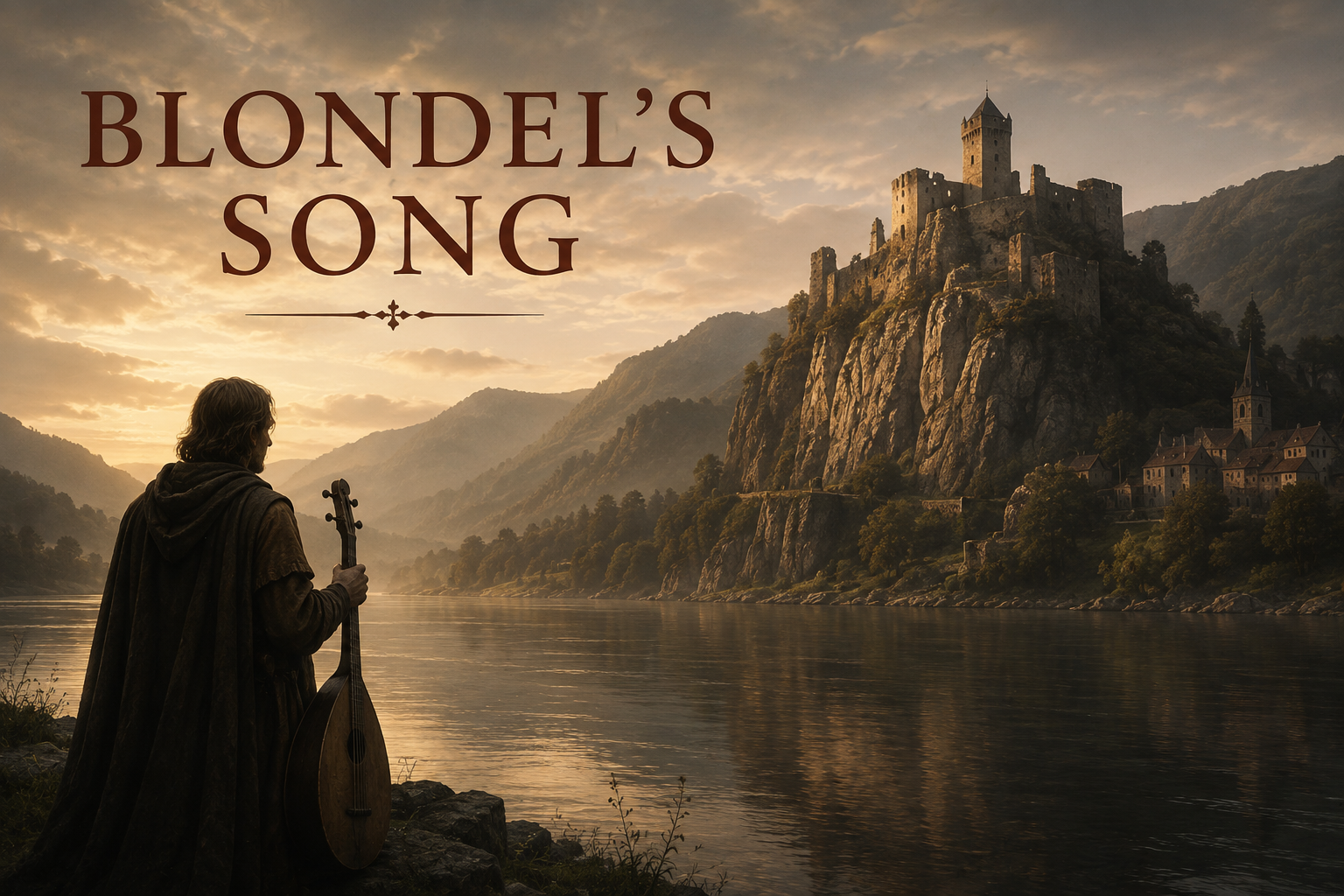
For years, one story has lingered in my imagination: Richard the Lionheart’s extraordinary journey home from the Third Crusade, and the enduring legend of his minstrel, Blondel, searching Europe for his imprisoned king. I first encountered that tale through David Boyle’s excellent Blondel’s Song: The Capture, Imprisonment and Ransom of Richard the Lionheart, which retraces Richard’s most likely journey across medieval Europe while weaving together history, landscape and legend. Long before this trip became a practical itinerary, Boyle’s book planted the seed that one day I might follow those same roads myself.
This August, I’m finally doing exactly that.
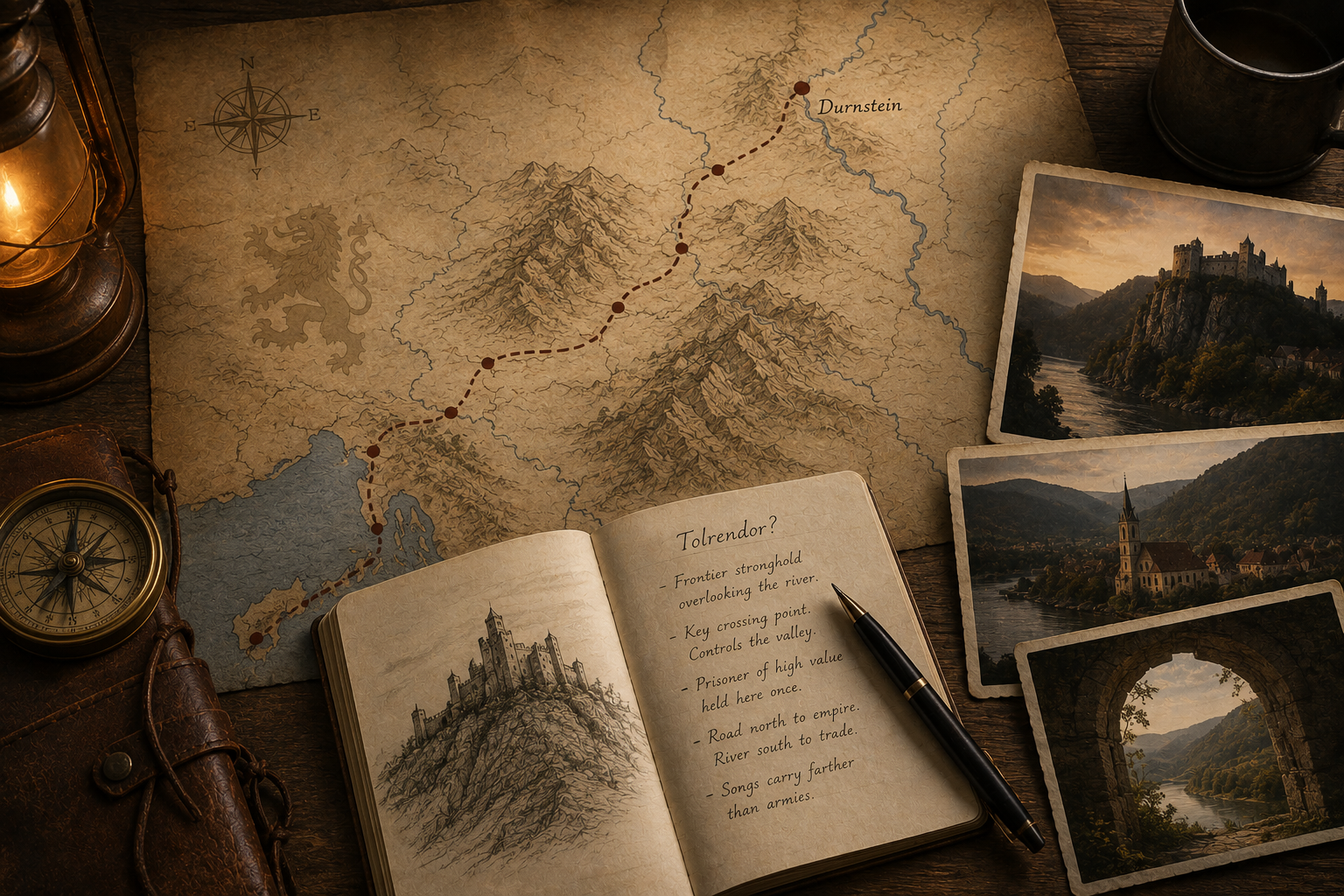
Armed with a backpack, a notebook, a camera (well, iPhone), a laptop, and far too many ideas, I’m travelling from the Adriatic through Central Europe, following some of the route Richard is believed to have taken after leaving the Holy Land. From Split to Zagreb, Trieste, Aquileia, Villach, Friesach, the Wachau, and then on to Bratislava and finally Budapest, I’ll be travelling largely by train, camping where I can, and spending my days exploring castles, medieval towns, monasteries, mountain passes and forgotten corners of Europe.
This isn’t intended to be a travel blog, at least not in the traditional sense.
Instead, it’s a research expedition for Tolrendor.
The fantasy worlds that stay with me always feel grounded. Cities grow where rivers can be crossed. Castles command mountain passes because those passes mattered. Kingdoms rise through trade, geography, politics and conflict long before they appear on a map.
Those are the things I want to see.
Not simply the famous landmarks, but the reasons they’re there.
Why was this town founded here?
Why did this fortress control the valley?
How does the landscape shape the settlement?
What details survive that never make it into the guidebooks or photographs?
Most importantly…
What if this place existed in Tolrendor?
Richard’s own journey already feels like the outline of a fantasy adventure: shipwrecked after the Third Crusade, travelling in disguise through hostile lands before finally being captured near Vienna and held for ransom. Whether every detail of Blondel’s legendary search is true matters less than the image it leaves behind: a Europe stitched together by roads, castles, songs and stories, where history and legend blur into one another. That feels like exactly the right path to follow when searching for inspiration for a fantasy world.
Over the coming weeks I’ll be sharing a series of World-Building Notes inspired by the places I visit, and asking the question:
“How would this exist in Tolrendor?”
I hope these posts offer a glimpse into one of my favourite parts of world-building: discovering that the real world is often stranger, richer and more inspiring than anything we could invent from scratch.
One of the things I enjoy most about organised play is that you never quite know what sort of adventure you’re about to get.
Two and a half hours later you’re trying to stop a magical conspiracy involving winged cats, cultists, and a plan to transform an entire city into tressym.
This week at RPG Taverns, our GM was Shaq, one of the newer GMs running tables, and he delivered exactly the sort of gloriously unpredictable adventure that makes organised play memorable.
An Unusual Fellowship
Our party was a wonderfully eclectic mix of levels and experience:
A 6th-level halfling Trickster Cleric
Tarin, my 5th-level Tiefling Sorcerer
A 4th-level Human Artificer
A 2nd-level Human Artificer
A 1st-level Halfling Warlock
A 1st-level Human Artificer
At RPG Taverns, mixed-level parties are fairly common, and they often create some interesting dynamics. The higher-level characters have enough tools to tackle bigger threats, while the lower-level characters still get their moments to shine.
And so it turned out …
A Simple Errand…
The adventure began in pre-Cataclysmic Aurelium.
At least on the surface, we were helping a wizard gather supplies for some arcane experiments.
Simple enough.
Naturally, things immediately went off the rails.
Before long we found ourselves approached by a tressym—a winged cat associated with one of Aurelium’s temples—who claimed another tressym was plotting a coup.
Not a political coup.
A species coup.
Apparently a rogue tressym known as Viceroy, aligned with Bane, was attempting to obtain magic powerful enough to transform the entire population of Aurelium into tressym.
As campaign premises go, it was certainly original.
Following the Trail
Our first stop was a temple of Moradin, home to our feline patron.
There we interrogated (fed?) a variety of winged cats, attempting to piece together what was really happening. Eventually the clues pointed us toward the Dockside district and the last known whereabouts of the mysterious Viceroy.
The Dockside, unsurprisingly, proved familiar territory for Tarin. A conversation with a local drug dealer eventually led us to an abandoned warehouse supposedly once involved in the distribution of “feline food.”
At that point nobody was entirely convinced this wasn’t some elaborate joke.
It wasn’t.
The Great Cookie Incident
Outside the warehouse we discovered cultists and guards protecting the site.
Rather than charge in, we opted for stealth.
With surprisingly creative use of Pass Without Trace, Invisibility, multiple Thaumaturgy distractions, and careful positioning, we managed to infiltrate the compound remarkably successfully.
Mostly.
One of our companions—whose player had openly admitted to dump-statting Dexterity—was carrying a jar of cookies.
Why?
Nobody ever established a satisfactory answer.
This almost brought our plan crashing down around our ears as he simply, well you know, dropped the jar at a critical juncture… thankfully saved by Tarin casting a swift Mage Hand to catch the jar and prevent a catastrophic cookie-related stealth failure.
It was one of those wonderfully ridiculous table moments that shouldn’t work but somehow becomes one of the highlights of the evening.
Fireball Time
Eventually we reached the heart of the operation.
There, Viceroy’s cult was attempting to open a portal to acquire the magic required to carry out their grand transformation plan. The supposed mastermind turned out not to be a tressym at all, but a halfling wizard directing the ritual while cultists worked around her.
Initiative was rolled.
One of our 1st-level characters immediately scored a critical hit with Fire Bolt, vaporising a guard and earning what I believe was their first ever combat critical.
The table erupted.
Then Tarin got his turn.
Having only recently reached 5th level, this was the first real opportunity I’d had to unleash the spell every fantasy spellcaster dreams about.
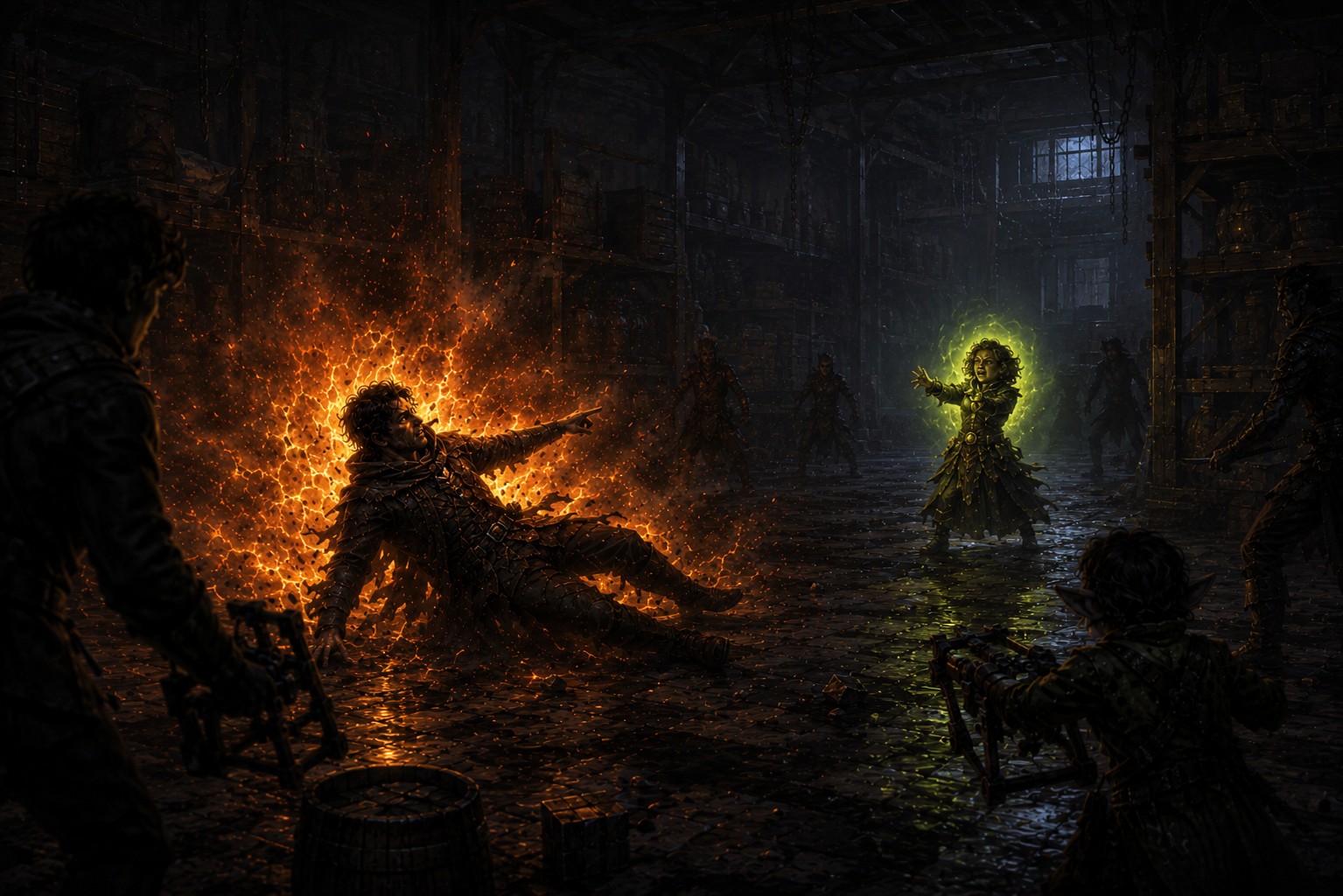
A sewer-green Fireball erupted into the centre of the cultists – and I remembered to use Empowered Spell.
The results were spectacular.
Most of the cultists burned to cinders.
The ritual collapsed into chaos.
The wizard was left bloodied and reeling.
For the first time, Tarin genuinely felt like a dangerous sorcerer.
He then advanced toward the remaining enemies, placing himself between them and some of our vulnerable 1st-level characters.
Which, as it turned out, was both heroic and extremely poor for his life expectancy.
The Cost of Heroism
The next round was very much a Tarin moment.
First came the crossbows.
Several bolts struck home.
One was a critical hit.
As his hit points evaporated, Tarin found himself reflecting on the fact that perhaps casting False Life before combat would have been sensible.
A revelation that arrived slightly too late.
Then the enemy wizard, with understandable irritation, launched a Fireball of her own.
Tarin was standing almost at the epicentre.
He made his Dexterity save.
His infernal heritage granted fire resistance.
Neither proved sufficient.
The blast dropped him.
But not before he had one final trick.
As the flames consumed him, Tarin unleashed a 3rd-level Hellish Rebuke (yes, sewer green).
Twenty-two points of damage later, the wizard collapsed.
Tarin hit the floor.
The wizard hit the floor.
The table cheered.
And with that, the coup was over.
Thankfully our cleric was still standing and had everyone back on their feet shortly afterwards.
What Did We Learn About Tarin?
One thing I enjoy about organised play is that characters evolve in ways you never quite expect.
He Might Actually Be Becoming Heroic
Tarin is cynical.
He’s self-protective – he is after all a product of the sewers and backstreets.
Yet recently I’ve found myself playing him on several mixed-level tables, and something interesting is happening.
He seems to enjoy protecting lower-level adventurers.
Whether it’s stepping into danger, shielding newer characters from threats, or simply acting as one of the more capable members of the party, there are definite signs that Tarin is developing at least the beginnings of a heroic streak.
I suspect he’d deny it.
Fireball Is Everything I Hoped It Would Be
I’ve been playing RPGs since the 1980s.
Back then levelling was a long, slow process.
I honestly don’t think I ever played a spellcaster long enough to cast Fireball.
So despite its iconic status, this was genuinely a milestone moment for me as a player.
And yes.
A sewer-green fireball is every bit as satisfying as it sounds.
Sorcerers Reward Practice
I’m also finding that Tarin’s toolkit is finally beginning to click.
Empowered Spell.
Hellish Rebuke.
Positioning.
Resource management.
For the first few levels I often felt like I was still learning how to play a sorcerer effectively.
Now the pieces are starting to come together.
Cantrips Matter
The stealth section of the adventure was one of my favourite parts of the evening.
Not because of combat.
Because it allowed Tarin to use abilities that rarely get the spotlight.
Thaumaturgy.
Mage Hand.
Little bits of utility magic that often sit unused suddenly became central to the success of the mission.
That’s always satisfying.
Always Cast False Life
Always.
Cast.
False Life.
Some wisdom comes from ancient tomes. Some comes from lying unconscious on the floor after standing in the middle of a fireball.
One of the things I particularly like about Northlands is that it isn’t merely a collection of Nordic-flavoured names and artwork. The setting is built upon a distinctive worldview. Its cultures are shaped by stories of gods and giants, by the belief that fate is real, and by the certainty that the greatest war in history has not truly ended.
The challenge was that Tolrendor already possesses an origin story.
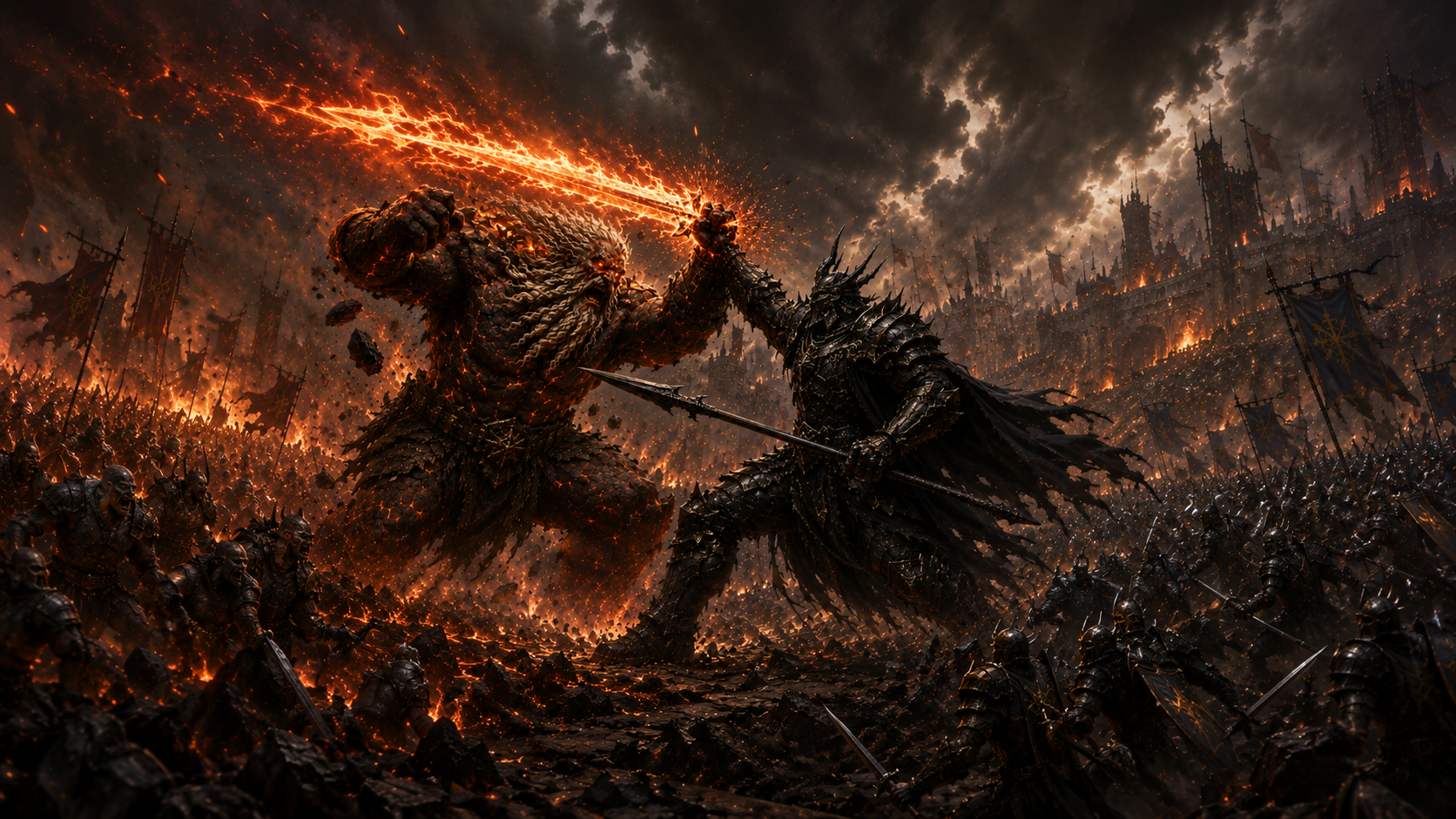
For many years the mythology of Tolrendor has been rooted in the Age of Strife, itself heavily inspired by the old 4th Edition D&D cosmology: a primordial war between the Astral Powers and the Elemental Lords, culminating in the fall of Karagthal and the Sundering of the world.
So I found myself facing a world-building problem.
How do I create a mythology that supports the themes Northlands expects—gods, giants, prophecy, fate and an unfinished war—without simply replacing the mythology Tolrendor already has?
At first I assumed I would need to rewrite large parts of the setting.
Instead, I discovered that the pieces were already there.
I simply hadn’t been looking at them from the perspective of the Northlanders.
Seeing The War Through Northern Eyes
When I first started thinking about Norðrlǫnd—my name for the Northlands region of Tolrendor—I assumed I needed to reinterpret the Age of Strife.
The more I worked on it, the more I realised that wasn’t necessary. The Age of Strife was never a single battle. Nor was it even a single war fought in a single place. It was a conflict that engulfed entire worlds.
The original mythology focuses on KaragTar, Bane and the siege of Karagthal because those events directly shaped the lands surrounding Tolrendor’s Inner Sea. It is the version of history preserved by the sages of Kerabos, the City of Amber founded at the very epicentre of the Sundering itself.
But why should the people of Norðrlǫnd remember the same heroes?
Why should their skalds’ songs focus on the same battles?
Instead, I began to think about what the people of the far North might remember.
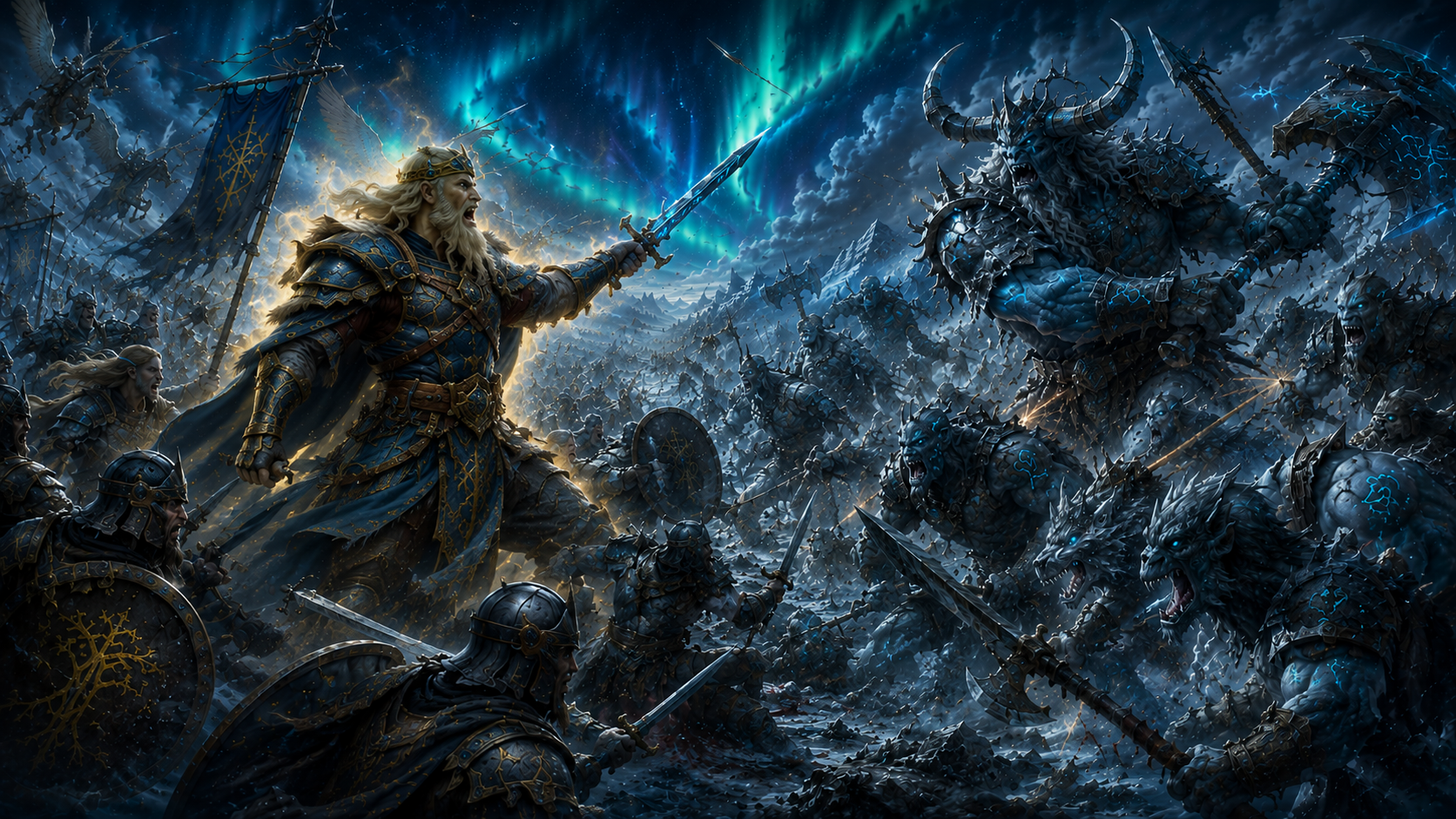
Their stories speak of the Valdrungar and the Frumjötnar.
Of Óðvaldr, High Father of the Valdrungar.
Of the primordial giant Hrímvaldr, Lord of Frost and Stone.
“Here, the fate of creation was contested between the Valdrungar and the Frumjötnar, the First Giants.”
The important realisation was that these stories do not need to replace the original mythology.
Both can be true.
The Age of Strife was vast enough to contain them all.
Two Traditions, One Age
Age of Strife Tradition
Norðrlǫnd Tradition
Focuses on KaragTar, Bane and the siege of Karagthal
Focuses on Óðvaldr, Hrímvaldr and the war against the First Giants
Remembered through the sages’ histories of the Inner Sea
Remembered through the sagas of the Northlands
The defining battle is fought before the Gates of Malor
The defining struggle is fought across the frozen North
Emphasises the clash between Astral Powers and Elemental Lords
Emphasises the struggle between gods and giants
The Sundering ends a catastrophic war
The Sundering postpones a destined final battle
The Earth Mother saves creation from destruction
Foldmóðir saves creation from destruction
The stories overlap.
But they are not the same story.
They are memories of different events from the same vast age.
Why I Avoided Traditional Norse Mythology
One deliberate choice was to avoid simply importing Norse mythology directly into Tolrendor.
There is nothing wrong with using Odin, Thor, Midgard or Ragnarök.
But those names carry enormous cultural and canon baggage.
For many readers they arrive accompanied by Marvel films, television series, video games and decades of fantasy gaming.
I wanted something that felt recognisably northern without feeling borrowed.
Using Old Norse terminology helps create that distinction.
Thus:
Norðrlǫnd rather than Midgard
Óðvaldr rather than Odin
Hrímvaldr rather than Ymir
Valdrungar rather than Aesir
Frumjötnar rather than simply Jötnar
The aim is not Norse mythological accuracy.
The aim is lore structure that can support the flavour of the setting – something familiar enough to evoke the right atmosphere while remaining firmly rooted in Tolrendor’s own mythology.
Fate, Prophecy and The Unfinished War
The original Age of Strife already contained one of the most important ideas required by a Northlands setting.
The war never truly ended.
The Earth Mother intervened because creation itself was breaking.
As the original Tolrendor tale tells us:
“At this juncture, Nairere the Earth Mother herself stepped into the fray…”
The northern tradition remembers the same event through a different lens.
Foldmóðir sees that neither side can truly prevail.
The giants cannot win.
The gods cannot win.
Creation itself is losing.
And so she acts.
“There would be no world left to inherit.”
The gods and giants are cast beyond the veil, into the outer realms from which they came.
The Sundering begins.
But the skalds remember something else as well.
“The war was ended.
Not won.
Ended.”
That single idea introduces one of the defining themes of Norðrlǫnd.
Fate.
The belief that the old war remains unfinished.
That beyond the veil the ancient powers still gather.
That one day the barriers will fail.
And that when they do, the final struggle will begin anew.
Final Thoughts
When I started this exercise, I thought I was trying to adapt Tolrendor to accommodate Northlands.
In reality, I was doing something rather different.
I wasn’t creating a new cosmology.
I was creating a Northland mythology.
The underlying truths of the setting remain unchanged. The Age of Strife still happened. KaragTar still raised Karagthal. Bane still laid siege to its walls. The Sundering still shattered the world and cast the great powers beyond the veil.
But those events were never experienced equally by every people, in every land.
The skalds of Norðrlǫnd remember different heroes, different battles and different lessons than the scholars of Kern. Where one culture remembers the fall of Karagthal, another remembers the war against the First Giants. Where one remembers victory denied, another remembers fate deferred.
Neither story is more true than the other.
Both are attempts by mortal peoples to understand events far greater than themselves.
In many ways, that feels closer to how real mythologies evolve. People remember the events that shaped their ancestors. They elevate their own heroes. They preserve the lessons that mattered to them. Over centuries, those memories become stories, and those stories become belief.
Perhaps that is the lesson I have taken from this exercise.
History may be universal. Mythology rarely is.
The Age of Strife was not a single battle, nor even a single war fought in a single place. It was a struggle that touched every corner of creation, leaving behind different memories, different heroes, different warnings—and different truths.
The myths that survive are simply the stories people chose to remember.
And for a world-builder, that is far more interesting than having a single “correct” version of the past.
After a long silence, RPG Tech Talk returns to the blog…
There’s something slightly ironic about the fact that it took playing more in-person tabletop RPGs to rekindle my interest in RPG technology.
Over the past few months, playing regularly at RPG Taverns has absolutely re-energised my love of the hobby. It’s also been a major reason this blog has come back to life after a very long quiet period.
If you’ve been following the recent posts on Tolrendor World, you’ll know I’ve been diving back into campaigns, world-building, Tales of the Valiant, Northlands, and generally rediscovering why I fell in love with tabletop RPGs in the first place.
But something else has been happening too.
The more I play around digital tables in a genuinely social, in-person setting, the more I find myself thinking:
We still haven’t really solved technology at the physical tabletop.
And that thought has quietly reignited something I haven’t explored deeply in years:
The COVID era massively accelerated digital tabletop gaming.
There’s really no debate about that anymore.
Virtual Tabletops exploded in capability during that period. Online play matured rapidly. Shared maps, dynamic lighting, automation, integrated character management, remote dice rolling, music, handouts — all of it advanced at incredible speed.
And none of that is going away.
But interestingly, sitting around the tables at RPG Taverns has reminded me that in-person play is fundamentally different.
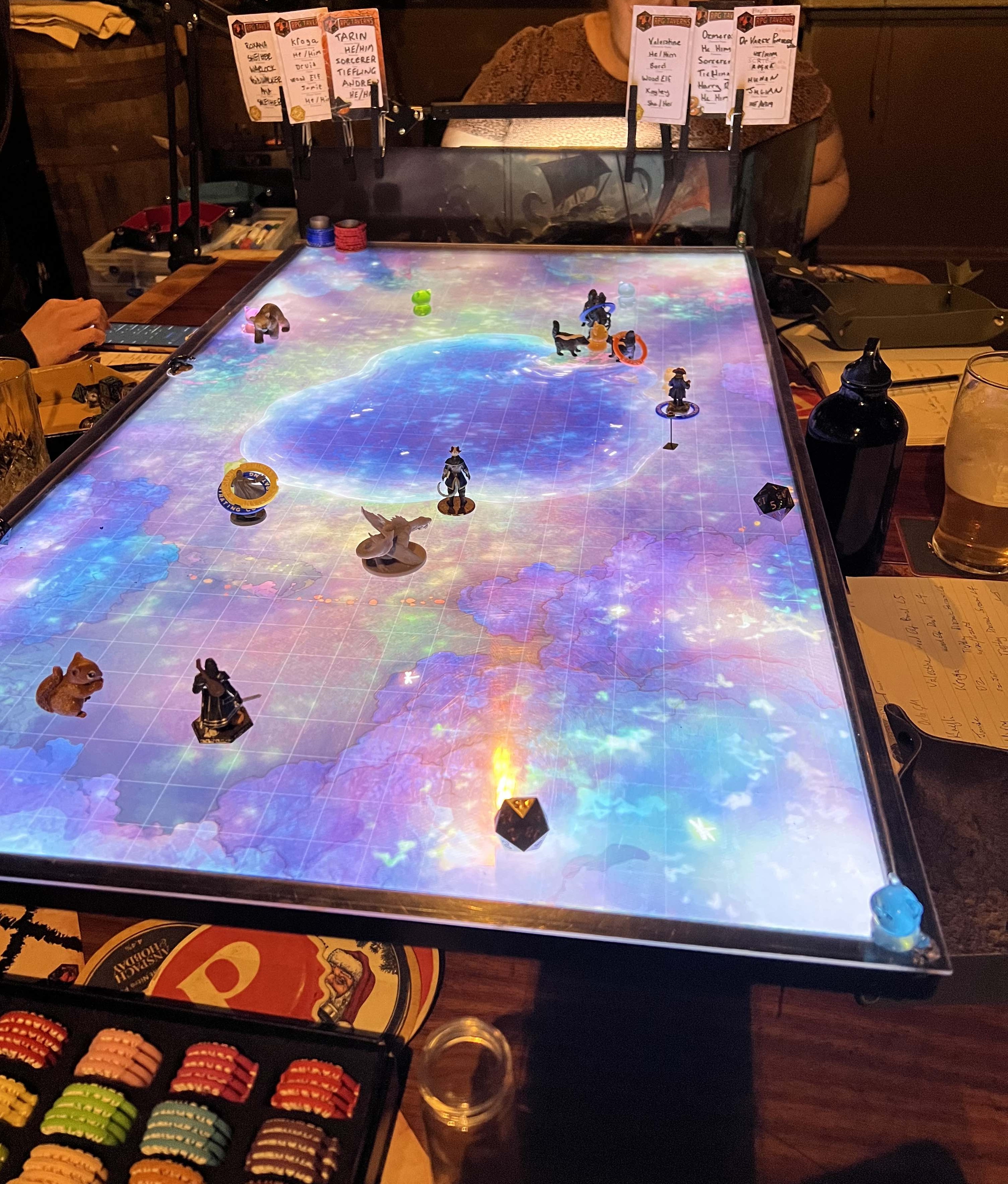
Even though we use digital displays at the table, the experience is still overwhelmingly physical:
Real miniatures
Real dice
Physical condition rings
Face-to-face roleplay
Shared reactions
Tangible table presence
The digital table itself is usually just acting as a map surface, rather than a full VTT experience.
Playing at RPG Taverns —where digital maps enhance, not replace, the in-person experience
I think that’s the right instinct.
Because VTTs were never really designed for the realities of in-person tabletop gaming. They excel at remote play, but can feel awkward or intrusive when everyone is physically sitting together.
At RPG Taverns, several GMs even combine digital maps with physical terrain — which looks fantastic and preserves that tactile tabletop feel.
That hybrid model fascinates me.
What I’d Love to See at the Table
The more I think about it, the more I believe there’s a huge gap between:
A printed (or hand-drawn) battle-map
And a full-blown VTT
There’s a middle ground that still feels surprisingly unexplored.
Imagine a tabletop system focused entirely on augmenting the in-person experience rather than replacing it.
Things like:
Automatically scaled digital maps
Simple GM controls for revealing or hiding map sections
Miniature movement sensing
On-table measurement tools
Area-effect templates projected directly onto the map
Integrated dice systems using either physical or virtual dice
Character app integration
GM tools connected to encounters and initiative tracking
Not to replace physical play.
Not to force everyone behind laptops.
But to enhance the table itself.
Because the reality is that many of the tools we now take for granted in VTTs are genuinely useful — fog of war, dynamic measurements, quick condition tracking, integrated encounters — but they need to be redesigned around shared physical presence.
That’s the key distinction.
The table should remain the centrepiece.
Not the software.
Enter… the Tolrendor Table?
So yes…
I’ve finally decided to stop merely thinking about this stuff and actually start prototyping some ideas.
For a long time I’ve wanted to experiment with:
Smart digital battlemaps
Mini tracking
Interactive overlays
Lightweight GM controls
Hybrid physical/digital encounters
Hardware integration
And potentially even modular “table appliance” concepts
And I think the time has come.
So let’s call the project:
The Tolrendor Table
At least for now.
No promises yet. No timelines. No polished product announcements.
Just a genuine passion project that I’m excited to start exploring properly again.
And honestly?
The modern tooling landscape is far more capable than it was the last time I dreamed in this space!
The ‘Tech’ GameMaster
Of course, the table itself is only part of the equation.
The modern GameMaster already lives in a deeply digital ecosystem.
Worldbuilding notes.
Character apps.
Campaign planning.
Discord servers.
Maps.
Lore documents.
Session prep.
Music.
Scheduling.
Handouts.
PDFs.
Encounter tools.
AI-assisted brainstorming.
We use an enormous amount of technology in tabletop RPGs.
But they fundamentally operate as a tightly controlled ecosystem around official content. Homebrew support exists, but often feels secondary to the commercial platform model.
Other VTTs are technically more open — and platforms like Foundry Virtual Tabletop have genuinely strong APIs and extensibility — but in practice most content still ends up deeply tied to the platform hosting it.
And for homebrew-heavy GameMasters?
That creates friction.
A lot of friction.
Campaign Nexus
Which leads me to the other major project idea quietly evolving in the background.
For a long while now, I’ve been sketching out the concept of an ecosystem of GameMaster tools that sit above individual VTTs and platforms.
A sort of campaign-centric architecture.
The working name for that project is:
Campaign Nexus
The vision is ambitious — perhaps dangerously ambitious — but the core idea is actually pretty simple:
Create a system that helps GameMasters manage the entire lifecycle of running campaigns.
Not just encounters.
Not just maps.
Not just character sheets.
But everything.
Things like:
Worldbuilding and lore management
Campaign organisation
Session planning
Homebrew management
Monster, spell, item, and faction creation
Narrative continuity tracking
Scheduling and player communication
Cross-platform VTT integration
AI-assisted tooling
And eventually deep integration with the Tolrendor Table concept itself
The key idea is that the campaign becomes the primary entity — not the VTT.
That matters enormously to homebrew creators.
Because ultimately, your world should belong to you, not to whichever platform currently hosts it.
Where This Goes Next
Right now, I’m working towards defining what an actual MVP for Campaign Nexus might realistically look like.
And trying very hard not to accidentally design six different products simultaneously.
Which, if you’ve ever built software passion projects before, you’ll know is a very real danger.
But after years away from serious RPG tech experimentation, it genuinely feels exciting to be thinking creatively in this space again.
And the best part?
This renewed inspiration has come directly from sitting around a real table with real players, rolling real dice.
Which feels oddly fitting.
The technology should support the magic of tabletop roleplaying.
Not replace it.
And I think there’s still a huge amount of unexplored territory there.
When I wrote my two-part review of the Northlands Worldbook, I mentioned that I intend to use the companion Northlands Sagas as my first full Tales of the Valiant campaign in the World of Tolrendor.
That decision, of course, immediately raises the obvious question:
How do I integrate the Northlands into an existing homebrew world without it feeling bolted-on?
For me, the answer always starts in the same place:
The Map
Before politics, before cultures, before gods and sagas and dragon-haunted jarldoms…
…I need geography:
Coastlines
Mountain ranges
Trade routes
Natural barriers
Places where stories want to happen.
And for that, I always end up returning to my old faithful:
I’ve been using Campaign Cartographer in one form or another for decades now, and despite the explosion of modern mapping tools over the last few years, I still think it remains one of the most versatile and powerful RPG cartography applications ever made.
It has never really been the easiest tool. But it’s one of the deepest.
And once you know how to drive it, it can produce maps with an astonishing amount of personality and flexibility.
What has always elevated it beyond “just a mapping application” for me, though, is the incredible longevity and creativity of the Cartographer’s Annual series.
Back in 2011, I wrote about RPG mapping and the Annual series on the old Tolrendor blog. At that point the Annual had been running for four years.
Four.
It has now somehow been running for twenty years.
That’s an absurd amount of content.
And remarkably, the quality and variety really hasn’t dropped off.
Every year brings new mapping styles, symbol collections, techniques, tools, templates, and ideas. Some are niche. Some are experimental. Some become instant classics.
But the result is that over time Campaign Cartographer has become less a single mapping style and more a library of fantasy cartography styles and traditions.
And that became important the moment I started planning my Tolrendor equivalent of the Northlands.
Finding the Right Style
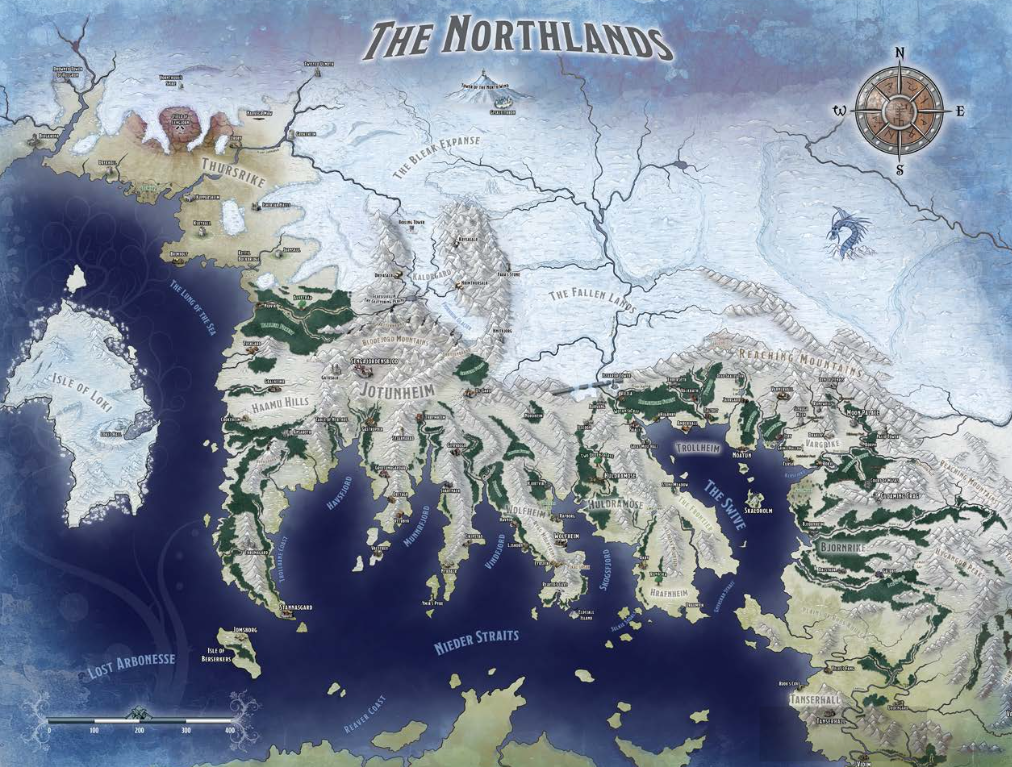
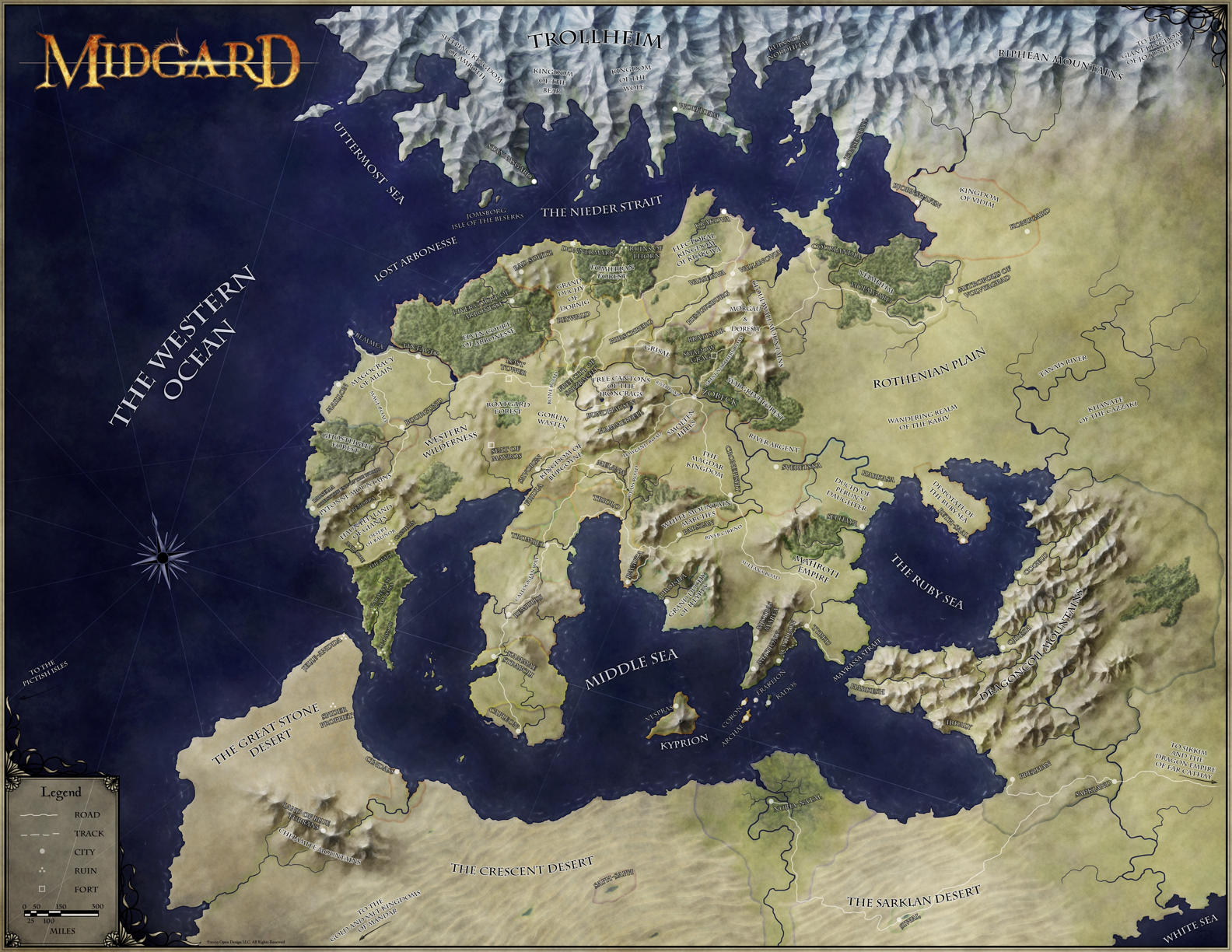
The Northlands Worldbook map — illustrated by Sean MacDonald — clearly evokes the visual DNA of the original Midgard Campaign Setting maps created by Jon Roberts.
That sweeping coastline-heavy aesthetic.
The muted natural palette.
The layered mountain ridges.
The sense that the landmass itself tells stories.
Campaign Cartographer has supported Jon Roberts-inspired styles for years, so the obvious first instinct was:
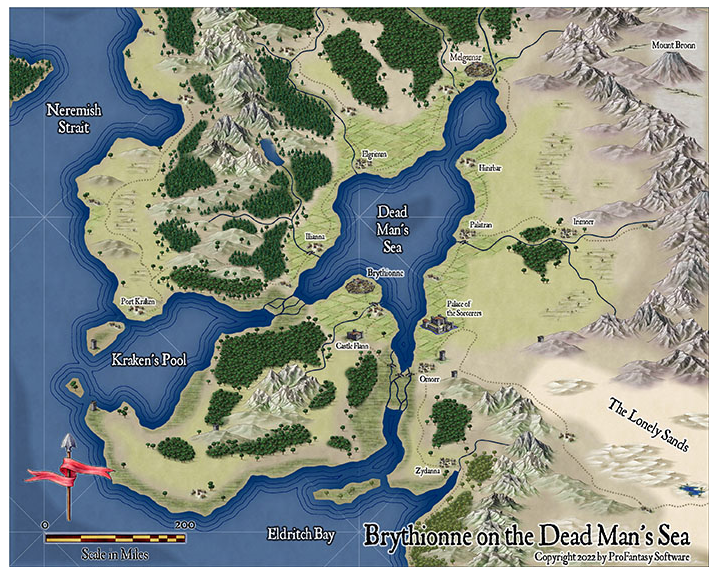
Jon Roberts Revisited (October 2022)
And honestly?
It still looks fantastic.
But…
I’ve mapped in that style quite a lot over the years, though, and part of me wants the Tolrendor Northlands to feel like a new creative chapter: inspired by Midgard’s mythic northern atmosphere, but not visually beholden to it.
So I started exploring alternatives from recent Annuals.
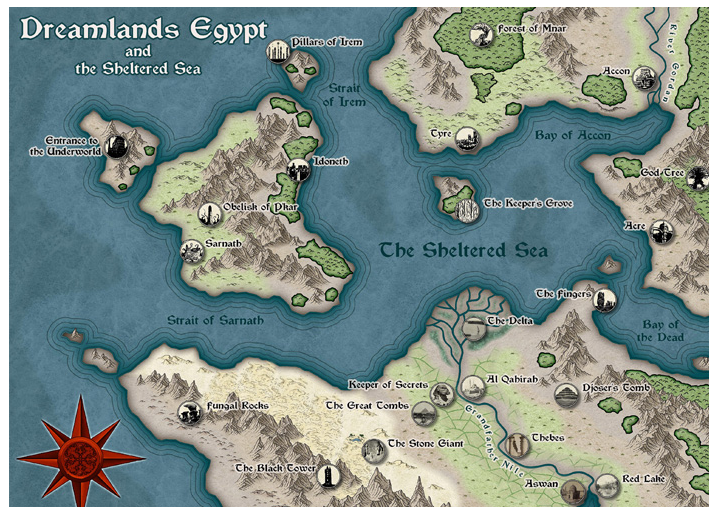
Ancient Realms Revisited (January 2025)
This one immediately grabbed me.
It has a slightly older-school fantasy atlas feel, but still enough texture and terrain detail to support a serious campaign setting.
There’s something about the coastlines and mountain rendering that feels particularly suitable for sagas, kingdoms, and mythic journeys.
It’s also designed for mapping large continental areas, which the Northlands definitely will be.
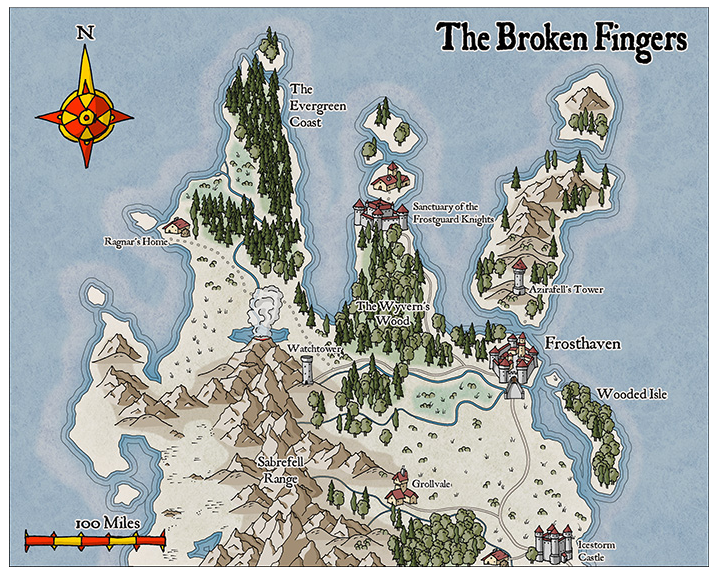
Hand-Drawn Fantasy (May/June 2025)
This style has enormous charm.
It feels personal.
Almost journal-like.
I could see this working brilliantly for regional or in-world maps — perhaps something produced by a skald, explorer, or merchant guild within Tolrendor itself.
I’m less convinced it works as the primary Northlands campaign map, but I absolutely want to use elements of this style somewhere.
Parchment Worlds (February 2024)
This one leans harder into the classic parchment aesthetic.
Very evocative.
Very “campaign setting sourcebook.”
Potentially excellent for world-scale mapping — particularly if I decide to finally redraw the wider Tolrendor world properly.
Why This Matters More Than People Think
One of the things I’ve learned over the years is that maps quietly shape campaigns far more than most people realise.
A good map creates narrative gravity.
Players begin asking questions naturally:
What’s beyond those mountains?
Who controls those islands?
Why are all the settlements clustered around that bay?
What happened in the frozen north?
And for adventures in the Northlands, where travel, culture, myth, and isolation matter enormously, the map becomes part of the storytelling engine.
That means I need the Tolrendor equivalent to feel like it has always existed.
Not “here is Viking Land pasted awkwardly onto the side of the continent.”
It needs to breathe naturally inside the world.
So… Which One?
Right now, I’m leaning toward Ancient Realms Revisited as the foundation style.
It feels like the best balance between:
mythic atmosphere
readability
large-scale geography
a cool palette that I think will suit the wind-swept, mountainous wilderness of the Northlands
…but what do you think?
And honestly, simply browsing twenty years of Cartographer’s Annual styles has completely reignited my enthusiasm for fantasy mapping…
The mapping juices are flowing.
Now I just need to decide where the fjords go — and which forgotten kingdoms once ruled them.
And four 1st-level adventurers who we hoped would not become immediate tragedies! (It’s part of the culture at RPG Taverns that the table looks after the 1st-level characters.)
Naturally, it turned into a highly entertaining session.
This was my first Thursday session rather than the usual Friday/weekend crowd. Noticeably quieter — but still with the same relaxed atmosphere. Thanks to train chaos on my line, I arrived late, messaged the venue on the way, and was simply pointed towards the Dockside table when I arrived. No fuss. Very easy-going.
Our DM for the evening was Luke — the first time I’d played at one of his tables — and he ran a great session with exactly the right mix of flavour, pressure, and humour.
Back Into Aurelium
The new chapter has begun, and all the tables were exploring the Hallowed Halls in pre-cataclysmic Aurelium. It was a religious festival, and many temples had trials and ceremonies underway.
Our particular goal revolved around the Temple of the Fire God — apparently we were to take part in a series of challenges posed by his clergy.
The party itself was wonderfully mismatched:
A 6th-level cleric
A 6th-level paladin complete with summoned steed
Tarin, my character —jaded and cynical 4th-level tiefling sorcerer
A 1st-level tiefling warlock
A 1st-level high-elf wizard
A 1st-level halfling rogue
A 1st-level human ranger
Somehow, against all probability, nobody died.
Though a few flirted with it…
Trial One — The Offering
The entrance to the temple required an offering to the Fire God.
This produced one of those excellent roleplaying moments where mechanics completely step aside in favour of character.
Tarin, unsurprisingly, has very little interest in the gods.
Not because he doubts they exist — in a fantasy world with clerics, miracles, and divine magic everywhere, atheism feels somewhat difficult to maintain — but because he simply does not regard them as worthy of reverence.
Growing up in the slums of Harford City taught him that faith rarely arrived when it was actually needed.
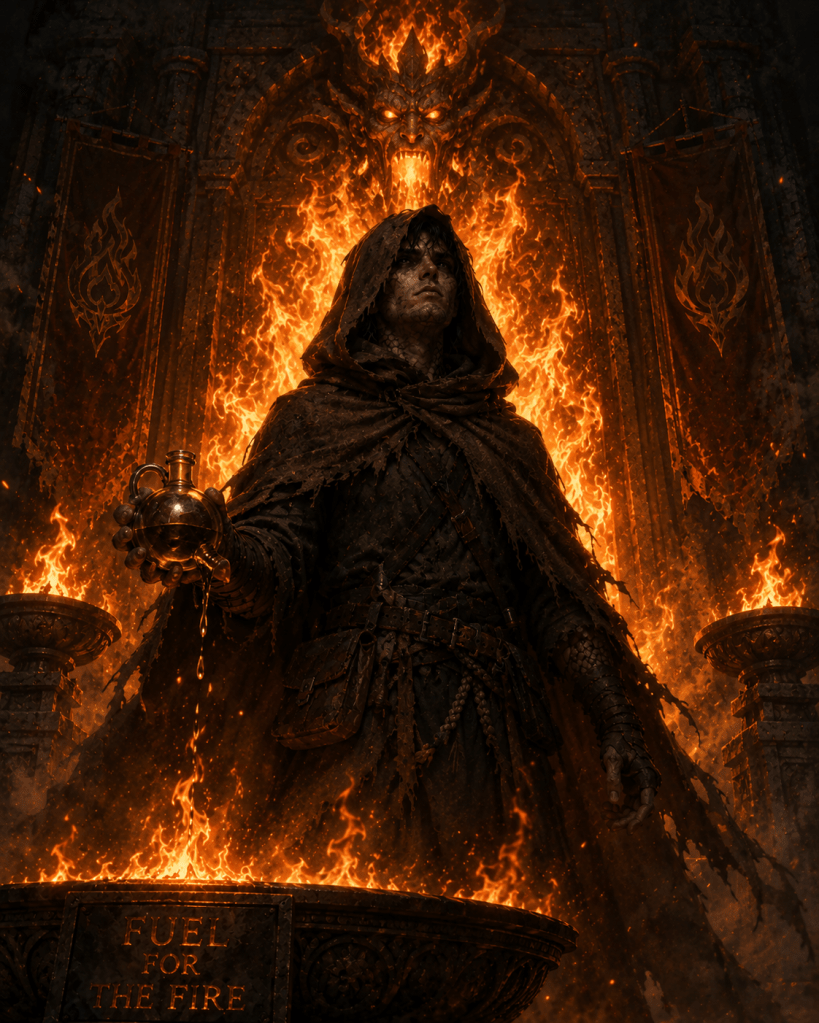
So when asked for an offering?
He produced a flask of oil.
“Fuel for the fire.”
Slightly cheeky. Slightly irreverent.
The flames roared upward violently in response, and while he could have recoiled instinctively, Tarin simply stood there and stared into them without moving. (He’s a tiefling draconic sorcerer —what’s a bit flame between friends!)
Which, apparently, the god respected.
Not devotion.
Not worship.
Resilience.
Stubbornness.
The refusal to flinch.
One of my favourite Tarin moments so far.
Trial Two — Jump Into The Lava
The second trial was considerably more direct.
The way forward required us to leap into a pit of fire. Tarin did take the precaution of casting False Life before hurling himself into the flames.
In what is rapidly becoming a tradition, Tarin immediately failed his Constitution save and suffered a level of exhaustion.
Still — he did make the second save which avoided any actual damage, which frankly counts as a major victory in Tarin’s world.
Trial Three — The Hall of Lamps
The final chamber was the standout encounter of the night.
A vast, shadow-filled hall populated by necrotic creatures — wights and ghouls emerging from the darkness while the party landed in scattered positions after falling from the fire pit.
Tarin ended up isolated with one of the wights immediately in his face.
Thankfully because of the earlier False Life casting, the opening hit mostly stripped temporary hit points rather than immediately leaving Tarin in a dangerous state.
I triggered Innate Sorcery and followed up with Burning Hands.
I’ve realised I increasingly enjoy spells that force the DM to roll saves instead of me rolling attacks. This may reflect a growing awareness of my dice luck.
Meanwhile, the paladin hurled javelins of lightning across the hall, while the 1st-level ranger somehow managed to get Hunter’s Mark onto my wight and pile damage onto the same target.
By the end of the first round, the wight was already bloodied.
Meanwhile several of the level 1s discovered the exciting educational experience known as “fighting undead far above your pay grade” and got hit hard.
Fortunately, the 6th-level cleric was an absolute hero all evening and kept dragging people back into the fight.
Then came the moment of collective revelation.
The encounter was called The Trial of the Lamplighters.
At roughly the same time, the entire table suddenly realised:
“Oh… maybe we’re supposed to light the giant lamps.”
Classic adventurer behaviour.
Once we finally embraced the objective rather than simply committing aggressive violence, things shifted quickly.
Tarin survived another attack thanks to a miss plus Shield, blasted the wight apart with Thunderwave, then used Quickened Spell to cast Fire Bolt one of the ghouls threatening the 1st-level warlock.
That ended up being his final action of the encounter because, by the end of the round the last lamps were lit — and the shadow creatures were utterly destroyed.
Final Thoughts
A genuinely excellent session.
Good pacing. Good atmosphere. A strong mix of roleplay and combat. Enough danger to make the low-level characters sweat without it becoming miserable.
And honestly, organised play continues to surprise me with how much emergent character development it creates.
Tarin is gradually becoming somebody far more defined through play than through backstory notes — cynical, stubborn, sometimes reckless, and somehow oddly resilient.
This website uses trademarks and/or copyrights owned by Fire Opal Media, which are used under the Fire Opal Media, 13th Age Community Use Policy. We are expressly prohibited from charging you to use or access this content. This website is not published, endorsed, or specifically approved by Fire Opal Media. For more information about Fire Opal Media's 13th Age Community Use Policy, please visit www.fireopalmedia.com/communityuse. For more information about Fire Opal Media and 13th Age products, please visit www.fireopalmedia.com and www.pelgranepress.com.

 Tolrendor DM's Blog