One of the dangers of travelling with a fantasy world permanently lurking somewhere in the back of your mind is that eventually you stop seeing places simply as they are.
You start seeing what they could be.
That happened almost immediately in Split. I had barely begun this journey before Diocletian’s Palace was already being dismantled and rebuilt in my imagination as Karsos: an ancient Varandian imperial complex, abandoned after the fall of the empire and eventually reclaimed by pirates, merchants and refugees.
A few days later, I took the short boat journey along the coast to Trogir.
And almost immediately it happened again.
A City on an Island
Trogir is tiny.
That was probably the thing that struck me most strongly.
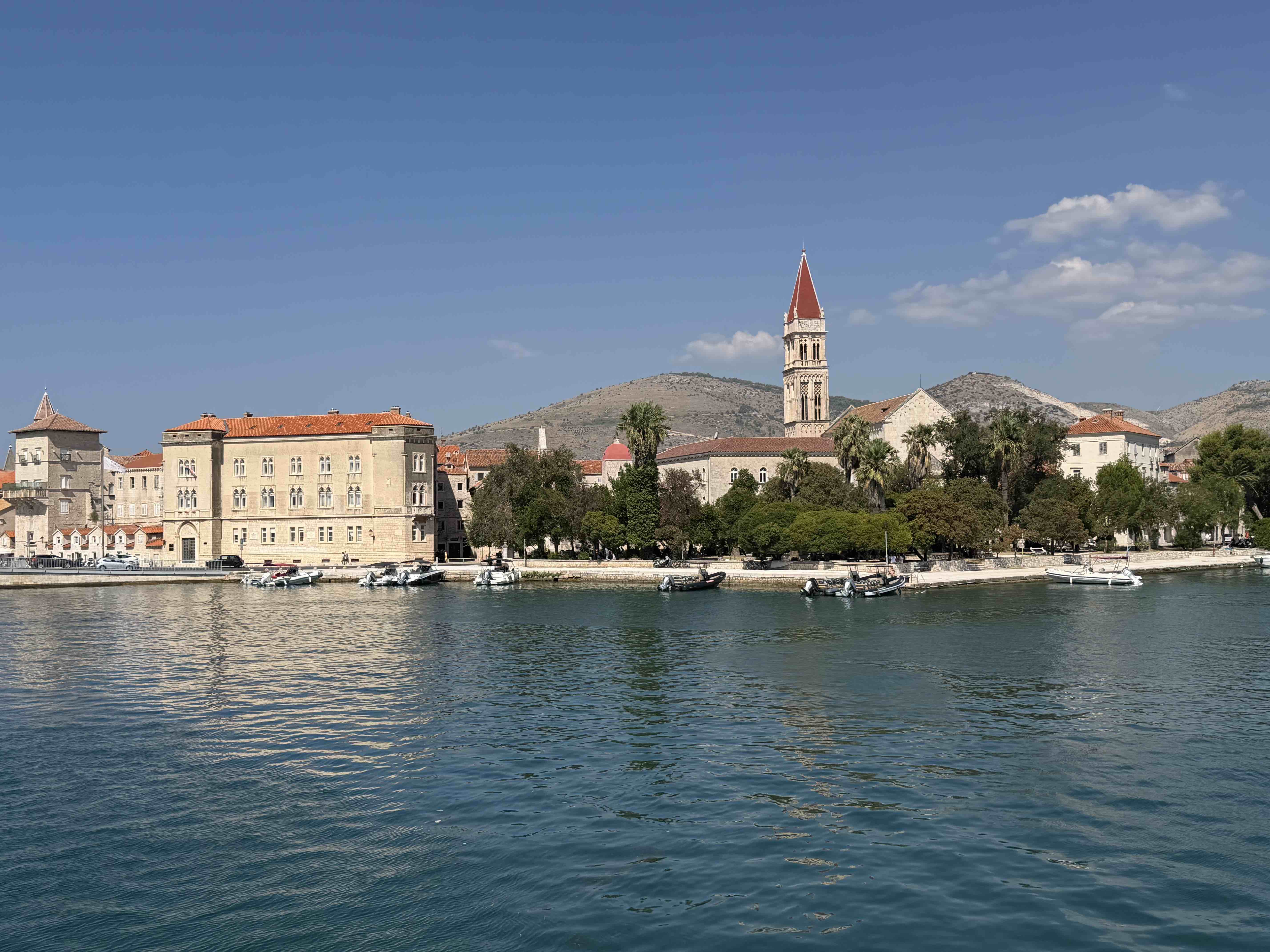
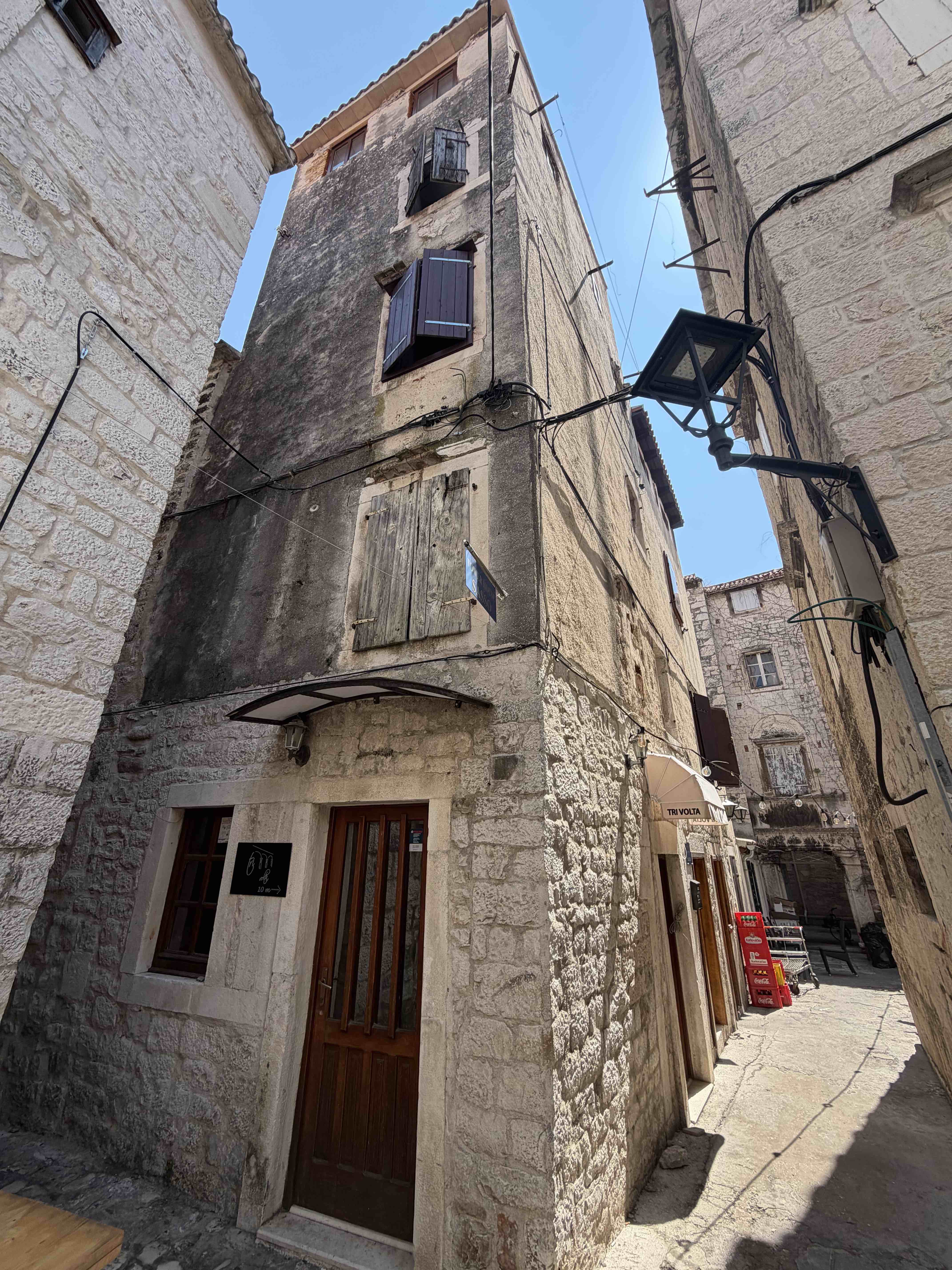
The historic city occupies a small island squeezed between the Croatian mainland and the much larger island of Čiovo. You can walk from one side to the other in minutes.
And yet an extraordinary amount of city has been compressed into that little space.
There are narrow stone streets and tiny squares, medieval houses packed almost wall-to-wall, churches, palaces and towers. At the western end, Kamerlengo Fortress guards the waterfront. Above everything rises the bell tower of the Cathedral of St Lawrence.
From street level, Trogir feels like a maze.
Climb above the rooftops and suddenly the whole thing makes sense.
The red-tiled roofs spread out beneath you, bounded on every side by water. Beyond them are the harbour, the mainland, the hills and the larger island across the channel.
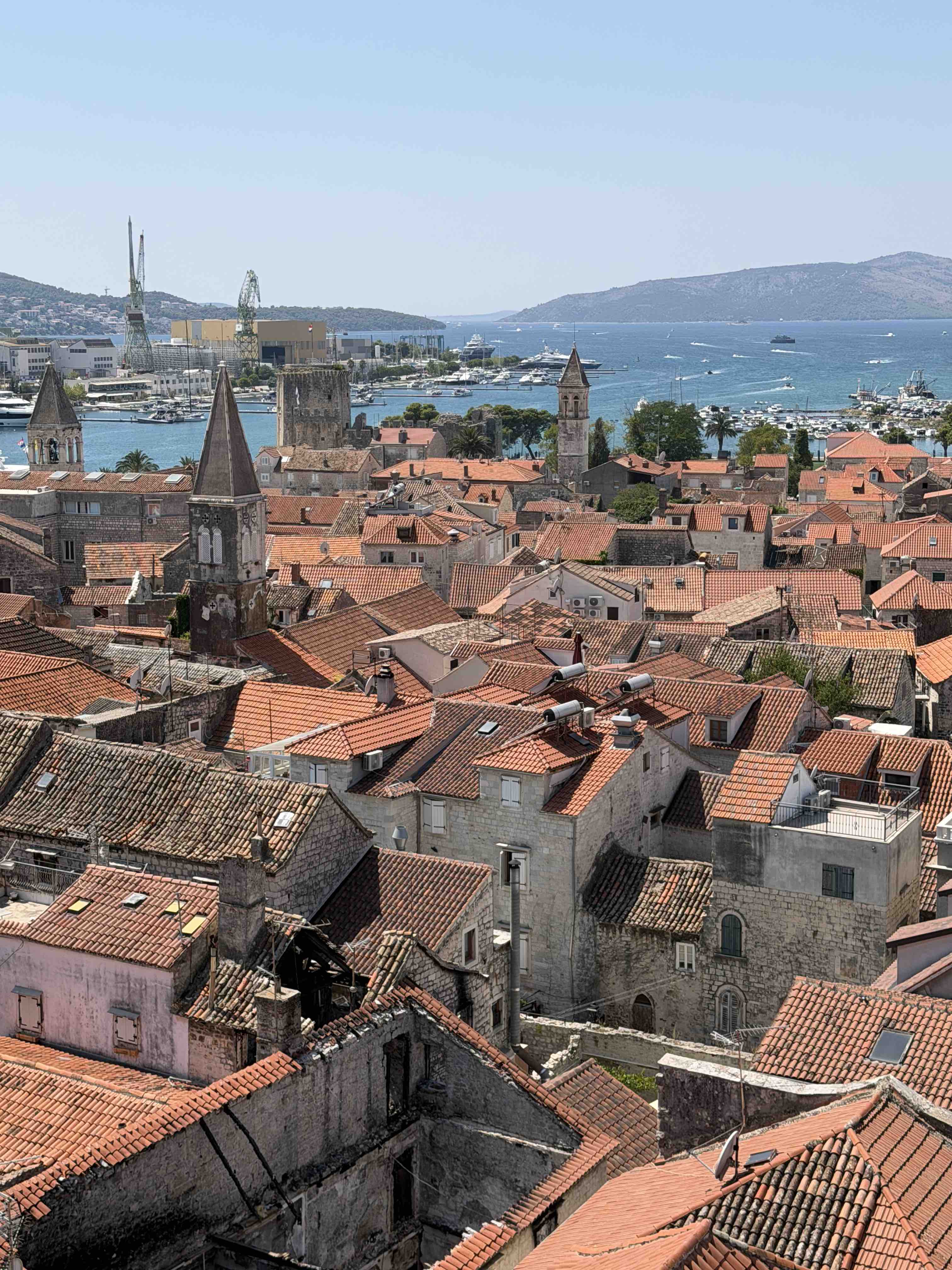
It is a wonderfully legible piece of geography.
And looking down from those towers, I realised that I already had almost exactly the right place for something like it in Tolrendor.
Back to Varandia
Karsos, inspired by Split, lies on the southern coast of the ruined Isle of Varandia.
Varandia was once the heartland of one of the great powers of the ancient world: the Dragon Empire.
Its end was catastrophic.
A magical war between Varandia and a rival empire to the south and east devastated the heartlands of both powers. Much of Varandia became the Blight, a magically scarred wasteland where even centuries later magic behaves unpredictably and the remains of once-great cities lie abandoned.
The catastrophe effectively emptied the heart of the old empire.
But perhaps not quite all of it.
Looking at my map, just a short distance west of Karsos is a tiny island sitting immediately off the Varandian coast. Beyond it lies another, somewhat larger island.
I’d drawn them years ago.
They had never really been anything more than shapes on the map.
Trogir gave them a purpose.
The little island became Talovar.
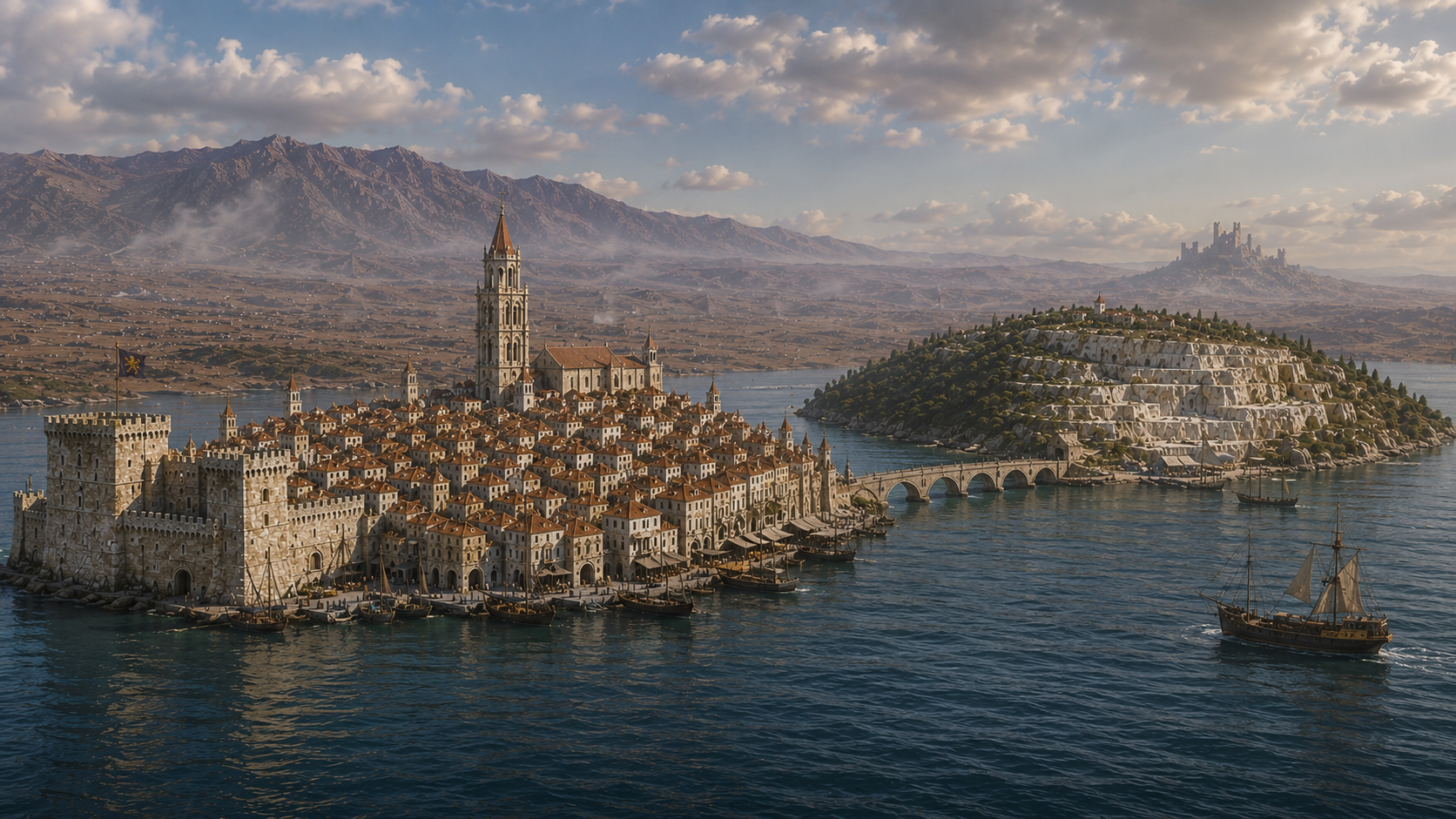
Talovar concept – AI generated
The Marble City
Talovar predates Karsos by many centuries.
In the days of the Dragon Empire it was a small but prosperous Varandian city, occupying an island just offshore and connected by bridges to both the mainland and the larger island beyond.
Its importance came from stone.
The larger island contained rich deposits of a pale marble prized throughout Varandia. Quarries cut deep into its hills, while Talovar became the port through which the stone passed on its way to temples, palaces and monuments across the empire.
It was never one of Varandia’s great cities.
It didn’t need to be.
It was a busy little quarry port, comfortably protected by imperial power and connected to a trading network stretching across the Inner Sea.
Then the world ended.
Surviving the Blight
The magical devastation that destroyed Varandia transformed Talovar almost overnight.
The mainland beyond the bridge became increasingly dangerous. Roads which had once carried carts of stone and food inland now led towards abandoned settlements and magically scarred wilderness.
Trade collapsed.
The quarries largely fell silent.
And the empire which had governed Talovar simply ceased to exist.
But Talovar itself survived.
Perhaps being separated from the mainland by that narrow strip of sea spared it from the worst of the catastrophe. Perhaps it was simply luck.
Whatever the reason, the people remained.
For generations Talovar became poorer, smaller and increasingly isolated. Great Varandian buildings were stripped for their stone. Marble which had once been intended for imperial monuments became doorsteps, harbour walls and houses.
The city learned to live from the sea.
More importantly, it learned to govern itself.
That experience became fundamental to the Talovari sense of who they were.
Empires might rise and fall around them.
Talovar endured.
Conquerors Come and Go
Eventually ships returned.
To the west, the Akayin peoples who had spent centuries beneath Dragon rule were building cities and kingdoms of their own.
Trade across the Inner Sea revived, and Talovar slowly became part of that world.
Its independence did not last forever.
One of the expanding Akayin city-states eventually brought the little port under its control. Later still, that state — and Talovar with it — was swallowed by the growing Empire of Samos.
The Samite Empire eventually dominated almost the entire Inner Sea.
Yet even the Samites largely avoided the Blight.
Talovar therefore occupied an unusual position: an imperial city sitting on the very edge of territory the empire nominally claimed but had little desire to govern.
Its ancient civic institutions survived. Its merchants prospered again. The marble trade revived, although never on the scale it had enjoyed under Varandia.
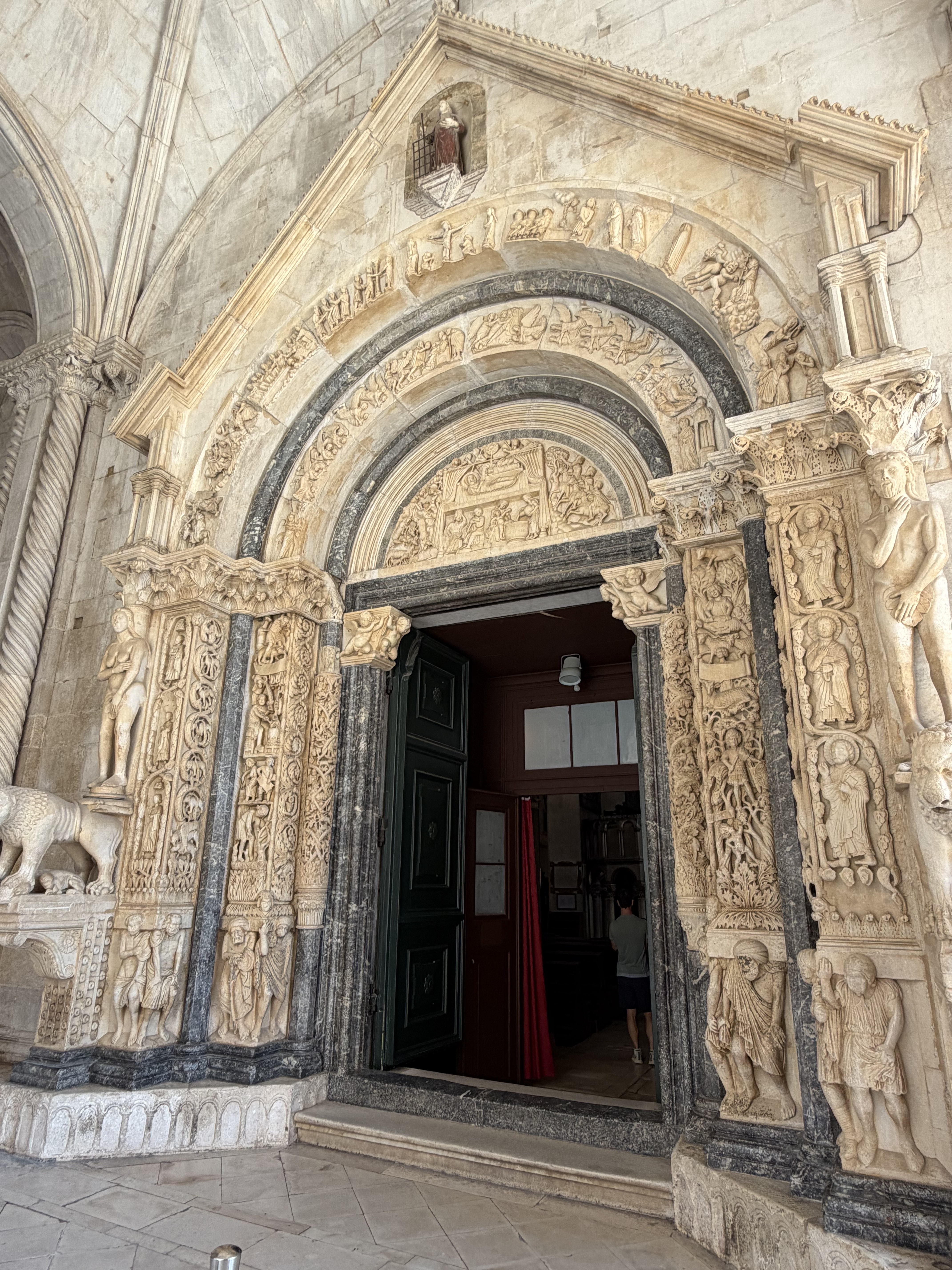
And among its increasingly cosmopolitan population remained an unusually large number of Dragonborn families.
Some claim descent from Talovari citizens who survived the fall of Varandia itself.
Their archives, traditions and stories preserve fragments of the old empire that have disappeared almost everywhere else.
Then Samos fell too.
And once again, Talovar found itself free.
Thelin
Unfortunately for the Talovari, history has an irritating habit of repeating itself.
Today Talovar belongs to Thelin, one of the Akayin successor states which emerged from the wreckage of Samite power.
The conquest is recent enough to remain uncomfortable.
A Thelin governor occupies the city. Thelin soldiers man its walls. And at the western end of the island stands a great stone fortress overlooking the harbour — both protection against attack and a very visible reminder of who currently rules Talovar.
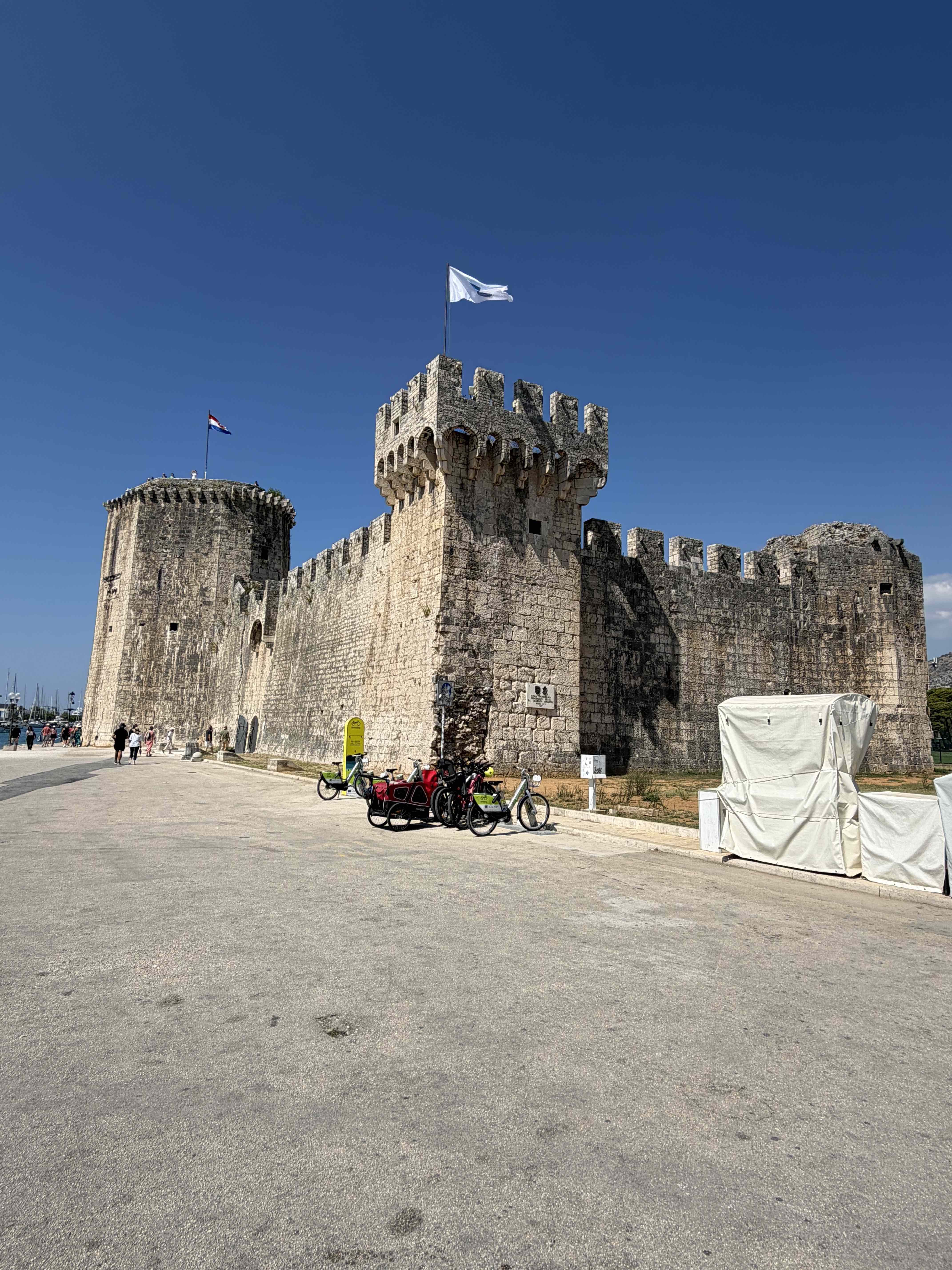
The relationship isn’t entirely hostile.
Thelin protects the sea lanes. Its markets bring wealth. Some Talovari merchant families have become considerably richer under its rule.
But the city remembers governing itself.
Indeed, it has governed itself several times.
There is an old saying in Talovar that empires eventually leave.
The Talovari merely have to wait.
The Upstarts Along the Coast
Which brings us back to Karsos.
Karsos is almost the opposite of Talovar.
Talovar survived the fall of Varandia.
Karsos was born from it.
For centuries the enormous ruined imperial complex at Karsos remained largely abandoned. Under Samos there was little reason to settle such a dangerous corner of the old Varandian coast.
But when Samite authority collapsed, piracy returned to the Inner Sea.
The ruins made an excellent refuge.
Pirates became settlers. Settlers became merchants. Privateers acquired warehouses, taverns and respectable houses.
Eventually the forgotten palace became a city.
To the old families of Talovar, Karsos should be appalling.
It is young, unruly and infested with pirates.
Its inhabitants have occupied Varandian ruins to which they have no conceivable claim and turned them into taverns, workshops, warehouses and homes.
Naturally, Talovar does a great deal of business with it.
Officially, Thelin would prefer that relationship to remain limited.
Unofficially, Talovari merchants have discovered that pirates require supplies, stolen cargo requires buyers, and privateers occasionally need respectable paperwork explaining where particular goods came from.
There are even whispers of something considerably more dangerous.
Some among Talovar’s old families look at Karsos and see not a nest of pirates, but something their own city has repeatedly lost.
Freedom.
They dream of restoring Talovar’s ancient charter, expelling the governor of Thelin and once again declaring themselves a free city — with the ships of Karsos conveniently available to discourage Thelin from objecting.
Thelin, unsurprisingly, would call that treason.
Old Cities, New Stories
And this is perhaps what I enjoyed most about Trogir.
Split inspired me because an enormous imperial monument had become a city.
Trogir suggested almost the reverse.
What if the little city simply never went away?
Empires collapse. Peoples migrate. Languages change. Gods acquire different names. Conquerors raise their banners over the walls.
But underneath everything are the same streets.
The same harbour.
The same old houses rebuilt from even older stone.
And somewhere beneath a Talovari merchant’s cellar there might still be a block of marble bearing the half-erased inscription of a Dragonborn magistrate who governed the city before the Blight.
Karsos may look more Varandian.
Its enormous ruins make sure of that.
But Talovar has something Karsos can never acquire.
Memory.
And all because I took a boat to a little Croatian island city that had been sitting there, quietly surviving empires, for more than two thousand years.


 Tolrendor DM's Blog