Every fantasy world begins somewhere.
Sometimes it’s a map scribbled on the back of an envelope. Sometimes it’s a scene from a favourite novel. Sometimes it’s a place you’ve stood, looked around, and quietly thought: this belongs in another world.
For years, one story has lingered in my imagination: Richard the Lionheart’s extraordinary journey home from the Third Crusade, and the enduring legend of his minstrel, Blondel, searching Europe for his imprisoned king. I first encountered that tale through David Boyle’s excellent Blondel’s Song: The Capture, Imprisonment and Ransom of Richard the Lionheart, which retraces Richard’s most likely journey across medieval Europe while weaving together history, landscape and legend. Long before this trip became a practical itinerary, Boyle’s book planted the seed that one day I might follow those same roads myself.
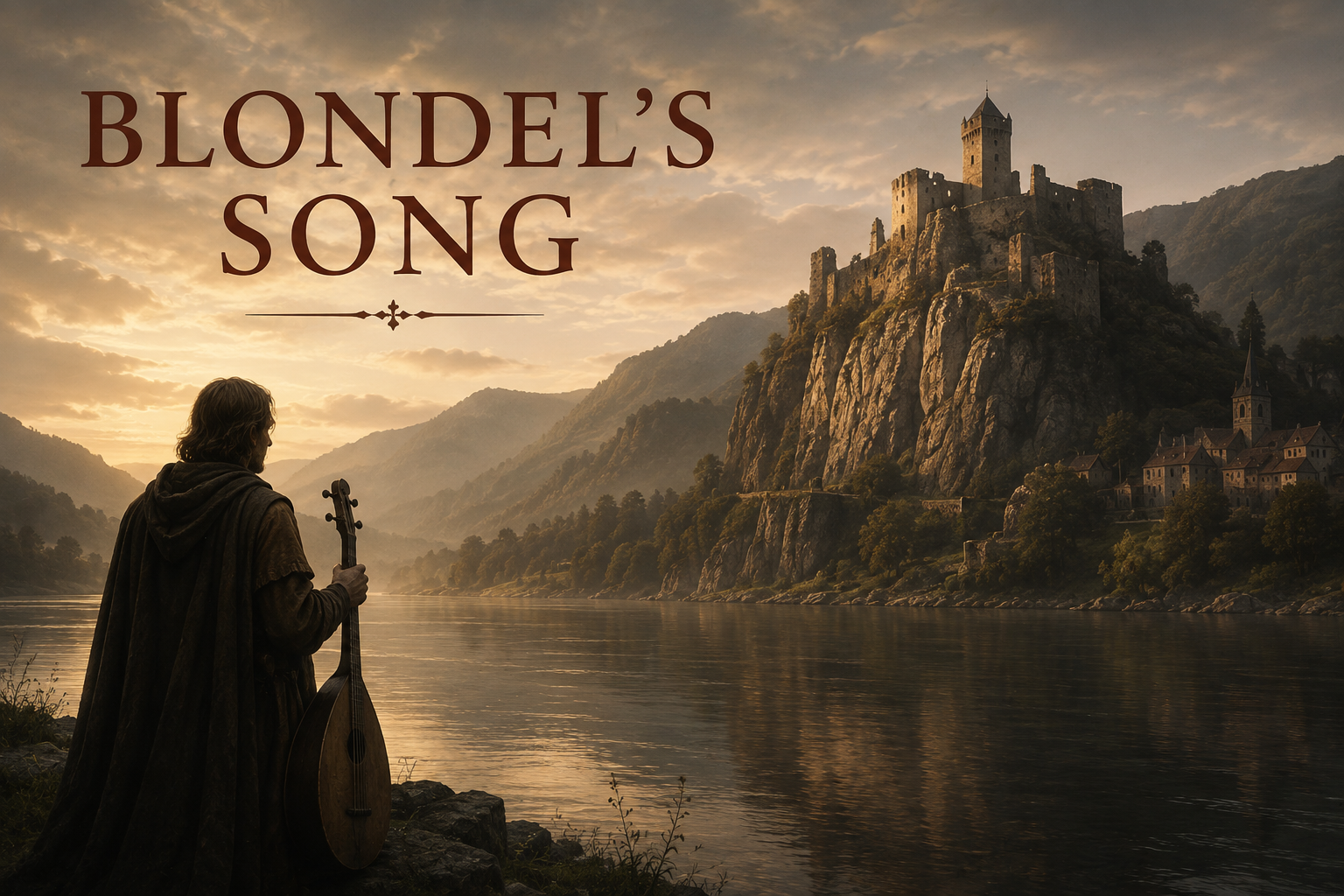
This August, I’m finally doing exactly that.
Armed with a backpack, a notebook, a camera (well, iPhone), a laptop, and far too many ideas, I’m travelling from the Adriatic through Central Europe, following some of the route Richard is believed to have taken after leaving the Holy Land. From Split to Zagreb, Trieste, Aquileia, Villach, Friesach, the Wachau, and then on to Bratislava and finally Budapest, I’ll be travelling largely by train, camping where I can, and spending my days exploring castles, medieval towns, monasteries, mountain passes and forgotten corners of Europe.
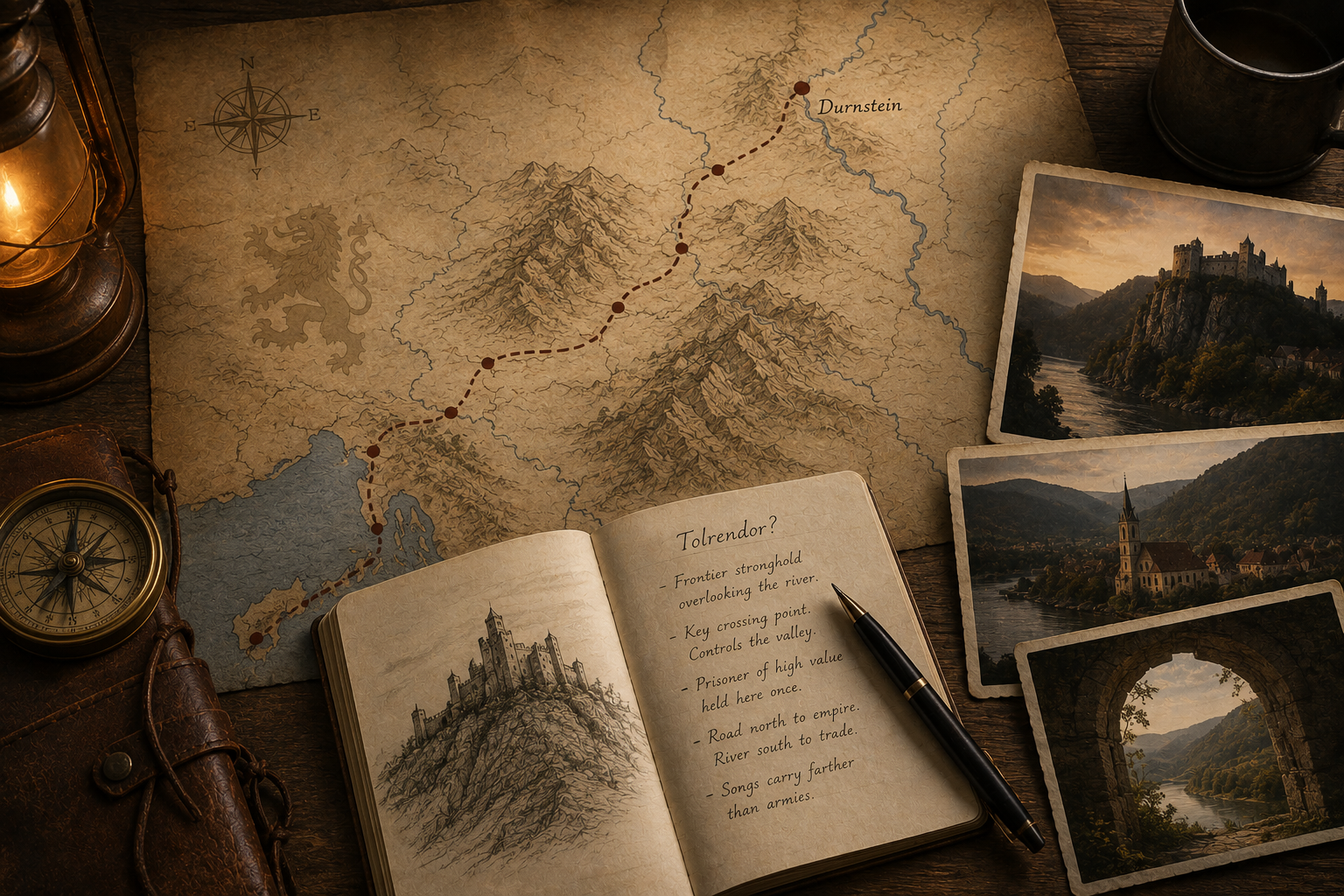
This isn’t intended to be a travel blog, at least not in the traditional sense.
Instead, it’s a research expedition for Tolrendor.
The fantasy worlds that stay with me always feel grounded. Cities grow where rivers can be crossed. Castles command mountain passes because those passes mattered. Kingdoms rise through trade, geography, politics and conflict long before they appear on a map.
Those are the things I want to see.
Not simply the famous landmarks, but the reasons they’re there.
- Why was this town founded here?
- Why did this fortress control the valley?
- How does the landscape shape the settlement?
- What details survive that never make it into the guidebooks or photographs?
Most importantly…
What if this place existed in Tolrendor?
Richard’s own journey already feels like the outline of a fantasy adventure: shipwrecked after the Third Crusade, travelling in disguise through hostile lands before finally being captured near Vienna and held for ransom. Whether every detail of Blondel’s legendary search is true matters less than the image it leaves behind: a Europe stitched together by roads, castles, songs and stories, where history and legend blur into one another. That feels like exactly the right path to follow when searching for inspiration for a fantasy world.
Over the coming weeks I’ll be sharing a series of World-Building Notes inspired by the places I visit, and asking the question:
“How would this exist in Tolrendor?”
I hope these posts offer a glimpse into one of my favourite parts of world-building: discovering that the real world is often stranger, richer and more inspiring than anything we could invent from scratch.
Let’s see what we find…
Further Recommended Reading:

 Tolrendor DM's Blog