DM for Kids: Remember, they’re still kids…

RPGKidsLogoSo summer is pretty much over now here in the UK as the evenings draw in rapidly, and temperatures start to fade. The kids are back at school after a great holiday period, so life has returned to the school/homework/sport/activity cycle!  

During the holidays, I’ve been running my Weekly Game Night Challenge, so we’ve actually been playing a fair bit of D&D! Being on a week-night, sessions have typically been shorter, so we haven’t necessarily been getting through adventures at a much greater rate. However, we’ve all agreed that playing weekly is a major improvement in terms of continuity, and definitely much better than our stop-start efforts over the last year. As my daughter put it: “I can actually remember what we did last time!” 🙂 

Now that we’re back in the grind, I very much doubt we can manage weekly, but I hope we can shoot for fortnightly sessions. If we can achieve this, I’ll be thrilled, and it would definitely be the icing on a very successful ‘Game Night Challenge’ cake!! The prep routine I’ve got into has been working well, so I’m confident I can cope.

The main topic of this post, however, is a DMing mistake I made at the end of the last session which I’ve been reflecting on quite a bit: 

To set the scene, the party was in Fallcrest, having a rest after a successful mission sponsored by the Captain of the Town Guard, and preparing for an excursion to Thunderspire Mountain. Returning from an evening meal at the Blue Moon Alehouse, they found an intruder in their rooms at the Silver Unicorn. The Dark Creeper, leapt out the window onto a neighbouring roof, and scampered off. A frenetic chase across the rooftops ensued, followed by a vicious fight as the Dark Creeper brought his back-up (undead and gargolyes) into play.  

Throughout this fast-moving and fun encounter, the kids were pretty focused on capturing the intruder so they could interrogate him; however in the meantime they had dealt him a considerable amount of damage. I therefore had him try and escape the combat, using his Zombie troops and the two Gargoyles to block the PCs from getting to him. They however, were not to be thwarted: Xyana, the Eladrin wizard who normally hangs at the back firing off ranged spells, fey-stepped past the rear-guards, took an Action Point to leap off a two-storey building onto the Dark Creeper… and killed him with the ‘falling’ damage … at which point he exploded into strands of Shadow (as they do …Killing Dark…)!!  

Well…

Cue pandemonium! The kids (and my son particularly) were incensed, as they had been expecting the Dark Creeper to fall unconscious, at which point they could capture him! They felt I had cheated on their plans…; whereas I guess in my mind I had never been expecting them to capture him, so just went with the rules! I certainly hadn’t expected this reaction!  

On reflection after the session, I guess I am a little disappointed with my handling of this situation – it was clear from the play leading up to the incident that the kids wanted to capture the Dark Creeper; however I was working on the assumption that he would either escape or be killed, and they would follow-up the encounter with some investigation around the town that would eventually enable them to track him down. Essentially, I thought they would see this as just leading into the next challenge… guess I was quite wrong! 

Unfortunately, in the heat of play (in my defence we were running out of time and I was trying to hurry the session/combat to a conclusion…) I failed to be flexible enough to accommodate the players’ actions – especially given the cool cinematic lead up (with Xyana). If I’d thought a bit more quickly on my feet, there were a number of approaches I could have taken:  

  • Have the Dark Creeper mutter a few words just before he exploded – which would provide a clue as where to investigate next. 
  • The PCs could have discovered some clues in his gear 
  • Just waive the rules and let them capture him  

I think I  prefer the first option as the best balance, but by the time I realised this, it would have been a bit false to go back to it. Thankfully the session finished at this point, so I still have a chance to rectify the situation with option 2; I’m planning on having the PCs discover a gold signet ring which fell on the ground when the Dark Creeper vapourised. This ring is intended provide a clue to finding out the faction behind the intrusion, and potentially where their main base of operations in Fallcrest is located.

Lessons Learned: 

  1. Definitely look at having more flexibility at the table to change things based on character actions! If the PCs do something cool, reward it, don’t punish it (albeit unintentionally)!! 
  2. Remember that although my kids are getting older, they’re still kids, and don’t necessarily react/think in the way an adult would/might in the same situation.

The next session is planned for tonight, so roll on the action!! 
Posted in Columns, DM for Kids, Roleplaying with Kids, The Amber Tower Campaign | 1 Comment

Cartographer’s Annual Challenge: July 2013

Yes, I realise it’s almost the end of August, and this is the July Cartographer’s Annual Challenge post. I guess I got waylaid on the road. Better late than never as they say…

July’s Annual Issue was a new black and white overland style from Pär Lindström, partly inspired by the original Tolkien maps. Given how much I loved those maps, I was really looking forward to this issue.

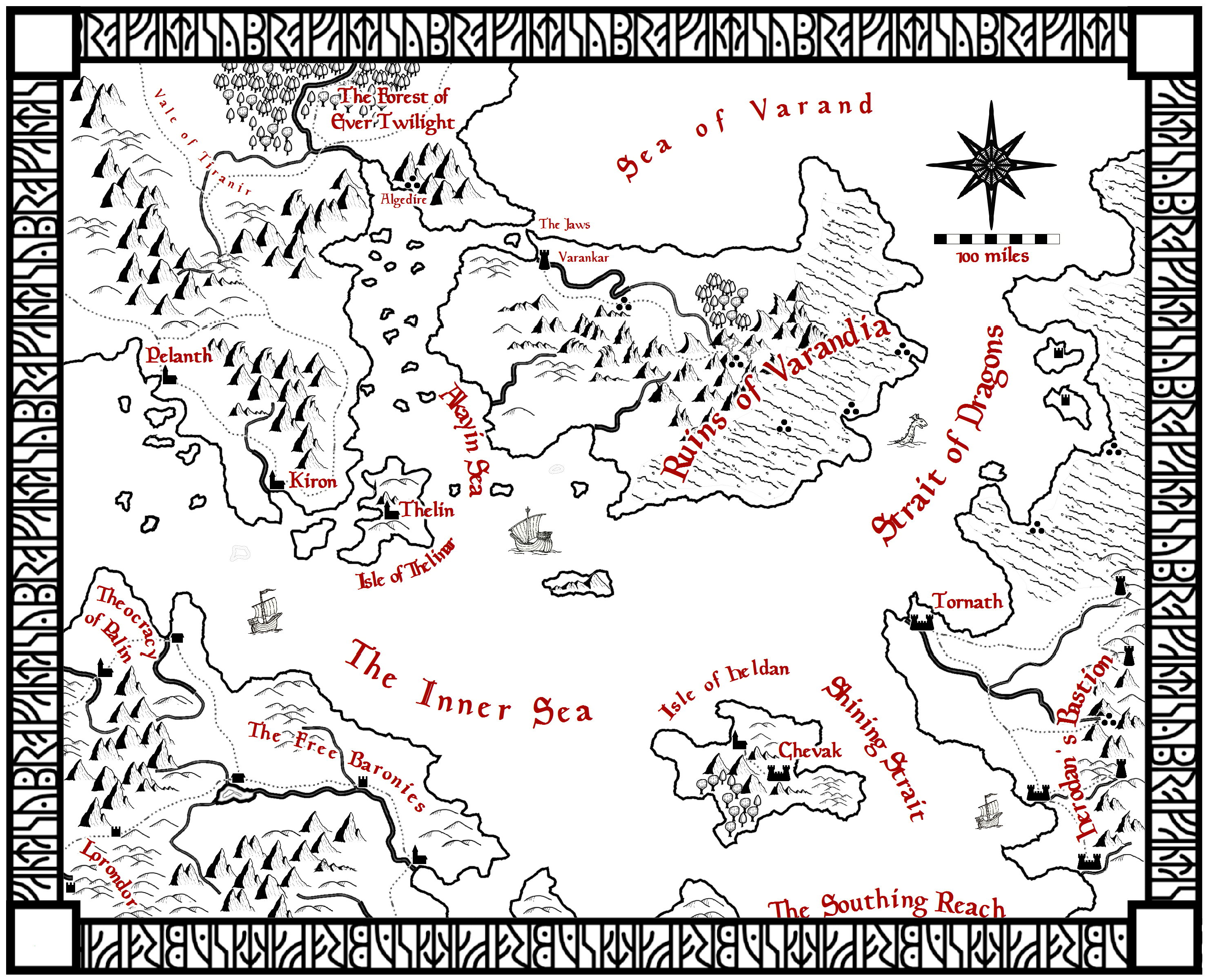
So what took me so long? Well I guess it was my choice of map – I’m much quicker at mapping using CC3 when I have already essentially designed the map, but in this case I decided to layout the eastern reaches of the Inner Sea, an area I’d never really focussed on in my Tolrendor campaigns. This therefore took a lot longer than expected, but I’m pretty pleased with the results – its an area inspired by many sources: the Greco-Persian conflicts of our own world, the Crusades, the Dragonborn empire which forms a key part of the D&D 4E backstory, the Seven Cities region of the Midgard Campaign Setting, and much much more. I hope you like it:

Tolrendor - Inner Sea SE - CA79 - 2

As usual, a lovely style with lots of interesting symbols and drawing tools. The Cartographer’s Annual just keeps getting better and better!

And now I’d better go catch-up with August 🙂

Posted in Cartography, Columns, The Annual Challenge | 2 Comments

Wizards Watch: Tidbits…

Wizards Watch LogoI thought there’d be a whole raft of posts up on the happennings at GenCon over the weekend, but it seems those people lucky enough to be there are still travelling/catching up on sleep! 🙂

The one obvious update I saw is out there on the WOTC website, announcing that the next DnD Next playtest packet will be the last, as R&D start to concentrate on more specific targeted playtesting. From the point of view of someone that is just (finally…) about to start a DnD Next campaign, this is actually not a bad thing, as it means the rules will be fairly stable!

However, I am still a little surprised, as the last packet contained some fairly sudden changes (skills removed, classes becoming a little more rigid in terms of progression choice, with options pretty tied to specific subclasses, etc.), so I’d expected a bit more time for feedback on this (my general feel from the comments and other blogs is that these changes were not that well received …). I’m just starting to create a couple of sub-classes myself to fit into the new campaign, so we’ll see how it goes …

I was also pleased to see Kobold Press picked up a couple of Gold Ennies for A Kobold Guide to Worldbuilding. On flip side, a little disappointed that the Midgard Campaign Setting didn’t win anything, but I guess that is how the dice roll! 😉

Finally, a little tidbit of goodness I just came across – yes I know it’s been up for several years, but I like it! After posting my entry to this months RPG Bloggers Carnival at Evil Machinations, I was browsing the site, not one I’d come across too often before. There’s lots of great content here, but a series of articles “Beyond ‘Fred’“, which provides lists of potential fantasy game names drawn from real-world cultures, really took my fancy!! I struggle with names, especially if I’m trying to keep them consistent, so this definitely goes straight onto on my list of GM-useful links!!

Posted in Columns, DnD Next, Wizards Watch, World Building | Leave a comment

RPG Blog Carnival: Campaign Creation

rpgblogcarnivallogocopyIt’s a while since I participated in a Carnival, but this looked like a fun topic! Creating a new campaign is one of the most exciting things you can take on as a GM. All those ideas, all that potential: in some ways the very unformed nature of the campaign is the attraction; the real nitty-gritty of preparation, when you actually have to make choices as to what is in or out, suddenly becomes a little more like work 🙂

As it happens, despite the fact that I am actively running a D&D 4E campaign for my kids , I have been toying with a secondary D&D Next campaign. This has recently moved into the actual planning and preparation stage, and I’m hoping to run the first session in a couple of weeks. So for my Carnival entry I’m going to outline the thought process and preparation stages I’ve just been going through:

Campaign Concept:

All campaigns have to start somewhere: with a concept! I’m not talking necessarily about anything earth-shattering; this simply means a few questions need to be answered, such as:

  • Where the campaign will take place (galaxy, world, region etc)?
  • What are the key themes?
  • What type of campaign will it be (grand cosmic story arc, adventure path, episodic, sandbox etc)?

In this case, I had some key goals, so this was easy to establish:

  • It will be set in the Havenscoast region of my home-brew world, Tolrendor. I’ve been re-developing this region from its original AD&D days, and nothing helps development like real adventures to run in it!
  • It is intended to be a DnDNext playtest campaign. My aim is to keep the PC list fairly flexible, so multiple different character options can be explored. Also, I want to test how well the DnD Next will support a DM creating setting specific flavour, something that is quite important to me in a rule-set!
  • By design, it will be episodic, as it is intended to run in parallel to my main Amber Tower campaign.

The Map!

Very few of my campaigns get off the ground without a map! Invariably I find that creating a map of the campaign area gets my creative juices flowing, and lots of ideas stem from that. That much should be obvious from this blog 🙂

In this particular case however, the Havenscoast is one of the regions of my world that isArea Map B4 Annual Dec 12 already the most extensively mapped, not only recently with some of the maps I’ve posted on the blog, but also with a large number of my original 19080s hand-drawn hex maps. The bulk of this campaign will take place in the north-east region of the map, around Knight’s Keep and the Tower of Watch. I’m sure there’ll be more work to do here, but I’m off to a good start!

Campaign Ideas:

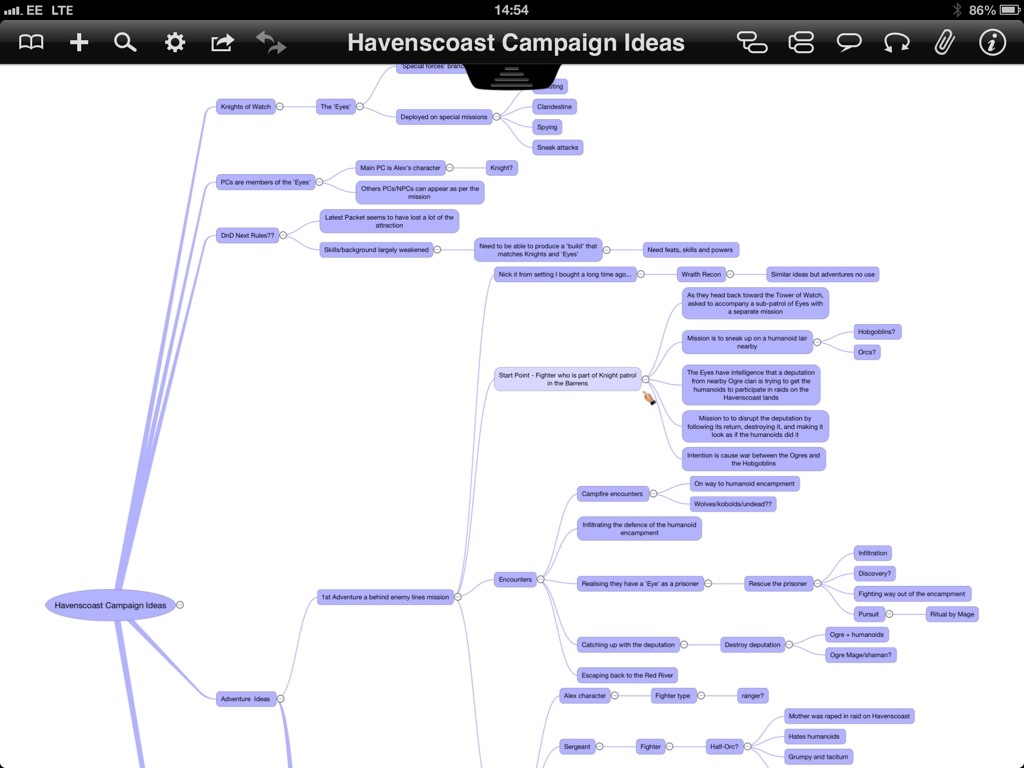
Ok, so now I know a bit about what I’m going to run, and where, but it needs a lot of fleshing out before I can start to prep sessions in earnest! As I’ve recently discussed, I’ve 20130816-151555.jpgbeen making heavy use of mind-mapping tools recently to help with this stage of the process. At this point, nothing is in or out, its just a matter of getting as many ideas jotted down as possible. Some of these may never be used, or may be picked up on later in the campaign, but they’re all useful!

This document is a living document which continue to be updated throughout the life of the campaign; I am not the sort of GM who can come up with a 20-30 level story arc in advance! The adventures of the characters will shape how my ideas for the campaign develop, even if I have some narrative underpinning it all.

Campaign Background:

This is where the process starts to become less about random ideas, and more about actual preparation i.e. I begin to actually write material for the campaign. It’s easy to get bogged down here, which can be fun of course, and a lot of GMs, myself included, love to detail rich histories and setting locations etc., but bear in mind that the more time you spend in this phase, the longer it will take to get to actually playing! Wolfgang Baur of Kobold Press made a great point in one of his essays on world-building (paraphrased): history is of no use to a campaign unless it impacts the adventurers’ current lives!

For this campaign, I’ve already written a short history of the Havenscoast, and an overview of the key locales. As the intention is that the characters are members (or at least associates) of the Knights of Watch, I need to put together some more detailed notes on this organisation, and hopefully some cool backgrounds and feats (in DnD Next parlance) that the players can use to add some setting flavour to their PCs.

First Session Prep:

Armed with all the above, it’s time to turn my attention to the specific prep needed to get ready for the opening session or adventure of the campaign. I’ve been posting about this process a lot lately (e.g. here and here), so won’t go into it again. The goal is to really get a campaign off the ground with a bang, so the players immediately begin to invest in the setting, story and characters, so I try not to skimp on the preparation here!

So there you have it, lots of (fun) work done, and lots still to go … but very soon a brand new Tolrendor campaign will be born … and for a DM, there are not too many more satisfying feelings! 🙂

Posted in Area Map B4: The Havenscoast, Havenscoast D&D Next campaign, Roleplaying with Kids, RPG Blog Carnival, The Amber Tower Campaign, The Havenscoast Project, Tolrendor Gazetter, World Building | 1 Comment

RPG Tech Talk: Prep Tools

RPGTechTalkLogoIn my last DM for Kids post, I talked about the challenge of preparing for a weekly game session, something I’ve never really done on a regular basis. My work and home life schedule doesn’t really seem cut out for it!

Obviously in this day and age, a time-challenged DM has a huge number of tech tools at his/her disposal which can help; a far-cry from the days when I started DMing, where everything had to be done long-hand … (Of course, many would argue that in those ancient days we just did things more simply … but that’s a question for another day …).

So given that I am currently trying to be as efficient as I can with my Prep, I thought it would be worth a quick look at the tools I am using. I’d be very interested in your comments regarding these, or any other gems you have to share.

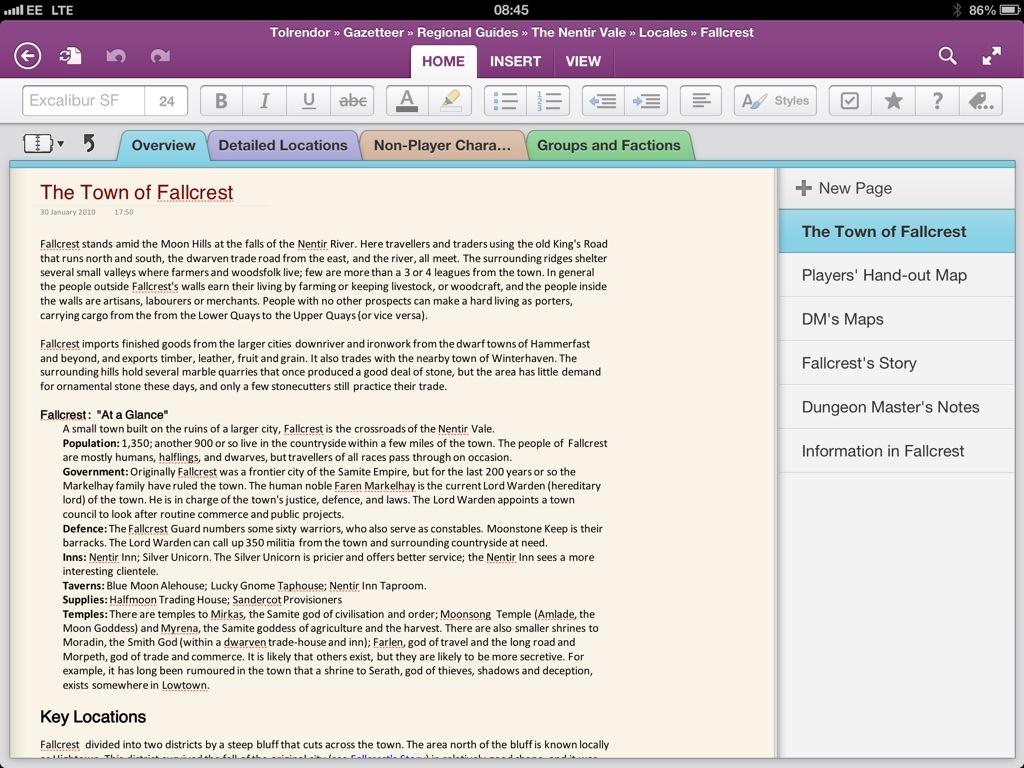
Currently I keep all of my campaign notes digitally in Microsoft OneNote, which I’ve talked about before. I haven’t yet found a better solution, either RPG specific, or generic, for organising information and supporting files in a flexible manner (however, see the bottom of this post…). It really is a digital ring-binder! It’s certainly not without its flaws, but just as I started this weekly session challenge, one update made it even better for my purposes…

Basically, I discovered the iPad version of OneNote. Apparently its been out for a while, but recently got an update which a number of reviewers have said: “finally made it usable.” To achieve my weekly session, I have been trying to maximise the prep I get done on my commute to work via train; this is a game-changer. Via Microsoft Skydrive, I can now keep my home-based and iPad-based views in complete sync, and I can work on my notes on the train directly, rather than using some other word-processing app like Pages, and always having to transfer the data back and forth.

OneNoteScreenshot1.pngApart from a heart-stopping moment when I first synced my data20130814-085530.jpg with SkyDrive, and it seemed to lose whole swathe of data (which thankfully turned out only to be a delay while the sync process completed…) this has been seamless. The iPad app is clean and functional, and my notes look very similar in both versions … as you can see from the two screenshots. There are a few features missing in the iPad app: you can’t create sections, only pages, so the organisation structure has to be established on a PC first; and you can’t follow internal hyperlinks within the app – if you click on one, it tries to load a Skydrive URL via Safari. For my work on the train, both of these are pretty minor issues.

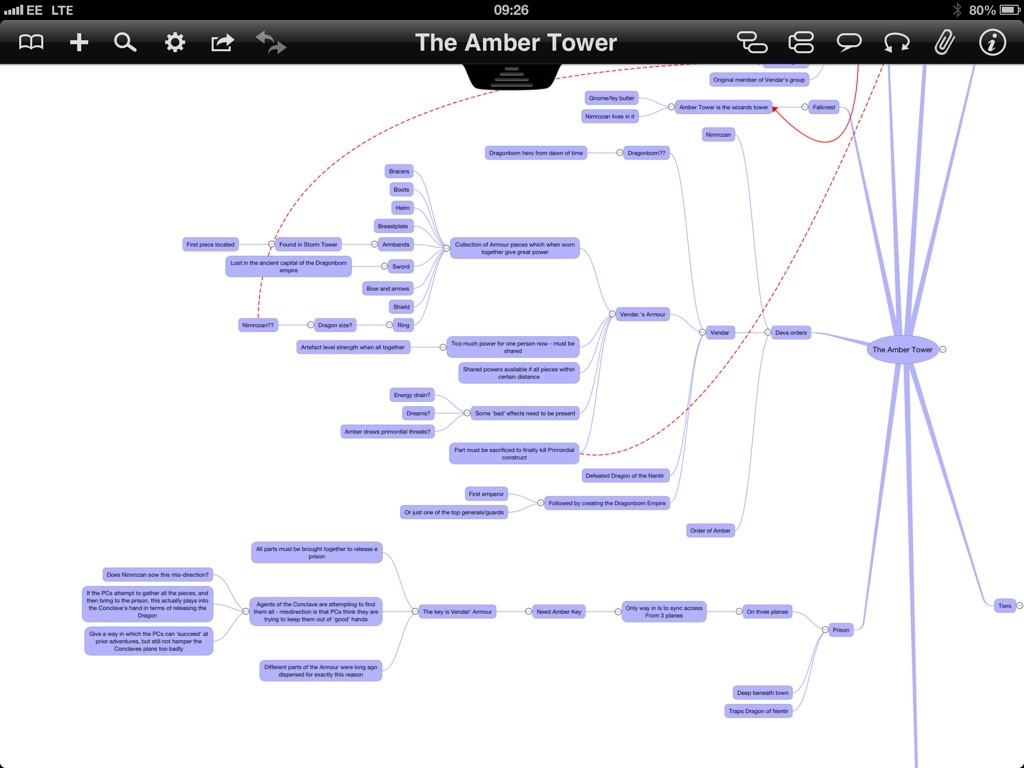
20130814-092905.jpgI also try and do most of my creative thinking on the train, as this maximises my time at home on a PC for more complex prep such as creating maps using CC3. For this process, I’ve been using a iPad mind-mapping app called iThoughtsHD. This allows me to brainstorm effectively, just popping out ideas and jotting them down in a connected way. Later, I can review those ideas, select the ones I like best, and start to build them into more structured notes (at which point I use OneNote). This app can also share data with a PC-based app, although I’ve never bothered with this – after brainstorming on my iPad, I simply transpose the ideas into OneNote.

As mentioned, I still prefer to do more graphical prep work such as map creation and image20130814-165218.jpg manipulation (e.g. to create tokens) on a home PC (I actually run a Mac system, using Parallels to run Windows-only applications like OneNote and CC3; it works pretty well!). However, last session I was prepping a kind of flow chart for a skills-check based chase across Fallcrest’s rooftops – I ran out of time to do this over the weekend at home, so used an app called iDraw to create it on the train. I was pretty pleased with the result  – simple, but effective! Once again the joy of ‘the Cloud’ meant that once I got home, there was my drawing ready to print straight out from the Mac version of iDraw 🙂

The weekly session challenge is certainly keeping me on my toes in terms of prep, but it has also lead me to find and use some great new tools, especially on the iPad, making it really effective for ‘prep on the go’! I’d love to hear about the tools other people use – I’m always on the look-out for ideas …

And finally for now on this topic, it’s here at last:

RealmWorks

… at least for us lucky ‘Early Access’ backers 🙂

I haven’t had a chance to play with it yet, but there is bound to be another RPG Tech Talk post on this as soon as I have. Will this change the way I manage campaign data and session prep forever?? It certainly has potential … although the promised ‘cloud sync’ functionality won’t be available for a while yet, and with my new-found OneNote PC/iPad awesomeness, it does have some stiff competition 🙂

Posted in Columns, RPG Tech Talk, RPG Technology | 1 Comment

DM for Kids: Session Prep

RPGKidsLogoSo the first session of my Summer Holiday (Monday) Weekly Game Night challenge has been and gone. As I previously mentioned, I only had one session pre-prepped before I began the challenge, and there are 5 more potential sessions before the kids go back to school … so what to run!!!?

But then that’s the whole point of the challenge! We have time to game, as it’s the summer holidays, but if I can’t deliver the sessions, we can’t game! I accept that work pressures might mean that some Mondays I might have to say: “Sorry, I’m not ready for D&D tonight, lets break out Dungeon Command or Castle Ravenloft or (… substitute any number of games we never get time to play …).” Realistically however, I want this to be the exception rather than the rule; the underlying goal of this challenge is to play more D&D!

Traditionally, my DMing has been in what I call ‘burst mode’; I spend a considerable amount of time prepping an adventure, and then we play it over multiple sessions. Once we’ve finished that adventure, there is a significant hiatus while I prep for the next adventure. This break can last from several days to several months, depending on a host of factors generally not connected with gaming (work, kids’ activities, etc., you know the score …).

In this case however I have a time-box: once the kids go back to school, time for gaming will again be at a premium, so I want to maximise what is available. Essentially, this means preparing a session to run every week, regardless! Scary – at least for me – I realise there are many of you out there for which this is the norm, and I give you full respect! But for me, and my schedule, help is required!!

My main sources of help are a book I bought earlier in the year: Never Unprepared: The Complete Gamemaster’s Guide to Session Prep, written by Phil Vecchione, and Chris Perkins’ peerless (and sadly now on hold…) column on the Wizards’ website: The Dungeon Master Experience. Both of these publications offer a wealth of ideas on how to run regular campaigns, so if they can manage it, surely I can for 6 weeks…

So lets look at the state of play: last Monday, the first holiday session took place in which we pretty much finished off the adventure ‘Storm Tower’ from Dungeon 166 (written by Chris Perkins in fact!)  Nothing more is prepped, so before next Monday I need to be ready with another session. Now don’t get me wrong, I’m not looking to write a whole adventure in this time – I’m not crazy! I’m using a published adventure (Thunderspire Labyrinth in fact), but I obviously need to prep it: integrate it into my campaign, prepare maps etc. So I still need to be pretty efficient.

In Never Unprepared, Phil Vechinone talks about the five stages of prep: Brainstorming, Selection, Conceptualisation, Documentation and Review. The first three cover the creative phase of generating fantastic ideas and then organizing them into an (hopefully) awesome session, while the latter two cover getting everything prepapred to actually run the session.

As I’m running a published adventure you wouldn’t expect too much brainstorming etc. to be required, but actually I always end up changing quite a lot of the background, hooks, running order and even encounters to fit into my campaign. On the documentation side, it still takes a reasonable amount of effort to produce printable maps, get tokens sorted, prepare role-playing notes etc.

To keep this manageable, my target is to finish the first three stages a whole week in advance. In practice, finishing Conceptualisation means that I have produced a one-page (-ish) session outline (I stole this from the Dungeon Master Experience!). At this point I know exactly (within reason and notwithstanding PC actions of course…) what the session will encompass, what encounters and adversaries need to be prepared, and so can I use the week leading up to the session for specific Documentation and Review.

Of course, as I’m running a two week cycle, but a weekly session, this still means I have all five stages to cover – but I’m doing them for different sessions. As I crunch through the documentation for the coming Monday, I’m also looking forward to the next session but one. Sounds tough right?

Well, one of the other key lessons of Never Unprepared is working out your personal timetable so that you can make the most of any available slots for prep. I commute to work by train each day, and this is an ideal ‘creative’ time, which is far less computer intensive than documentation (i.e. mapping, compiling monster stats for encounters etc.). So my plan is to work on the ‘next but one’ session during my commute, coming up with ideas, making notes on my iPad, and typing up the session outline. At home, I can concentrate efficiently on the documentation for the upcoming session with the right tools around me: computer, all my rule books, printer etc.

Sounds fine in theory, doesnt it!? Will it work ??

Ill let you know 🙂

Posted in Adventure Design, Columns, DM for Kids, Roleplaying with Kids, The Amber Tower Campaign | 3 Comments

Ahhh, Summer…

20130802-095336.jpgIn actual fact, as I steal 10 minutes in the office to start this post, rain is beating against the windows!! Summer in the UK I guess … although to be fair the weather has been pretty awesome for the last few weeks after a pretty poor start 😉

So what do the lazy days of August have in store at TolrendorDM’s blog?

Well first thing is that due to family holidays and house guests, I haven’t yet got my July Cartographer’s Annual Challenge entry up!! That should get rectified this weekend!

I’m just back from a wonderful couple of weeks in the Lake Garda area of northern Italy, surrounded by clear water, mountains, and of course, medieval towns and castles. A great time was had by all the family, and as ever when I visit places with such wonderful heritage, I come back inspired with campaign ideas! Some thoughts on that to follow in another post.

The Monday coming is the first session of my summer holiday Weekly Game Challenge!! There’s a lot of prep still to do, and not much time to get it done!! I’ve been looking for opportunities to put in place some new tools and ideas for efficient prep, so look out for some posts on this topic!!

Finally, although it keeps on slipping, I’m still expecting to get my hands on the Early Access release of the RealmWorks campaign data manager! Very much looking forward to seeing how it really rocks (at least I hope…) so more on that to come I’m sure …

Hmm, seems August might not be so lazy after all 🙂

Posted in Cartography, Columns, Miscellaneous, Roleplaying with Kids, RPG Technology, World Building | Leave a comment

DM for Kids: The Weekly Game Challenge!

RPGKidsLogoI’ve never run a weekly game! There, I’ve said it! It’s unfortunately the honest truth. My DMing experience back in college/university days was always in ‘burst mode’: we’d have a few sessions in a short space of time, followed by a lull due to scheduling issues, or simply cos further preparation time was required between adventures.

Regular readers of this column will also know that I have been getting frustrated over the last six months or so with the intermittent sessions we’ve been able to achieve in my kids’ campaign. So far this year we’ve achieved 4 sessions!! Yep, 4 measly sessions!!

And by the way, this is not down to session prep (as the adventure we’re currently running was fully prepped before we even started it…), this is solely down to the scheduling issues of a busy modern early teen family!! Typically weekends are taken up with sporting activities, and when not, homework takes up the slack. D&D unfortunately comes a distant last …! Week-nights are no good due to homework, or kid’s bedtimes, especially as I’m seldom home from work before 7.30-8pm.

But now its almost the Summer holidays. Yay. The weekends are likely to be just as busy, but week-nights are a possibility – no homework, and less stringent bedtimes. So I’m setting myself a challenge: Monday night is game night!! That is, every Monday night during the holiday period, we’re going to game!

I’ve got a maximum of one session left in the currently prepped adventure, and then I’m in unknown territory …! I’ll definitely be making use of the book Never Unprepared: The Complete Gamemaster’s Guide to Session Prep, which I mentioned in a previous column.

Wish me luck – this is something new for me, and it could be tough 🙂 I know lots of you out there do this week-in, week-out, so it doable…! I’ll keep you posted 🙂

Posted in Columns, DM for Kids, Roleplaying with Kids | 4 Comments

Wizards Watch: De Planes, De Planes

Wizards Watch Logo

I’ve been musing about the subject of this article for sometime now, without it coming to the boil! Finally I’ve managed to collect my thoughts on this, so here goes! 🙂

The original trigger was Chris Perkins’ editorial in Dragon 414 , back in August 2012, announcing a month of Dungeon and Dragon content with a planar theme. An excerpt from the article caused quite a lot of internet chatter at the time: “D&D is not truly D&D without the Great Wheel,…

Plenty of people were immediately raising the roof after this quote, saying it implied that 4E, because it does not have the Great Wheel cosmology, was therefore not DnD!! I’m quite sure Chris, who had been sharing details of his long-running 4E campaign through his superlative Dungeon Master Experience column, meant nothing of the sort, but the article was interesting nonetheless for its viewpoint on how DnD Next might treat the question of cosmology.

Then later, in November 2012, a Wandering Monster column by James Wyatt was published on the topic of the ‘fey’, and posed the question whether the Feywild was really a necessary concept, despite admitting that it was one of the more popular innovations in 4E. This column is more about getting a feel for how people perceive the iconic monsters of D&D, but certainly it gave some insights into how the design team for DnD Next is thinking.

Finally, with this week’s Legends and Lore column, Mike Mearls has given us some fairly clear indications as to where the new system is going. Planescape and the Great Wheel are seen as the default cosmology, the distinct Elemental planes return, albeit with some changes to make parts of them (the border planes) more hospitable to adventuring. Meanwhile, the 4E Shadowfell (although renamed back to the Ravenloft setting) and  Feywild are presented as borderlands to the negative and positive energy planes respectively. Even Spelljammer gets a mention!

So what is TolrendorDM’s view on all this? Well at first glance, I’ve got no major issues. Planescape and Spelljammer were two concepts I loved in AD&D, and it’s good to see them potentially making a new appearance. I’m pleased also that the Feywild and Shadowfell have not been thrown into the 4E trash can – these concepts were great additions to the D&D cosmology in my opinion.

However my second thought is that in some ways the whole concept of a ‘default’ cosmology seems wrong – this is one area which I think should be quite distinct depending on the setting you are playing or creating. For example, Planescape has a particular slant on planar material (i.e. the concept of ‘ideals’ having real power, and the planes portrayed as a diverse and wondrous dangerous set of tourist destinations!). A cool concept, but it doesn’t necessarily fit a setting where the Greater Powers/Deities are depicted as remote from the petty concerns of the world.

A strong influence on the way I think about planar adventures is the Eternal Champion series by Michael Moorcock, in which the various planes and otherworldly settings tend to happen upon heroes in strange and unexplained ways. Here there is no (at least none that is explained) overarching meaning or connection between these strange places –  heroes simply reach them by accident or by seeking out legendary artifacts or beings. In some ways this is closer to the more abstract 4E concepts of the Astral vs the Elemental (Law vs Chaos?), within which disparate ‘realms’ appear under the influence of powerful beings.

In my Tolrendor setting, the cosmology is built around the 4E concept of the ‘Dawn War’, where the primordial Titans of creation (and Chaos) fought their great war  against the ‘Law’ forced upon them by the Gods, until finally a tenuous balance was achieved upon the intervention of the primal forces of life and nature. If and when my players (kids…) venture into the outer planes, there is sure to be a Planescape flavour (after all, Sigil is cool…), but I’m unlikely to apply the rigid concepts of the Great Wheel – to me, the planes should never make sense!

Overall, I think this is my point. I accept there must be some default concepts about the cosmology in the D&D system in order to define a ruleset around planar adventuring (Demons live in the Abyss etc..), but I don’t think it needs to be all encompassing or rigid – I want to be able to develop my own setting’s cosmology and mythology, drawing on published material as needed, but not feeling like I have to have a plane of interlocking gears inhabited by insectoid solids …

To be fair, this ‘toolbox’ approach is clearly identified as a key aim in Chris Perkin’s editorial from last year, and I think that is still what Mike is saying in the most recent article … time will tell!

And as for Spelljammer? D&D in Outer Space? The Return of the Giff? Bring it on … 🙂

Posted in Columns, DnD Next, Wizards Watch, World Building | 2 Comments

Wizards Watch: Deep Magic

Wizards Watch LogoI’m sure a lot of you have seen the latest Kickstarter project from Kobold Press: Deep Magic. It’s pitched as a setting-neutral tome of all kinds of magical goodies: new spells, class features, magical academies etc, for all types of spell-casters.

The original funding ask was $10,000 – but it blew through that in a matter of hours, and has continued to grow apace, with 38 stretch goals already achieved, and more to come. As I write this, the funding stands at almost $78k, with more than 1300 backers, and still 10 days to go!!

As with most Kobold Press publications now, this one is aimed at the Pathfinder Roleplaying Game, so you may ask, why am I interested? The answer is simple: cool products are cool products, whatever the ruleset – and this one looks extremely cool. Also, as readers of this blog will know, I’m a big backer of the Midgard Campaign Setting, and a lot of the spell lore will have its roots in, or be compatible with, this grand setting. I’m also expecting that one of the benefits of DnD Next will be easier sharing of content between various editions/branches of the D&D game, especially as the play-test rules have definitely gone back to the more traditional view of spells in the game – one which 4E, for all its good ideas, did lose a bit in my view.

So if this looks interesting, get involved! Let’s see if we can get to the point where Wolfgang simply has to say: “Sorry, I’ve run out of stretch goals!”

Posted in Columns, Midgard Campaign Setting, Wizards Watch | Leave a comment