Following on from my first post looking at the setting and flavour of Northlands…
If my first post on the Northlands was about inspiration, this one is about something more important:
What the setting actually brings to the table.
And this is where Northlands really stands out.
Because this isn’t just flavour.
It’s playable flavour.
Why This Matters
Players tend to ignore setting flavour unless it:
- Gives them a mechanical edge
- Influences their decisions
- Or rewards engagement
Northlands clearly understands this.
Almost all the setting flavour is reinforced by mechanics that push it into play.
Heroes of the Sagas — Subclasses That Fit
Chapter 4 introduces a range of new subclasses, and they immediately do something right:
You can tell what they bring just from the name.
- Titan (Barbarian)
- Skald (Bard)
- Nornbound (Cleric)
- Circle of Fenris (Druid)
- Viking (Fighter)
- Oath of Valhalla (Paladin)
- Spirit Caller (Sorcerer)
- Trickster (Warlock)
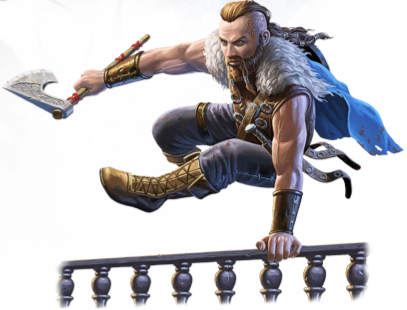
(Image © Kobold Press, for review purposes)
I’m sure you could’ve named the base class without any prompting, right?
They’re unapologetically tied to the setting—and that’s exactly what you want here.
Meaningful class choices that ooze Northlands.
Just one example:
Viking Weapons 3rd-Level Viking Feature When you are wielding a battleaxe, longsword, or spear, once on each of your turns, you can add your PB to a damage roll with one of those weapons.
(Northlands Worldbook, © Kobold Press, p.110)
Subclasses remain, in my view, one of the secret sauces of 5E and Tales of the Valiant. They add strong flavour without rewriting the base class, and bring meaningful additions through class progression.
This is what I mean by playable flavour—mechanics that carry the tone of the setting into actual play.
Character Options That Anchor You in the World
It doesn’t stop at subclasses. Northlands layers in multiple ways to immerse characters in the setting:
- Lineages: Variants to the familiar lineages (e.g. fjord dwarf, ice elf), as well as new Northlands-specific ones (e.g. giant-kin, trollkin, bearfolk, etc.).
- Backgrounds: Dancing Bear Guide, Doomed, Seafarer, Ice Nomad. These do exactly what backgrounds should do—give your character a past that matters in this setting.
- Talents: Are TotV’s version of 5E Feats, and are tied into Backgrounds, and level progression (you can choose to take a Talent as part of the Improvement feature on the class progression table). They’re a great way to add flavour with mechanical impact, and because they often have pre-requisites, they encourage players to think through setting-specific choices that build over time. Many of the talents here directly tie to the Gods of the setting (e.g. Blessing of Loki, which – of course – gives benefits to Deception, and bonus illusion cantrips and spells), or are themed to the Northlands environment (e.g. A martial Talent Giant-Slayer which gives you abilities when fighting Large creatures).
Character Threads — A Standout Idea
Northlands goes even further and introduces an entire new story mechanic concept:
Character Threads.
Less about what your character did before becoming an adventurer and more about what your character does in the “background” while they are adventuring.
(Northlands Worldbook, © Kobold Press, p.128)
In practice, this means players work with their DM to define the goal, the milestones, and the benefits attached to each milestone. Each milestone is ranked based on the character levels it is intended to be reached at, and of course the benefits are level appropriate.
This gives the player an incentive to interact with the setting outside the main plot.
As well as the basic mechanics, a number of Northlands aligned ‘threads’ are described, making it simple to bring this into your campaign—or alternatively, more specific personalised threads can be created collaboratively.
Frankly, this feels like something that could—and probably should—become standard in the Tales of the Valiant ruleset.
Magic, Gear, and Viking Fantasy
Chapter 5 – Magic and Miscellany continues with Northlands themed equipment and magic items, e.g.:
- Longships: If I was a Northlands character, I’d want a longship! 5 different types are included, giving the characters a range of options to suit their level and adventures.
- Spells: Kobold Press has a long history of publishing new spells for the game (Tome of Magic etc.) and this is no different. There are almost 150 new spells across the 4 magic sources, all Northlands themed.
Where It All Comes Together — Running the Campaign
Chapter 7 – takes the mechanical design to another level. This chapter presents a veritable smorgasbord of mechanics designed to bring the setting to life at the table—not just on the page:
- Reputation: an entire reputation tracking system, with the benefit (once per level only) of being able to control the game narrative in certain circumstances. More prosaically, a significant reputation can reduce living costs. This incentivises players to act like saga heroes, and conversely, bad deeds cause complications.
- Dueling (Holmganga): Major slights on your honour must be settled by ritual combat, of course! Simple idea, great at the table.
- Flyting: Bring combat by insult to your table! What’s not to like!
- Prophecies and Omens: This is pure Norse myth translated into gameplay:
- Seek the seer
- Gain glimpses of fate
- Interpret meaning
- Ships, Sea Combat and Raiding: It wouldn’t be a Viking-inspired setting if there wasn’t the opportunity to crew the longships and go a-reaving! This section presents:
- Ship rules
- Sea encounters
- Abstracted raiding systems
- Weather: Finally, optional rules are given to translate the bleak and harsh setting into weather difficulties to throw at your players.
This is playable flavour at its strongest—mechanics that ensure the setting isn’t just described, but actively played.
Northlands Bestiary — Finishing the Job
Finally, Chapter 8 rounds out the setting with 30+ new monsters for the DM to throw at his Northlands heroes.
This covers the standard foes you would expect, such as an abundance of Giant and Troll options, but also a number of lesser known options inspired by Norse mythology, such as Fenrikyn, Gamr and Grendelkyn.
There are also plenty of stat blocks for Northlands Mounts and NPCs.
Final Thoughts — Great Design!
If I had to summarise the mechanical design of Northlands in one sentence:
It forces the setting to show up at the table.
Everything here:
- Encourages behaviour
- Rewards engagement
- Reinforces tone
This is playable flavour done right.
Nothing here feels like it’s just there for the DM to read.
For Tolrendor…
This is where it gets interesting:
If the flavour of the Northlands in the previous post inspired me to use the setting…
The mechanics described here leave me thinking: how soon can I start my campaign?
Stay tuned for subsequent musings on:
- The Northlands Sagas — the companion adventure path to the Worldbook that I’m definitely planning to run soon!
- Northlands World-building – follow along as I weave the Northlands into the World of Tolrendor
No matter how far you roam across glaciers, snowfields, or among ice-choked seas, there is always more to discover. The Northlands cry out for heroes with a sharp blade, a strong voice, a steady heart, or a hand raising a rune‑marked stone in defiance of fate. So gather your warband, ready your longship, and call upon your shield-maidens and reavers. Step into the sagas and marvels of the Northlands and see what glories await you.
(Northlands Worldbook, © Kobold Press, p.6)
 Tolrendor DM's Blog
Pingback: Reimagining the Age of Strife for Norðrlǫnd | Tolrendor DM's Blog