Wizards Watch: I’ve got my kit!!

Wizards Watch LogoWell, I’ve downloaded the play test materials, so I guess I’m away with DnD Next! I’m not going to make any specific comments until I’ve had a chance to read fully and play at least one session with the kids.

2 things immediately struck me however:

* They’ve used the original ‘Caves of Chaos’ map from Keep on the Borderlands for the introductory scenario. This will be interesting as its a far different style of map from typical 4E adventures, which is what my kids are used to…

* Although it was heavily previewed, the initial playtest is about core rules, not character generation. The pre-gens have a background and a theme, but there are no options, just the 2nd and 3rd level additional abilities to add as you advance. I fully expect there to be a pile of complaint on the forums about this, despite the clear information !! 🙂

On a negative note, there were clearly technical issues with the initial release of the playtest materials (although I was one of those that used a different email to sign-up than my DDI account email, and it didn’t seem to affect me..), but the vitriol on the forums just beggars belief! I cannot believe people saying stuff like “If I have to ring customer services, that will drive me to paizo”. I mean please … just grow up! Lets all try and make this process a positive one, so we can actually influence the game…

Posted in DnD Next, Wizards Watch | 2 Comments

Wizards Watch: Maps and Minis – A Fallacy

Wizards Watch LogoA few weeks back, a DnD Next blog came out about ToTM (Theatre of the Mind) vs Grid based combat. A follow-up came out recently. Boy have these articles stimulated some internet inches (yards…) of comment! Its clear from the commentary that there is definitely a focus on coping with both these styles (and hybrid styles) in the new rules, which is good. Hopefully we’ll find out how very soon

As I’ve mentioned before, my current DMing is almost totally in the ‘Grid’ camp as that’s what my kids enjoy with D&D combat, and that’s fine as far as I’m concerned. In the D&D (Basic D&D,1e and 2e) campaigns of my youth however, ToTM was more common, with a sketch map used for bigger combats. I was probably more likely to use a map if the combat was outside, where ranged weapons and character movement were more important (there’s only so many tactical moves you can use in a 10′ corridor…).

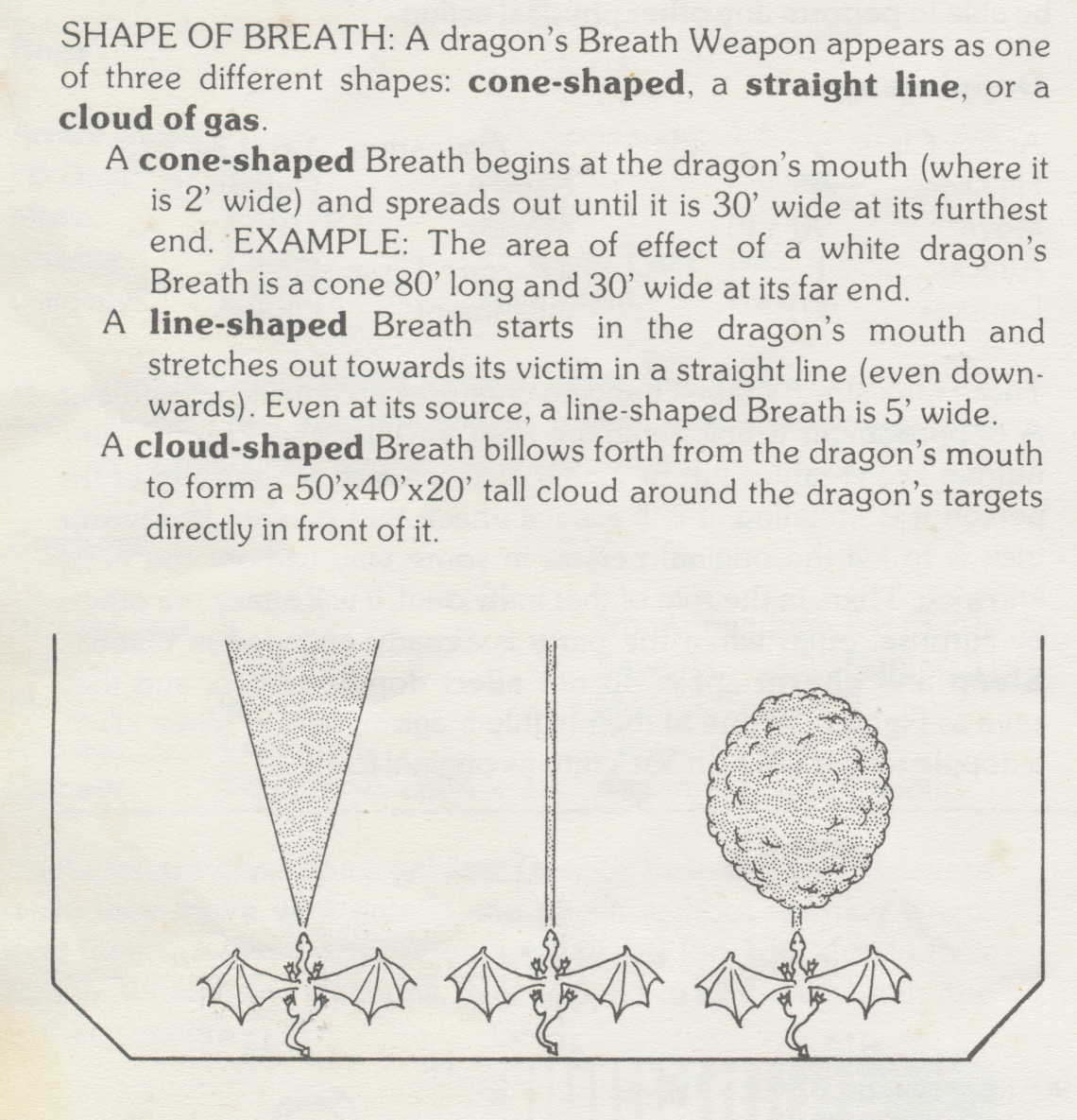
I fully support the design goal that DnD Next needs to support the range of options – but what gets me is the concept that this was not the case in any version of D&D. I mean, take a look at this from the Moldvay ‘Red Book’:
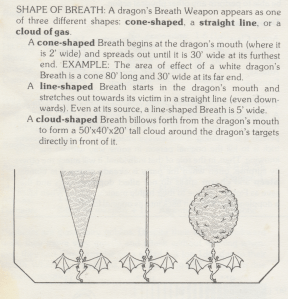
This is clearly a rule that lends itself to the use of miniatures and a map/grid. As in fact the rule-book states (p B26):

USING FIGURES: Miniature figures are useful during combat for both the DM and the players, so that they may “see” what is happening. If miniatures are not being used, theDM should draw on a piece of paper, or use something (dice work nicely) to represent the characters in place of miniature figures.

Note you don’t have to use miniatures or a grid – but in my opinion with a rule like this that is clearly based on spatial conditions, if you don’t use them, you’re hand-waving the rule i.e. making a judgement as to which of the dragon’s enemies are caught in the breath weapon area of effect! I not saying this is a wrong way to play, but it clearly goes against applying the rule precisely.

(As an aside, why didn’t we use minis and a grid more extensively back then? Well I think one answer is that back in early 1980s, we didn’t have access to the computer tools to produce great maps and tokens like we can today, and access to colour printers was unheard of… plus the fact that I lived in New Zealand, where getting hold of minis meant expensive postage and import duty – i.e. out of the range of a teenager!!)

So fast forward then to 4E, and in my opinion the situation is exactly the same. Although character powers and monster stats are more codified than they were in earlier editions in terms of grid usage, they can still be applied to ToTM type combats. For example, take a (common) power which allows you to ‘shift’ after an attack. This has a clearly defined grid-based mechanic associated with it, but it’s also a narrative point meant to reflect a nimble attack: “I dance in, strike with my dagger, and then swiftly leap back the orc can slash at me.” ‘Push’, ‘Pull’ type powers , or ones that apply a condition (Knock Prone…) are all just as applicable in a narrative style combat.

I agree that the way the rules are written imply the use of a grid and miniatures, but there is nothing that prevents you playing your combats in the way your group want to … and in my experience that holds true for all editions!

Dnd Next Playtest eve…

In any case, some of the speculation around this will vanish tomorrow when we (the general public) get our hands on the first public playtest materials. From the little tidbits of information and rumour flying around, it seems this initial release will seem a lot like Basic D&D, even having ‘Caves of Chaos’ as the playtest scenario!

I’m really looking forward to seeing this, and playing it through with my kids – they have taken to 4E D&D really well, and we’ve had a blast with that edition, so it will be very interesting to see how this goes.

However, I must admit that I’m not much looking forward to reading the comments boards in the wake of this. Tbh, I’m sick of the self-centred viewpoints that appear with alarming regularity (“If it doesn’t do X, I’m not interested…”) – can I remind people that every group plays D&D in the way that suits them, and the rules should allow for this. However, we can’t expect this initial playtest to cover everything – its simply going to be the core of a system which can grow elegantly (we hope…) to encompass the full range. So lets all keep that in mind and concentrate on giving constructive feedback on what’s there, not on what’s not …

Happy DnD Next Gaming!

TolrendorDM
Posted in Columns, D&D Nostalgia, DnD Next, Wizards Watch | Leave a comment

Content Corner: Rats Below

Content Corner LogoEarlier this month I posted an iBook publication of a short delve in my RPG Tech Talk column. This was an example of using a new Apple application to create richly formatted publication for viewing on an iPad!

Of course, that’s not much use to anyone unless they have an iPad, so I thought I’d put a plain-old PDF version up as my Content Corner offering for this month! So here it is:

 Rats Below.pdf

This is generated directly from the iBooks Author software, so shows all the same warts and niggles! 😉

Hopefully it’s of use to to someone!

Posted in 4E D&D, Columns, Content Corner, Self-publishing, The Amber Tower Campaign | 1 Comment

Map of the Month: In the beginning…

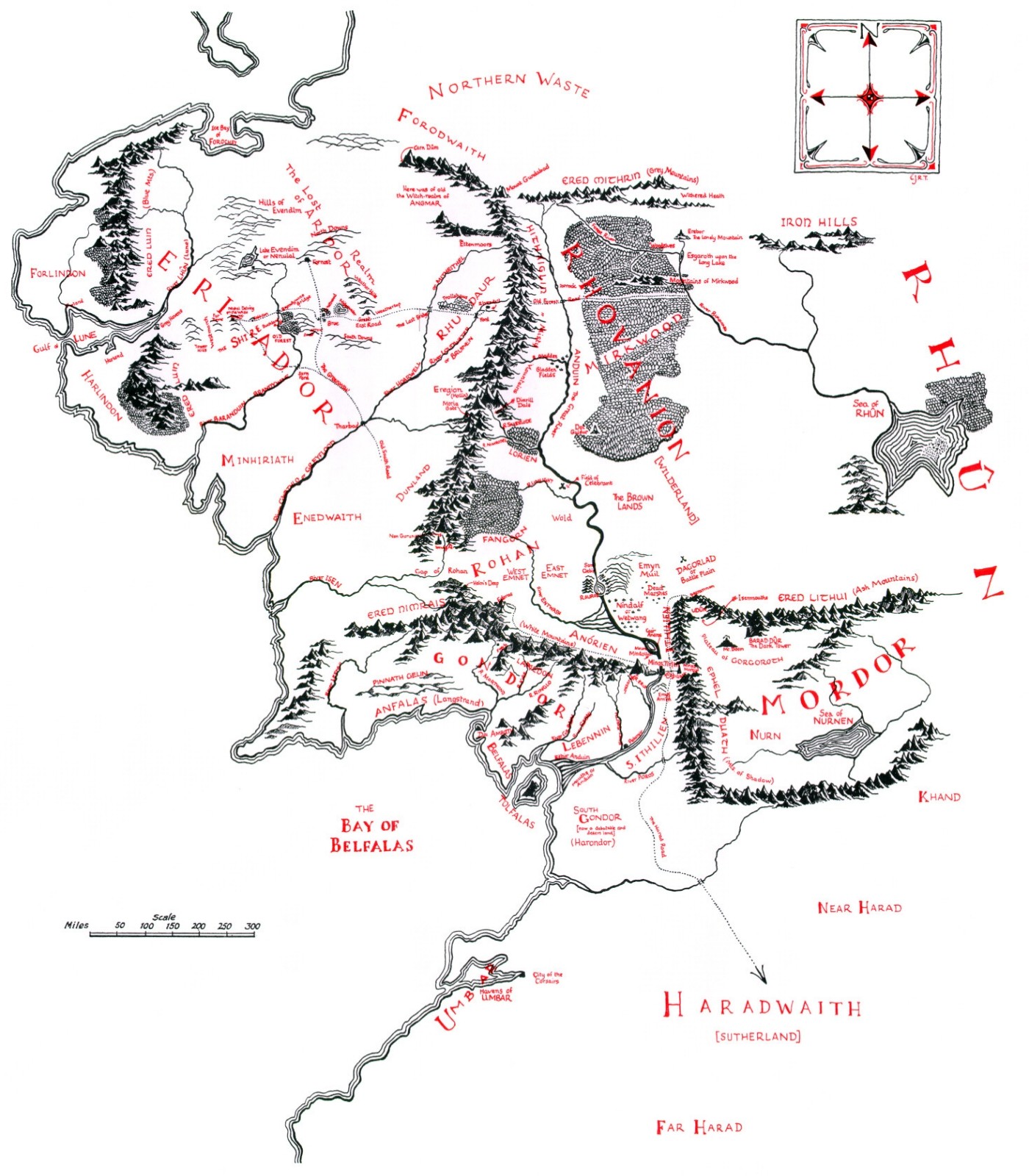
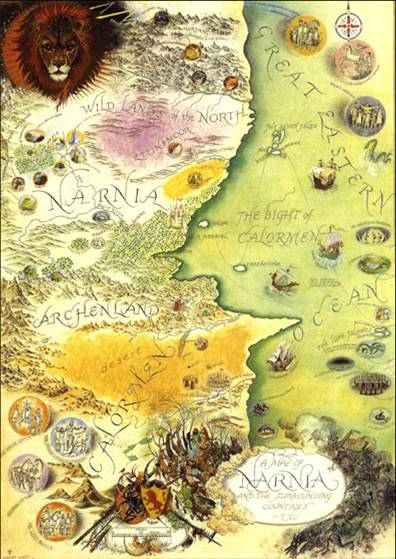
A few weeks ago I was browsing the Profantasy forums, and I came across a post by someone looking for advice on creating a style reminiscent of the maps in the Hobbit and the Lord of the Rings.

That got me thinking. How many people in this world got started on a passion for fantasy cartography with images such as these??:

I certainly know that I couldn’t get enough of these maps when I was first read these stories as a kid (in the case of the Narnia books). The stereotypical overland map style even today in RPG publications is based on these early examples.

Although I loved both the CS Lewis and Tolkien stories as well as the maps, the main motivation it gave me was to draw my own world maps and design my own creatures and stories – and this way before the early 80’s when I first discovered Dungeons and Dragons. I vividly remember sitting at the kitchen table drawing huge world maps, and illustrating (or at least trying to given my limited artistic ability…) the strange creatures that lived there.

This naturally transferred to my role-playing experiences as a Dungeon Master. Of course, I loved settings like the Forgotten Realms, but I never actually played within that setting as written, or mapped. I borrowed loads (including large chunks of the Savage Frontier at one point), but I always had to re-draw the maps to integrate it into my own world of Tolrendor.

Even now (as is probably obvious from this blog…), when I’m pretty time-challenged on my creative opportunities, creating my own maps, whether world or city maps, or just a battle-map for an encounter, is a core part of the game experience!

How many of you have a ‘formative cartographic experience’ related to one of these maps?

Posted in Cartography, Columns, D&D Nostalgia, Map of the Month, World Building | 2 Comments

RPG Tech Talk: iBooks Author

In my last column, I talked about my opinion that current eBook  formats are not really suitable for RPG publications, where typically a greater level of control is required over the precise layout – unlike a novel where the ‘flow’ formats of an eBook work well.

This month, I decided to try my hand at producing a publication using Apple’s new application iBooks Author. This software is aimed at the textbook market, allowing electronic study guides etc. to be produced and sold through the iBooks application on an iPad. The key point is that the application is a layout tool, so gives the ability to create PDF-like publications, with precise control over layout, fonts, images etc … so maybe this would be a realistic alternative to the Adobe format for RPG publishers.

The software is free, and downloadable via the App Store, so it’s simple to get up and running. Essentially it operates like many other desktop publishing tools, allowing you to place text and other content within frames, add pages and headings etc. When the time comes to preview your work, you hook up your iPad, start the iBooks application, and download straight onto it!

So far good, but then the problems started…! Firstly, in somewhat typical Apple style, the application works absolutely fine – as long as you follow the grand plan laid out for you by Apple! Go off-piste even slightly, and things suddenly get a lot harder! As the app is designed for textbook authoring, a typical chapter-based organisation for your document is assumed. A number of layouts are provided out of the box, but if they don’t suit what you want  – well lets just say I found it pretty difficult  to create my own…

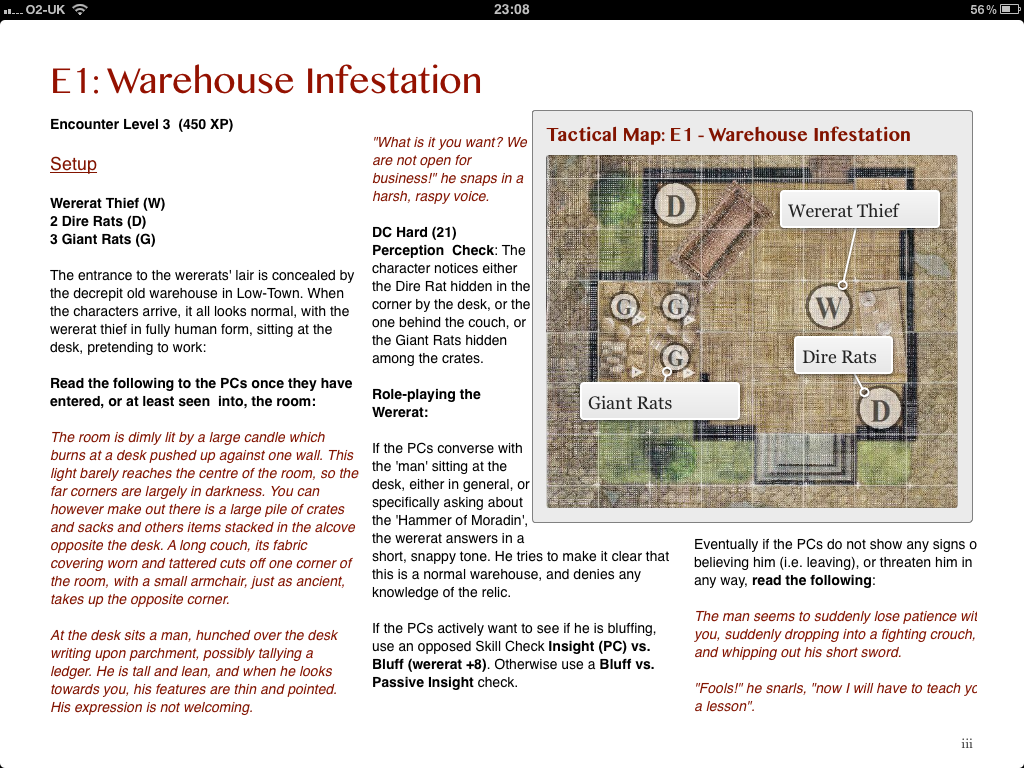
Secondly, try as I might, the layout on the screen did not seem to translate properly to the iPad – especially the right-most column, which always seemed to get lost in the margin – infuriating when you can’t find any way (or any help item) to resolve this:

Example iBook screenshot on iPad

Another part of the app that I was looking forward to exploring was ‘widgets’ – little snippets of interactive content. Unfortunately, in the end these left me pretty underwhelmed. The ‘Interactive Image’ (example shown in the screenshot above) allowed labels to be added to an image that would zoom in when tapped – a reasonable gimmick -but you couldn’t do anything neat like link to another page (e.g. to monster stats). The ‘Gallery’ option was also very frustrating. I wanted to use this as a space-saving way of displaying a set of stat blocks for an encounter, but just couldn’t manage to get the images scaled sensibly!

In summary, iBooks Author is a neat idea, but it currently seems to have a number of bugs and functional gaps that prevent it being a solid publishing tool. It will be a while before this format seriously threatens the venerable PDF for layout based publications! However, it’s not a million miles away: if the niggles were ironed out, and the app evolved to be more general-purpose in nature, we might be on to something…

Apple only lets you sell iBooks created with Author via the iTunes store, which might be another put-off for prospective RPG publishers given the significant cut Apple would take! Thankfully, you can distribute publications for free … so take a look at my sample if you’re interested – and of course are on the Apple side of the techno-wars 🙂

RatsBelow.ibooks

To load it to your iPad, first download and add the file above to your Books library in iTunes, then go to the ‘Books’ tab on your iPad page in Devices. Ensure the option ‘Sync Books’ is checked, select ‘Rats Below’ in the Books Pane. Hit the Sync button, wait … and then enjoy reading in the iBooks app!

Posted in Columns, RPG Tech Talk, RPG Technology, Self-publishing | 5 Comments

May Update

Halfway through the month and I’m only just starting! As I mentioned here, there is a least a good excuse, but its certainly taken longer to get back on track than I’d hoped.

Still the Content Calendar is updated with May’s plans, so hopefully I’m on the way back…

It will also be a big month in the DnD Next multiverse, with the release of the first play test materials on the 24th. Excited …?? 🙂

Posted in Columns, Miscellaneous | Leave a comment

Scheduling Problems…

When I put the Content Calendar publication schedule for April together, I kind of neglected one thing! 🙂

At the end April, we’re moving house (well, actually, back into our house … long story…) and my schedule has gone to pot! Some of the posts I had planned simply aren’t going to happen, and certainly not quite on time …

Note I still hope to get a post for each of monthly columns done, it just may be a different (and possibly simpler…) topic.

Hopefully May will see me back on track … assuming of course that Virgin Media move my broadband correctly …

Posted in Columns, Miscellaneous | 1 Comment

Wizards Watch: A Smorgasbord

Wizards Watch LogoWhat with PAX East seminars and and a rush of blogs its been a busy time in DnD Next land. That of course launches a cascade on comment in the blogosphere! 🙂

Actually I’m beginning to think WOTC have made a bit of a rod for their own back with perhaps too early an announcement of DnD Next and the playtest programme: they’re now being criticised for seeking feedback without opening it up to playtest – when clearly they’re nowhere near ready for that. To have any sort of meaningful testing, they’ve got to have a system, and it seems they’re a long way from that yet. However, this in turn implies that despite what many are saying, they are seemingly using the various polls and columns as genuine input, rather than just as ‘leaking’ decisions already made.

I think a lot of people out there are comparing the situation (unfavourably normally…) to the Pazio Pathfinder RPG play-test programme – without remembering that this was a upgrade to an already well-known product i.e D&D 3.5!!

There was a recent Legends and Lore column by Mike Mearls that presented the original DnD Next goals. This was interesting to read, but to me made it pretty clear that the aims are more about combating market fragmentation than feeling this is anything fundamentally wrong with the 4E ruleset. This is clearly a valid target for a commercial company, but it does make me wonder. A large part of the fragmentation happened with 4E and Pathfinder RPG … And with the momentum of Paizo’s product it’s hard to see that reversing. And then there is the OSR market, where it seems to me that a large part of the attraction is playing with the actual original rulesets – so is a DnD Next system, however closely it achieves the ‘feel’ goal, really going to change the situation?

Another interesting post by Rob Schwalb touched on a proposed concept of  themes and backgrounds being used to choose skills and feats – almost packaged up like fast food … but still allowing for more discrete choices if desired. I’m not against this concept – what I do find strange though is the interweb angst that it generates, and why this is such a big issue for DnD Next. To me, character choices aren’t rules, they’re content … rules determine how a power (or a skill, or a feat, or a combat tactic, or a spell/attack) works in the game … what powers (etc …) a character has is content!! I realise this might be my DM bias (as I’ve mentioned before …), but I still think it a valid point! 🙂

Then came a very interesting post about ‘the Grid‘ i.e. the range of combat options between full imagination to full grid based tactical combat.  Again, this generated a lot of comment/blog inches … and is a topic I might explore further in another post!

In summary, some interesting information out there recently, and on the whole I think the direction is still positive … but I  can’t help thinking that everything they’re looking to do could be achieved essentially with the 4E game engine … again, a concept I might explore further…

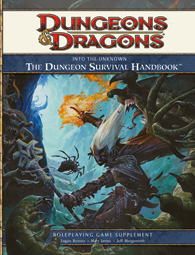
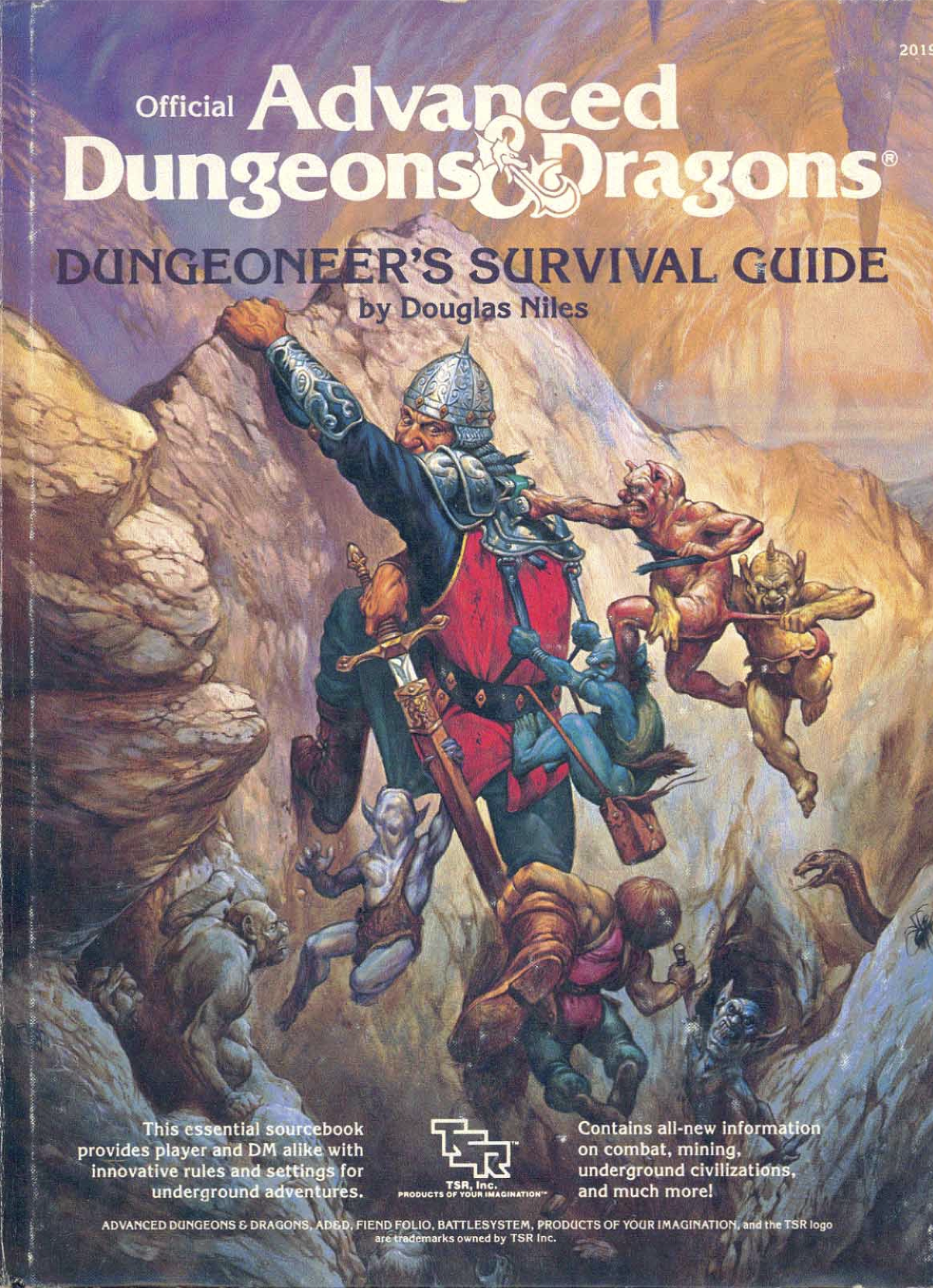
And lastly, its great to see that even though lots of people are thinking (and stressing…??) about DnD Next, there is still plenty to look forward to on the 4E content front. The last few 4E releases (e.g. Heroes of the Feywild) have been top notch, and I’m really looking forward to the Dungeon Survival Handbook. I’ve been a big fan of the Underdark ever since the original Dungeoneer’s Survival Guide (which unfortunately I no longer have my copy of …).

Following all this up with the ‘Rise of the Underdark‘ set of products and tie-ins should make for an interesting summer!

Happy Gaming,

TolrendorDM

Posted in Columns, D&D Nostalgia, DnD Next, Wizards Watch | Leave a comment

June Cartographer’s Annual!!

And as I mentioned just this morning re Henrik Wielink’s Dungeon style for CC3 … how cool does this look … 🙂

Posted in Cartography, RPG Technology | 1 Comment

Fantasy Maps – A Stunning Site!

The Cartographer Annual (from ProfantasyApril Issue shipped last week, with yet another great overland style, based on the work of Herwin Wielink. I hadn’t come across this cartographer before, but his work is really stunning.

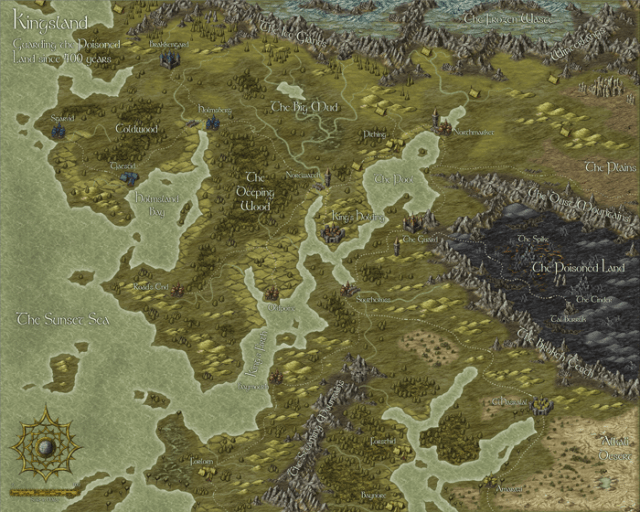
His own site, Fantasy Maps,  contain lots of great maps, from an example created using the CC3 style:

Cartographer's Annual - April 2012 Issue

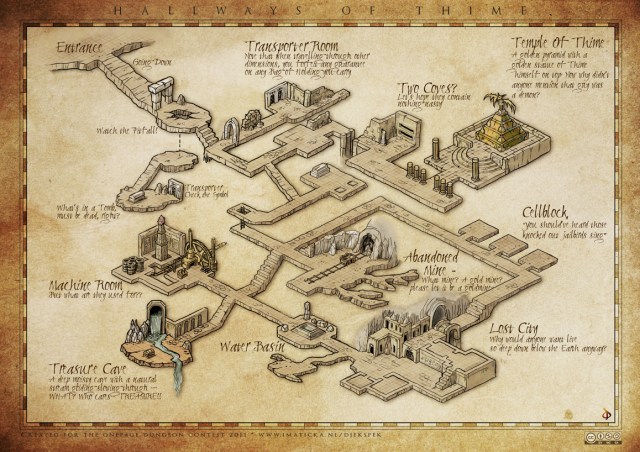
.. as well as some great freebie dungeon maps e.g:

… and also some tutorials (I love the Compass Rose one…) and a stunning gallery!!

Definitely worth checking out, and the best news is that apparently during 2012 the Annual will also include his ‘Dungeon’ style for CC3 – can’t wait!!

Posted in Cartography, RPG Technology | 1 Comment